

Monsoon floods kill more than 100 as landslides force thousands to flee
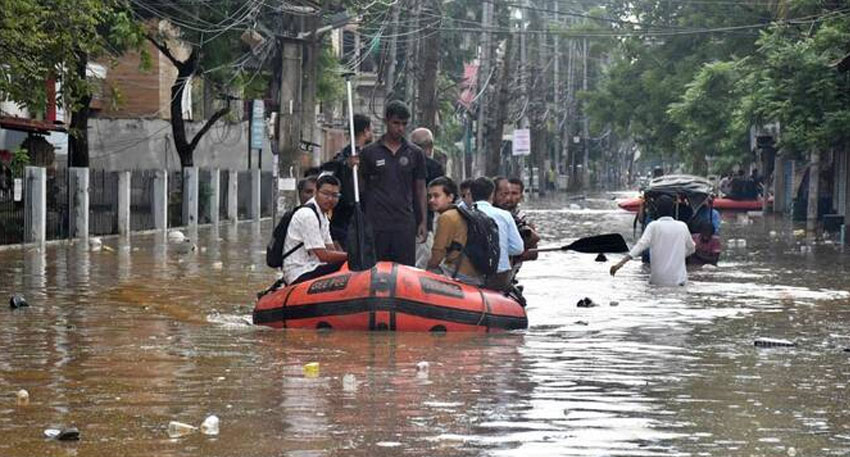
Assam records the highest death toll
Monsoon rains have caused deadly floods and landslides across India, leaving more than 100 people dead and forcing thousands to leave their homes. Officials said the disaster has affected several regions as rivers overflowed and roads were damaged.
Assam is among the worst-hit states, with at least 87 people losing their lives. The Sivasagar district recorded 47 deaths, while floodwaters submerged many villages and towns.
The Assam government has appealed for financial support to help people affected by the disaster. Chief Minister Himanta Biswa Sarma said, “The devastation here is unlike anything these areas have witnessed before.”
He also said, “Material losses can be restored, but no compensation can replace a loved one.” Rescue teams continued to move stranded residents to safer places using boats and rafts.
Heavy rains hit more states
In Kerala, at least 15 people were killed after several days of heavy rainfall. Officials also said seven people were still missing as rescue operations continued.
More than 300 relief camps have been established across the state. These camps are providing shelter to over 10,000 displaced people after landslides and overflowing rivers damaged many communities.
In Indian Illegally Occupied Jammu and Kashmir (IIOJK), at least 31 people died after short periods of extremely heavy rainfall. Authorities said the sudden weather caused severe destruction in several areas.
Lightning strikes also claimed at least 22 lives in Bihar and Jharkhand since Tuesday. Most of the victims were farmers, cattle grazers and four children who were caught outdoors during storms.
Monsoon-related disasters occur every year across India, but experts say climate change is making rainfall more intense and less predictable. This has increased the risk of deadly floods and landslides in many regions.
Also read: Floods wreak havoc in Punjab as rising rivers destroy crops and homes
Neighbouring Sri Lanka has also been affected by unusually heavy monsoon rains. At least eight people have died, while around 12,000 residents have been forced to leave their flooded homes.
At the same time, eastern parts of Sri Lanka are facing severe drought conditions. Authorities are supplying drinking water to affected communities through tanker trucks.
The latest monsoon season has once again shown how extreme weather can quickly turn into a humanitarian crisis. Experts say stronger disaster planning and climate adaptation will be important as severe weather becomes more frequent.