

NASA discovers giant moon crater larger than two football grounds
NASA finds a record-setting moon crater
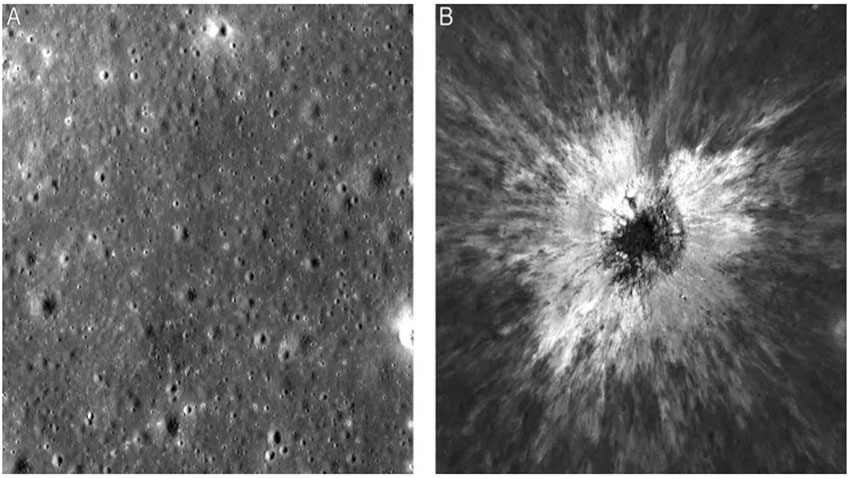
NASA scientists have discovered a huge crater on the moon that is larger than two football grounds. The crater was created by a powerful impact that happened in 2024 but was not detected at the time.
The crater is about 728 feet wide and up to 141 feet deep. Researchers say it is the largest known impact crater created in the solar system in recent times.
Rare moon impact remained hidden
NASA’s Lunar Reconnaissance Orbiter (LRO) spotted the crater on the near side of the moon in May 2024. Scientists believe it was formed when a fragment from an asteroid or comet struck the lunar surface.
The impact was missed by telescopes on Earth and in space when it happened. LRO images showing the crater were not identified until August 2025 because of the huge amount of data collected by the spacecraft.
Crater offers clues about lunar soil
The crater was later photographed in greater detail, and scientists confirmed the discovery earlier this year. It has been named after Thomas McGetchin, a former director of Houston’s Lunar and Planetary Institute.
The new crater is three times larger than the previous record-holder discovered by LRO about a decade ago. The impact also disturbed the moon’s surface across an area stretching for more than 66 miles.
Scientists found that dust and rocky material were thrown away at a higher angle than expected. Another study found a four-mile-wide cold area around the crater, suggesting that the moon’s upper soil had been disturbed.
Discovery could help protect moon base
Scientists say the impact provides a rare opportunity to study how the moon’s surface changes over time. One study described the event as a statistically rare, effectively once-in-a-lifetime observation.
David Paige of the University of California, Los Angeles, compared these impacts with gardening because they mix material from different layers of lunar soil. “We’re now thinking of impacts as a way to garden the regolith — churning the sediments and putting stuff above that’s usually below the surface,” Paige said in a statement.
NASA’s LRO has found many craters since its launch in 2009. Scientists now estimate that the moon’s top inch of soil is overturned by material from impacts every 80,000 years, which is faster than previously believed.
The finding could also be important for NASA’s planned moon base. Scientists will next study the risk of material thrown out by impacts reaching a future lunar base and use that information to help engineers strengthen its structures.
The discovery gives scientists a rare look at how powerful impacts reshape the moon. It could also help NASA better understand risks for future astronauts and lunar structures.
Also read: NASA launches Roman telescope for a stunning cosmic survey
Also read: NASA turns to a 300-year-old navigation tool for future space missions


