

Supreme Court issues Nikahnama and Haq Mehr directives to Registrars
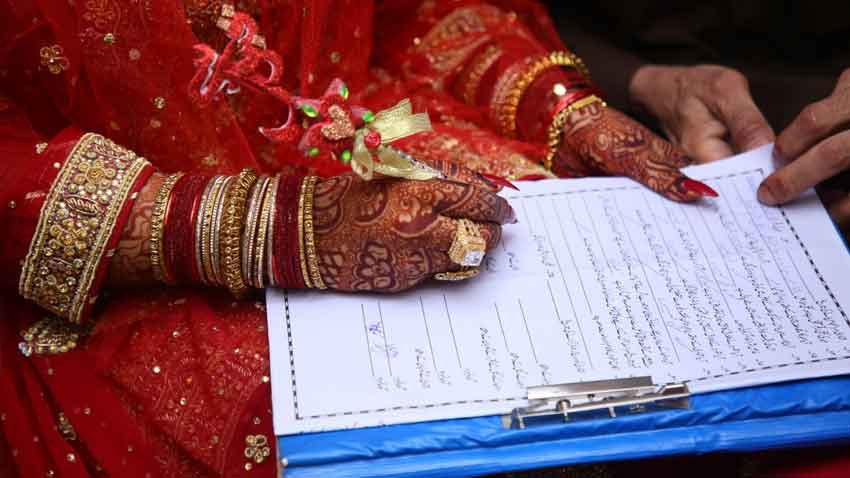
A five-member bench led by Justice Shahid Waheed said Haq Mehr is a mandatory legal right of the wife. The court said dower is the wife’s exclusive property and is not a price for marriage.
Registrars told to complete every column
In additional directions, Justice Shahid Bilal Hassan said Nikah Registrars must use the prescribed Nikahnama. No column should be left blank without a lawful reason.
The court said every column has a specific purpose and must be completed carefully. It gave special attention to Columns 13 to 16, which cover Haq Mehr and related property details.
Column 13 must clearly state the total Haq Mehr agreed by the bride and groom. The amount or property can include cash, movable assets or immovable property.
Property details must be clear
If property is given as Haq Mehr, Column 16 must contain enough information to identify it. This includes its description, measurements, location and agreed value where required.
The directions are aimed at reducing confusion over property promised as dower. Clear details can also help prevent disputes between spouses in the future.
Before taking signatures or thumb impressions, registrars must read or explain the relevant entries to both parties. This includes Haq Mehr, special conditions, delegated authority for divorce and property given as dower.
No personal interpretation allowed
The court directed that Column 17 should contain only the special condition actually agreed by the parties. A registrar cannot add a condition based on personal interpretation, assumption or understanding.
If an agreement is unclear, the registrar must ask the parties for clarification before entering it in the Nikahnama. The completed records must also be properly authenticated and preserved.
Registrars must provide the required copies to both spouses and send the prescribed copy to the relevant Union Council. Authorities have also been directed to ensure that licensed registrars understand the legal purpose of every column.
Training and inspections ordered
The Supreme Court directed authorities to arrange regular training and orientation for Nikah Registrars. Union Council officials should also conduct inspections of Nikah registers to check whether the directions are being followed.
Legal action can be taken against registrars who fail to perform their statutory duties or violate their licence conditions. The court’s directions build on earlier rulings that treat the Nikahnama as a civil contract based on the parties’ actual intention and informed consent.
The Supreme Court has previously said that unclear Nikahnama terms should not normally be interpreted against the wife’s rights when her understanding and free consent have not been established. The court has also stressed the need to verify ownership when immovable property is offered as Haq Mehr.
In May 2026, the Supreme Court ruled that a co-owner cannot transfer more than his lawful share of jointly owned property as Haq Mehr. It also directed steps to record ownership details and help prevent disputes over property given as dower.
The new directions focus on making Nikahnamas clearer and reducing confusion over Haq Mehr. They also place greater responsibility on registrars to explain important terms before obtaining signatures.
Clear property descriptions and ownership records may help avoid future legal disputes. Regular training and inspections can also help ensure that the prescribed Nikahnama is completed correctly.
Also read: Govt to cut petrol price by Rs70 to Rs85 per litre and waive levy?
Also read: Nikah registrar rules tightened to curb child marriages


