


US strikes Iran as Tehran hits targets in three Gulf states
The latest confrontation comes just days after a fragile ceasefire collapsed, raising fears of a return to full-scale war and increasing concerns over regional security and global energy supplies.
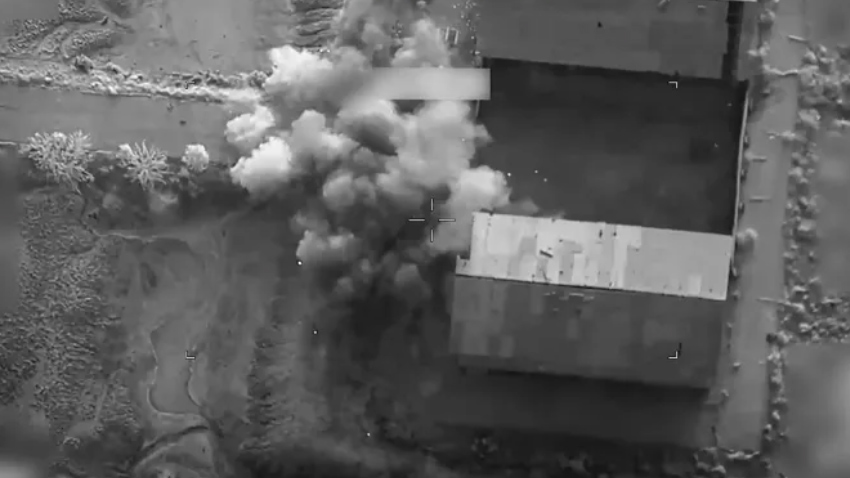
According to the US Central Command, American forces carried out two waves of strikes targeting Iran’s coastal defence systems, cruise missile storage facilities, launch sites and other military infrastructure.
The US military said the attacks also targeted command centres, air defence systems, missile and drone capabilities, and coastal surveillance facilities in Bandar Abbas and on Greater Tunb Island. Meanwhile, Iran’s Islamic Revolutionary Guard Corps (IRGC) claimed it launched missile and drone attacks on US military targets in Bahrain, Kuwait and Jordan in response to the American strikes.
The IRGC said it targeted a gathering of US military personnel and a radar system at Ali Al Salem Air Base in Kuwait. These claims could not be independently verified. US officials told Reuters that the strikes were aimed at weakening Iran’s military capabilities ahead of any broader military operations in the region.
The US military also said it intercepted and disabled an unmanned oil tanker heading towards Iran’s Kharg Island after it ignored repeated warnings. According to the military, the vessel was disabled after Hellfire missiles were fired into its smokestack.
Iranian media reported multiple explosions in Bandar Abbas, Ahvaz, Konarak, Sirik and Qeshm, while air defence systems were activated in Tehran in response to what officials described as “hostile threats.”
Also Read: Iran threatens to close Bab el-Mandeb Strait as US-Iran tensions deepen
Iran’s state broadcaster reported that a US strike landed near a hospital in Ahvaz that houses a paediatric cancer centre, forcing a temporary evacuation. The report could not be independently verified.
Iranian Parliament Speaker Mohammad Baqer Qalibaf described the conflict as an “existential war” with the United States and said Iran would continue to protect what it considers its security interests in the Strait of Hormuz.
US President Donald Trump said Iran wanted to reach a settlement but warned that military operations would continue if negotiations failed. Trump also said the United States had been in contact with Iranian officials, urging Tehran to agree to a deal to avoid further escalation.
Despite the ongoing conflict, Trump announced that an American citizen detained in Iran had been allowed to leave the country. Human rights lawyer Jared Genser identified the individual as Dena Karari and confirmed that she was travelling back to the United States.
The latest exchange of attacks has further heightened concerns over regional stability, global shipping and energy supplies, as the conflict between Washington and Tehran continues to intensify.