

Trump claims US has full control of Strait of Hormuz
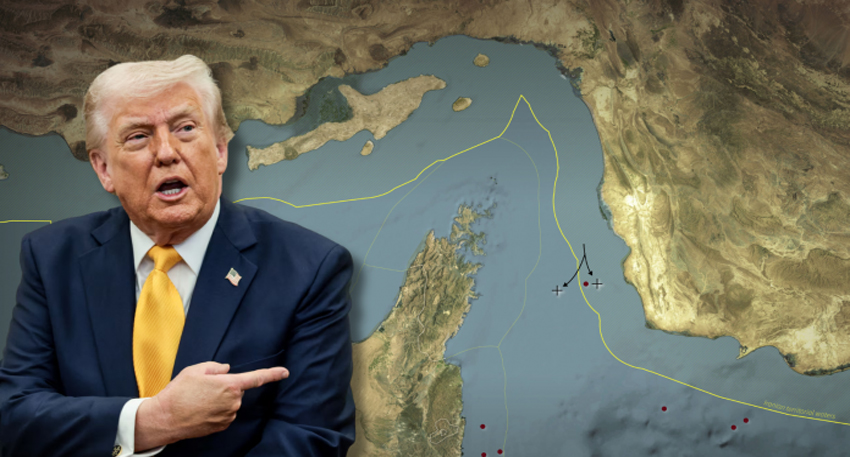
Trump said the situation regarding Iran is “going in a good direction” while claiming that US forces now have complete control over the strategically important waterway.
Trump makes major Strait of Hormuz claim
According to Arab media reports, Trump’s statement came after a recent claim by Iranian Revolutionary Guard spokesman Brigadier General Hossein Mohebbi.
Mohebbi had said that no US warships were currently present in the Persian Gulf following the war involving Iran. However, he did not provide details about the US naval vessels that Iran had previously described as part of a blockade.
The conflicting claims have added to uncertainty over the situation around the Strait of Hormuz, one of the world’s most important shipping routes.
US intercepts cargo ship
Meanwhile, the US military has reportedly fired two Hellfire missiles to stop a Panama-flagged cargo ship travelling towards Iran.
US officials said the vessel had ignored several warnings before the military action was taken.
Read Also: Why Trump‘s secret flight to Turkiye hid him from Iran danger
The development has further increased attention on maritime activity in the region as tensions between Iran and the United States remain high.
Iran has also linked the reopening of the Strait of Hormuz to several conditions. According to Arab media, Tehran has demanded an end to the war and naval blockade, the restoration of frozen Iranian assets and a ceasefire in the region.
Iranian officials have maintained that the waterway will remain closed until their demands are met.
Talks continue over reopening the waterway
Iranian Supreme National Security Council Secretary Mohsen Rezaei has said that the Strait of Hormuz will not reopen until all conditions are fulfilled.
At the same time, Qatar has reported progress in talks between Iran and Oman aimed at restoring the movement of commercial ships through the waterway.
Read Also:Libyan military intelligence chief killed in car bomb blast
The Strait of Hormuz is particularly important because a large amount of global energy trade passes through the route. Any prolonged disruption could therefore affect shipping, fuel supplies and international markets.