


Iran warns of more sea route closures after renewed US blockade
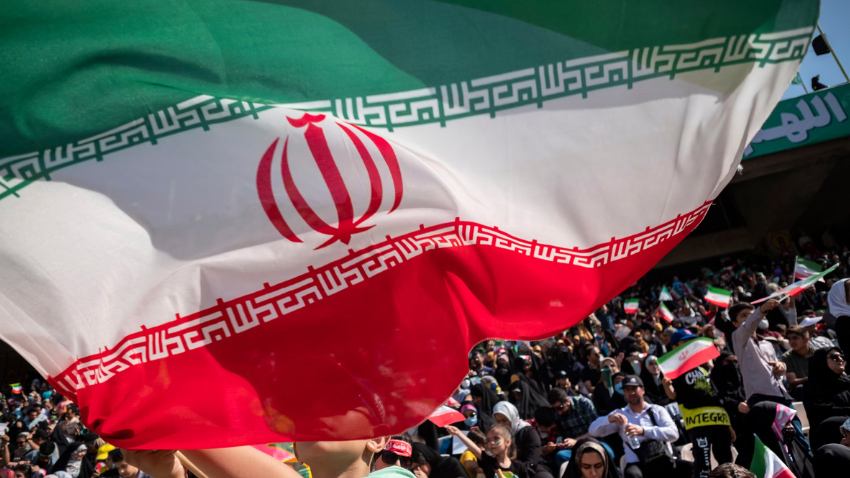
The Islamic Revolutionary Guard Corps (IRGC) said regional energy exports should either benefit all countries or none, warning that other export corridors used by the US and its allies could also be targeted.
The latest warning came after Iran closed the Strait of Hormuz, while the US renewed its naval blockade of Iranian ports amid escalating military tensions. Security analysts believe Iran could use its Houthi allies in Yemen to block the Bab el-Mandeb Strait, another vital global shipping route that connects the Red Sea to the Gulf of Aden.
The Bab el-Mandeb Strait is one of the world’s busiest maritime corridors, carrying Saudi oil exports and a significant share of global trade. Any disruption could affect global energy markets and increase shipping costs.
A senior Houthi official recently warned that the group could close the Bab el-Mandeb Strait if Saudi Arabia continued its military operations in Yemen. He claimed such a move could push global oil prices as high as $200 per barrel.
The Houthis recently launched missile attacks on Saudi Arabia after accusing the Kingdom of carrying out airstrikes on an airport under their control, ending a four-year truce between the two sides.
The group has previously targeted commercial vessels in the Red Sea, claiming the attacks were carried out in support of Palestinians during the Gaza conflict. Meanwhile, the US military said it had launched another wave of strikes against Iranian military targets to weaken Tehran’s ability to threaten commercial shipping in the Strait of Hormuz.
US officials claimed that Iran attacked seven commercial vessels over the past week, leaving several crew members dead, missing or injured. According to the US Central Command, the latest military operation lasted seven hours and targeted dozens of military sites near the Strait of Hormuz and along Iran’s southern coastline.
The IRGC said the Strait of Hormuz would remain closed until what it described as “the end of America’s evils”. Before the conflict, around one-fifth of the world’s oil and gas shipments passed through the strategic waterway each day.
Also Read: Can Gulf countries defend themselves without US support amid Iranian threats?
Iran also claimed it had targeted facilities linked to the US Fifth Fleet in Bahrain, a logistics site in Kuwait and a US military base in Jordan in response to recent American strikes. These claims have not been independently verified.
Jordan’s military said its air defence systems intercepted and destroyed three ballistic missiles that entered the country’s airspace from Iran. The renewed confrontation comes after a fragile ceasefire reached earlier this year began to collapse, increasing fears of a wider regional conflict.
US President Donald Trump warned that Washington could target Iran’s power plants and other energy infrastructure if Tehran refused to return to negotiations. He also said the US remains in contact with Iranian officials in an effort to revive talks.
Trump later withdrew his earlier proposal to impose a 20 percent shipping fee on vessels passing through the Strait of Hormuz, saying he would instead pursue investment agreements with Gulf countries.
Oil prices continued to rise as markets reacted to the growing conflict and concerns over possible disruptions to global energy supplies. Brent crude and West Texas Intermediate both reached their highest levels in about a month.