

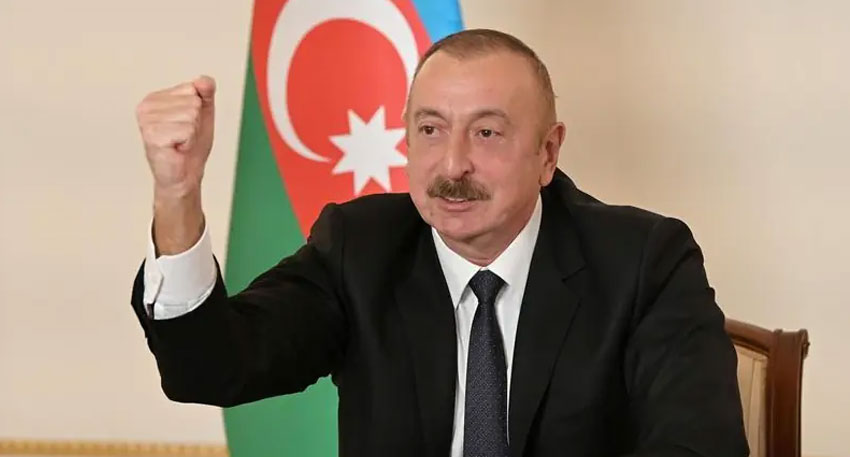
President Ilham Aliyev said Azerbaijan has no plan to deploy its soldiers in peacekeeping missions outside the country, including any potential operation in Gaza.
Speaking in an interview with local television channels, Aliyev said his country has discussed key questions with Donald Trump’s US administration regarding the proposed International Stabilisation Force ISF for Gaza.
Read more: Palestinian embassy officially inaugurated in UK
He explained that Azerbaijan sought clarity on how such a force would operate, but stressed that this engagement does not mean Baku intends to contribute troops.
Aliyev’s remarks come as international discussions continue over security arrangements in Gaza, with several countries weighing their positions on possible peacekeeping roles.
The president made it clear that Azerbaijan prefers to stay out of foreign military deployments while maintaining diplomatic communication on regional and global security matters.
Azerbaijan is setting clear limits on foreign deployments. Talking does not mean taking part on the ground. The stance reflects caution amid a complex Gaza situation.
“We prepared a questionnaire of more than 20 questions and provided it to the American side. No participation in peacekeeping forces is envisaged,” Aliyev said.
“I am not considering participation in hostilities outside Azerbaijan at all.”
An Azeri government source had said last November that Azerbaijan would provide no troops for such an operation unless there was a complete halt to fighting between Israel and Hamas.
Read more: Pakistan voices ‘profound concern’ over Venezuela crisis at UNSC
Meanwhile, diplomats involved in the discussions said that despite deep reservations and fears of domestic backlash, most Muslim-majority countries associated with the Gaza peace process want the proposed ISF to succeed, arguing that only such a force can ensure the security and survival of Palestinians in the besieged enclave.
“Israel has already killed [more than] 70,000 people in Gaza, and only an international force with a clear mandate can stop this genocide,” said a diplomat from a Muslim nation, directly associated with the process.
Another diplomat acknowledged that participation in the ISF would place contributing states in an extremely difficult position, but said the alternatives were even bleaker.
“We know we would be pushed into a very difficult situation if we joined the ISF,” he said. “But the alternative is even worse — uninterrupted bloodshed in Gaza, and that’s not acceptable to us.”


