
US Vice President JD Vance claims that the Trump administration will be in ‘great position’ even if Iran talks fail
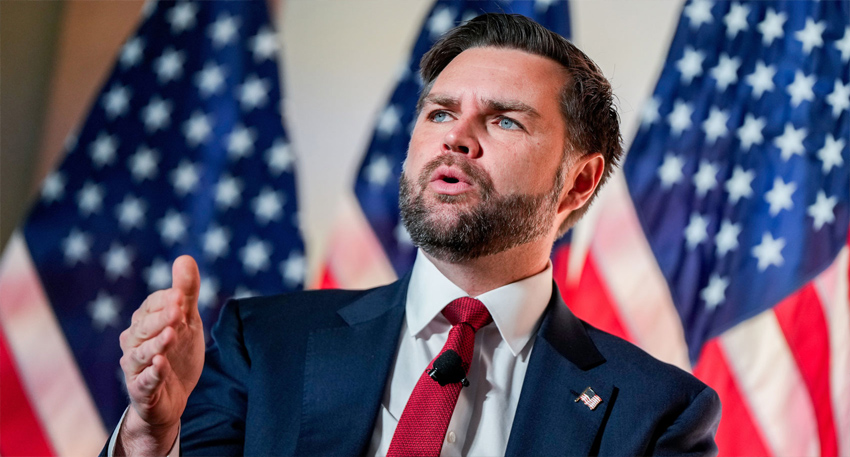
Vance claimed, Washington anticipated the negotiations would have a positive outcome but upheld the fact US would remain in a favorable position even if no agreement is reached. He insisted Iran's military capabilities and nuclear programme had been disassembled.
He went on to add that President Trump cautioned that any move made by Tehran to disrupt shipping through the Strait of Hormuz would trigger a US military response.
He also reiterated that Iran could undergo a lasting transformation if the ongoing negotiations succeed in reaching a durable agreement.
Earlier, the vice president said commercial shipping through the Strait of Hormuz had returned to pre-conflict levels and noted that technical-level discussions with Iran were continuing, despite Tehran's denial that it is engaged in peace talks with Washington.
Iran announced on Tuesday that it would not hold direct meetings with senior US officials who travelled to the region after the recent escalation in hostilities, casting fresh doubt over efforts to secure a lasting agreement between the two countries.
The latest developments underscored significant differences over the proposed framework, which envisions Iran ending disruptions to shipping through the Strait of Hormuz in return for economic incentives, followed by a 60-day negotiating period aimed at reaching a permanent peace accord.
Also Read: UN issues alarming warning as terrorists turn to AI
Meanwhile, US President Donald Trump's son-in-law, Jared Kushner, and special envoy Steve Witkoff arrived in Doha for what the White House described as high-level discussions. However, Iranian officials and the Qatari government said the American delegation would engage with mediators instead of holding face-to-face talks with Iranian representatives.
Qatar also confirmed that Prime Minister Sheikh Mohammed bin Abdulrahman Al Thani was among the officials who met with Witkoff and Kushner.
Iranian Foreign Ministry spokesperson Esmaeil Baghaei said no meetings with US officials had been planned in the coming days at any level.
Meanwhile, Qatar's foreign ministry spokesperson, Majed Al-Ansari, said the two countries were expected to begin technical-level discussions as part of the ongoing diplomatic process.
As efforts continue to revive negotiations, President Donald Trump has reportedly considered the option of renewed military action. According to The Wall Street Journal, citing US officials familiar with the discussions, Trump has consulted Defense Secretary Pete Hegseth and Chairman of the Joint Chiefs of Staff General
Dan Caine about the possibility of additional strikes. Reuters said it could not independently verify the report.
Despite publicly warning of further attacks on Iran, the report said Trump has, for now, opted to allow more time for diplomatic efforts.
Commercial shipping has gradually resumed through the Strait of Hormuz, a strategic route that carried roughly one-fifth of global oil and liquefied natural gas shipments before the conflict erupted on February 28.
Iranian officials, however, insisted they retain the authority to regulate maritime traffic in coordination with Oman, which borders the opposite side of the waterway. They said tolls could be introduced in mid-August after the current 60-day negotiating period concludes.
"The sovereignty of the Strait of Hormuz lies with Iran and Oman, and traffic in the Strait is subject to arrangements determined by Iran," Iran's chief negotiator, Mohammed Baqer Qalibaf, said in remarks broadcast on state television.
US Vice President JD Vance rejected the possibility of Iran imposing transit fees, saying on The Michael Knowles Show that Washington would not allow Tehran to charge ships using the international waterway. He also said oil shipments through the Strait of Hormuz had rebounded to pre-conflict levels and had even surpassed previous volumes on some days, though he did not provide supporting data.
Also Read: Provincial Assembly to return controversial bill to government for amendments
Despite continued uncertainty, oil prices have eased since the weekend, following US strikes on Iranian military facilities in retaliation for drone attacks on commercial vessels and Iran's subsequent attacks on US military installations in Kuwait and Bahrain.
The UN trade and development agency warned on Tuesday that vulnerable economies could continue to face higher food and fuel costs even if energy markets stabilize.
The conflict has fueled global inflation and increased political pressure on Trump ahead of November's US midterm elections, which will determine control of Congress. Trump and Treasury Secretary Scott Bessent have both called on fuel retailers to reduce gasoline prices.
The interim US-Iran agreement also includes provisions aimed at ending hostilities between Israel and the Iran-backed Hezbollah movement in Lebanon.
However, Lebanese Parliament Speaker Nabih Berri, a Hezbollah ally, questioned a separate US-mediated proposal between Lebanon and Israel intended to end that conflict. Analysts warned the framework could prolong the impasse by linking Israel's withdrawal from southern Lebanon to Hezbollah's disarmament.