

US Army Secretary Driscoll resigns amid reported Hegseth feud
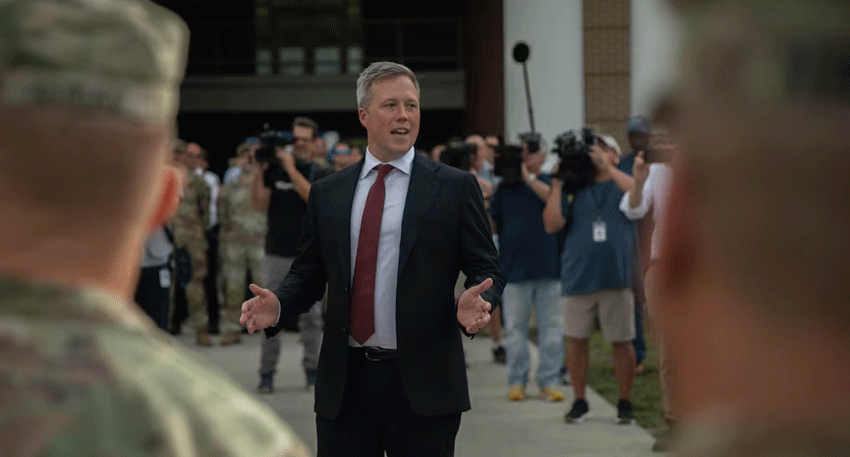
The resignation was submitted to the White House, according to a person familiar with the matter. It was not immediately clear whether President Donald Trump’s administration had formally accepted it.
Driscoll’s reported decision comes at a sensitive time for the US military, with American forces involved in operations in the Middle East and thousands of Army personnel deployed in the region.
The development also adds to growing questions about disagreements inside the Pentagon over military leadership, Army reforms and the direction of future defence planning.
Tensions over Army reforms
Driscoll, who was confirmed as Army secretary in February 2025, had focused on changing how the Army develops and buys weapons.
He pushed for a more flexible approach that could allow the military to obtain cheaper and more practical weapons. He also criticised major defence companies for their influence over military procurement.
Driscoll previously said, “(The) defense industrial base broadly, and the primes in particular, conned the American people and the Pentagon and the Army.”
The Army secretary is responsible for important areas including training and equipping soldiers. His position therefore gives him a significant role in shaping the service’s future capabilities.
According to the source familiar with the matter, Driscoll had raised concerns with the administration about Army transformation and readiness.
The source also claimed that Hegseth had blocked some of those efforts, particularly through decisions involving senior military commanders.
Neither the Army nor Driscoll immediately provided a detailed public response to the reported resignation.
Dispute over senior military leadership
The reported disagreement became more serious after Hegseth removed several senior Army officials.
In April, Hegseth dismissed US Army Chief of Staff General Randy George. The decision reportedly surprised Driscoll and increased tensions between the two officials.
Driscoll later told lawmakers that his family visited George after his dismissal and offered him personal support.
The change came while the US military was dealing with a major conflict in the Middle East, adding further pressure to the Pentagon’s senior leadership.
In June, Hegseth also removed the head of US Army forces in Europe. He has additionally been accused of blocking the promotion of several senior Army officials.
A US official speaking anonymously said Hegseth had viewed Driscoll as a threat within the Pentagon bureaucracy and had wanted him removed for some time.
However, the official said Driscoll’s close relationship with Vice President JD Vance made such a move more difficult.
Driscoll gained wider role under Trump
Driscoll became more prominent outside the Pentagon after Trump selected him to participate in talks involving Russia and Ukraine.
His involvement was unusual because Army secretaries normally focus mainly on managing the Army rather than taking part in major international negotiations.
The role increased Driscoll’s public profile while the Trump administration continued efforts to influence negotiations surrounding the Ukraine conflict.
White House spokeswoman Anna Kelly praised Driscoll’s record despite the reports about his resignation.
“Secretary Driscoll has been highly effective in advancing President Trump’s agenda to Make America Strong Again at the Department of the Army,” Kelly said.
She also credited him with providing leadership during military operations, improving readiness and lethality, and helping with negotiations between Russia and Ukraine.
The statement did not directly confirm whether Driscoll had resigned or whether the White House had accepted his reported decision.
Also Read:Trump warns Iran of harsh response after new missile strikes
Another Army official may also leave
The reported leadership changes could extend beyond Driscoll.
According to the source, Dave Fitzgerald, the Army’s deputy undersecretary responsible for innovation, was also expected to resign.
Fitzgerald did not immediately respond to requests for comment.
His possible departure could attract attention because innovation has been a major focus of the Army’s efforts to modernise its forces and improve military technology.
The developments suggest that disagreements over how quickly and how deeply the Army should change may remain an important issue inside the Pentagon.
What the resignation could mean
Driscoll’s reported resignation comes as the US Army faces demands for greater readiness, faster weapons development and changes to its military structure.
His supporters have argued that he brought urgency to an organisation that needed faster reforms.
Republican Congressman Pat Harrigan said, “Driscoll brought urgency to an institution that cannot afford complacency.”
“Dan’s service to this country is far from over,” Harrigan added.
For now, an important question remains unanswered: whether the White House will accept Driscoll’s resignation and who could replace him if he leaves.
The reported dispute also highlights the difficult balance between civilian defence leaders and military commanders over appointments, strategy and institutional reform.


