

Trump warns Iran over nuclear arms as tensions escalate
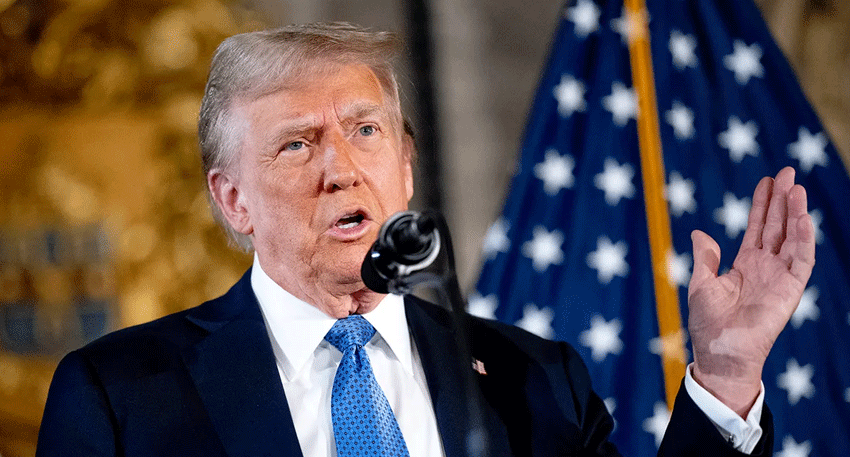
Trump repeats warning over Iran’s nuclear ambitions
US President Donald Trump has again said Iran must not be allowed to obtain a nuclear weapon, arguing that such a development could create serious risks across the Middle East.
Speaking in an interview with Fox News, Trump defended US military action against Iran and said Tehran could have attacked Israel or other countries if it had developed nuclear weapons.
“You cannot let them have a nuclear weapon, and they won’t have a nuclear weapon,” Trump said.
The president described nuclear weapons as capable of causing destruction on an unprecedented scale. He also questioned whether those opposing US action would accept Iran possessing such a weapon.
“A nuclear weapon is massive destruction,” Trump said.
Trump argued that Iran would potentially use a nuclear weapon against Israel if it had the capability. He further warned that the consequences could extend beyond Israel and the Middle East.
“If I weren't president, Israel would be gone. There would be no Israel, and there would probably be no Middle East,” Trump said.
He also suggested that the United States and European countries could eventually face threats if Iran acquired a nuclear weapon.
“That means that if they would have had a nuclear weapon, they would have fired it,” he said.
.@POTUS: "Iran is the number one leading state sponsor of terror... They cannot have a nuclear weapon." pic.twitter.com/XmfAxTcFvT
— Rapid Response 47 (@RapidResponse47) August 31, 2026
Trump defends military and economic pressure
Trump also defended the wider US campaign against Tehran, including military action and economic measures.
“We are doing a great job,” Trump said, while describing the financial pressure placed on Iran as particularly severe.
“The financial hits that we're giving them, we're hitting them very hard. Nobody's ever been hit like this,” he added.
Trump called Iran a “failing nation” and said Washington would continue its campaign until it achieved what he described as victory.
“And they're a failing nation right now. And at the right point, we'll either win, or they'll do something,” he said.
The US president also claimed that Iran’s military capabilities had suffered major damage during the conflict.
“Their navy is gone, their air force is gone, their leaders are gone,” Trump said, while also claiming that Iranian air-defence systems had been destroyed.
He described Iranians as “tough people” and “smart people” but also called them “very evil”.
Trump additionally claimed that Iranian security forces had killed large numbers of protesters. Those claims were presented by Trump during the interview and were not independently established in the supplied report.
Tensions spread across the Gulf region
Trump said he was surprised when Iran began targeting or threatening several Gulf countries during the conflict.
He referred to Saudi Arabia, Qatar, the United Arab Emirates, Bahrain and Kuwait, saying the attacks changed how some regional countries viewed Tehran.
“Everybody was shocked. I was surprised,” Trump said.
He argued that Iran’s actions had reduced the regional support it previously enjoyed.
“I thought it was a very good thing because they lost all of the support that they had,” he said.
The comments come as the wider confrontation has increasingly involved the Strait of Hormuz, one of the world’s most important energy routes.
The waterway is especially important because large volumes of oil and liquefied natural gas shipments traditionally pass through it.
US strikes launchers on Iran’s Larak Island
The latest comments came after US forces struck two Iranian rocket launchers on Larak Island, according to an American official.
Larak Island lies near the northern end of the Strait of Hormuz, making the location strategically important to the current confrontation.
The official said Iranian Revolutionary Guard forces had been seen preparing to launch rockets carrying sea mines into the waterway.
US Central Command described the action as “limited, precise” and said the Iranian forces represented an “imminent threat” to the strategic route.
The attack was reportedly the first known US strike against Iran since late July.
The development has increased concerns about further military escalation around the Strait of Hormuz.
Any major disruption in the waterway could affect international shipping and energy markets because of its importance to global oil supplies.
Iran vows retaliation after US attack
Iran’s Islamic Revolutionary Guard Corps condemned the Larak Island strike and threatened retaliation against the United States.
The IRGC said the attack would bring “vengeance upon criminals” and promised consequences for what it described as American aggression.
IRGC spokesman and public relations chief Hossein Mohebbi called the strike a “grave blunder”.
“This action was a strategic and fatal error by the Trump regime in the course of the economic war,” Mohebbi said.
“The enemy will pay the consequences of this miscalculation in both the economic and military arenas,” he added.
The warnings raised fresh concerns that the exchange between Washington and Tehran could move into another stage of escalation.
Iran launches missiles toward US bases
Following the Larak Island strike, Iran launched ballistic missiles toward two US military bases in Jordan, according to Iranian media and the Revolutionary Guards.
Jordan’s armed forces said its air-defence systems intercepted eight missiles that entered the country’s airspace.
A Fox News reporter, citing a US source, also reported that Iranian missiles had targeted American forces in Jordan.
The latest exchange has added another layer to the already tense situation across the region.
The Strait of Hormuz remains a major concern because threats involving mines, military vessels and commercial shipping could quickly affect international energy supplies.
Trump has repeatedly claimed that the United States has control over the waterway and that mines have been cleared.
Iran’s Revolutionary Guards have disputed US claims and continued warning that American actions could face consequences.
Also Read:Putin and Xi gather in Kyrgyzstan as SCO summit draws attention
Washington increases economic pressure on Tehran
The military developments are also taking place alongside a new US economic pressure campaign.
US Treasury Secretary Scott Bessent announced the initiative on August 24, describing it as “Operation Economic Outcast”.
The campaign aims to restrict Iran’s access to international financial networks and reduce revenue sources available to the Iranian government.
The US has increasingly used sanctions and financial restrictions as part of its broader strategy toward Tehran.
The measures include secondary sanctions against financial institutions and companies accused of helping Iran access international funds.
Trump has rejected claims that Washington is losing its campaign against Iran.
He said the United States was “absolutely winning easily” and maintained that his administration would continue applying pressure.
Trump also criticises US allies
During the interview, Trump also criticised some American allies over their defence contributions and support for US military operations.
He referred to US spending on NATO and South Korea and complained that some allies had declined to provide assistance when Washington requested it.
“We cannot continue to support those who do not stand with us,” Trump said.
The comments reflect Trump’s broader criticism of allies over defence spending and burden-sharing.
They also come at a time when the United States is facing growing military and diplomatic challenges in the Middle East.


