

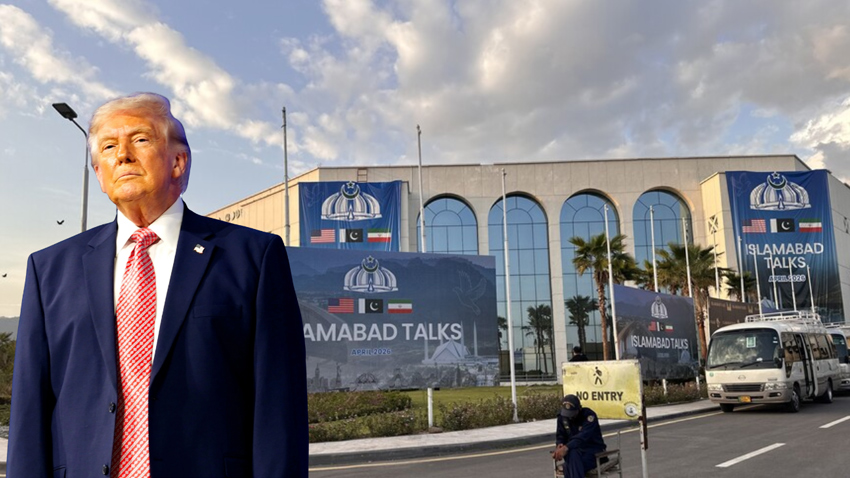
The United States President Donald Trump has confirmed that American representatives will travel to Islamabad for a second round of talks with Iran, raising hopes for progress in the ongoing Middle East crisis.
“My representatives are going to Islamabad, Pakistan, they will be there tomorrow evening, for negotiations,” Trump said in a post. His statement signals that diplomatic efforts are still active despite recent tensions.
However, the situation remains complicated. Trump accused Iran of violating the ceasefire by firing shots near the Strait of Hormuz, claiming some attacks targeted foreign vessels. He also called Iran’s move to close the strait “strange”, saying it was already affected by a US blockade.
Also Read: Islamabad on high alert as security tightened for US-Iran talks
The US president warned that Iran must accept what he called a “very fair and reasonable deal”. He added that failure to agree could lead to severe consequences, including attacks on key infrastructure.
On the other side, Iran strongly rejected US pressure. President Masoud Pezeshkian questioned why Iran should be denied its nuclear rights, saying the country is not seeking war but acting in self-defense.
Iranian officials also made it clear that the Strait of Hormuz will remain closed unless the United States removes its naval blockade. This condition has become one of the biggest obstacles in the talks.
Parliament Speaker Mohammad Bagher Ghalibaf said negotiations have made some progress but are still far from a final agreement. He noted that both sides have “red lines”, and key issues remain unresolved.
At the same time, Iran’s military claimed it has strengthened its missile and drone capabilities during the ceasefire, showing that tensions on the ground are still high.
The conflict has also affected global trade. The Strait of Hormuz, a key route for oil shipments, remains unstable, with reports of ships facing gunfire and delays. Hundreds of vessels are still waiting for safe passage.
Also Read: Iran shuts Strait of Hormuz again amid US blockade
Meanwhile, countries like Turkiye have expressed hope that the ceasefire will be extended to avoid further war. Yet, incidents in Lebanon and continued military actions show that peace remains fragile.
Despite all challenges, both sides appear willing to keep talking. Islamabad is once again at the center of global diplomacy, as the world watches whether these talks can finally bring a breakthrough.


