

Mark Carney declares Canada 'at war' with US over trade tensions
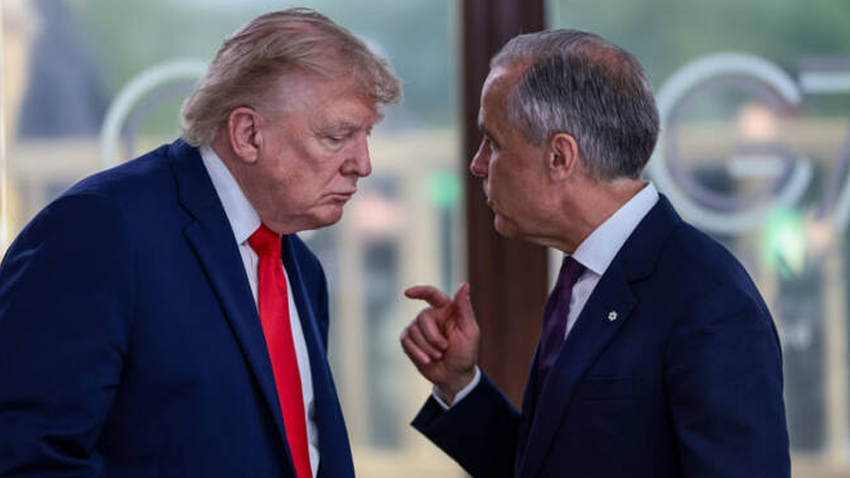
Carney said President Donald Trump “miscalculated” by escalating tariffs and demanding what Canada viewed as a “bad deal”.
Carney made the remarks after Canada suspended trade talks with Washington. He said the latest US demands had become unacceptable as the two sides approached a midnight deadline.
US tariffs put pressure on Canadian exports
The collapse of negotiations is expected to bring a new round of US tariffs covering about $20bn worth of Canadian exports. These measures would come on top of existing US duties on Canadian steel, aluminium, lumber and vehicles.
“You’re at war when you’re attacked, and we got attacked,” Carney told reporters in Ottawa. He said Canada was prepared to withstand economic pressure rather than accept terms it considered unfair.
Carney rejects US demands
Carney said Canada had made several concessions during the negotiations but believed Washington kept changing its demands. “We cannot accept what they’ve offered and we will not give what they’ve asked,” he said.
The Canadian prime minister said Ottawa had negotiated “in good faith” and had tried to address US concerns linked to fentanyl, tariffs and other trade issues. He also criticised new US demands affecting Canada’s auto industry, saying they “would make production more uneconomic over time”.
Carney said Washington had also sought “exclusive access” to Canada’s critical minerals. He described the issue as a new red line and said Canada would not accept restrictions that could affect its ability to negotiate trade agreements with other countries.
Washington and Ottawa give different accounts
US officials rejected Canada’s account of how the talks broke down and denied that disagreements between US trade officials had caused the collapse. One US official said there was “no daylight between Lutnick and Greer” and argued that Canada had made last-minute demands.
Carney, however, suggested that differences among US negotiators may have contributed to the breakdown. When asked whether Commerce Secretary Howard Lutnick was responsible, Carney replied: “It’s a question for the US administration.”
What happens next?
Carney said Canada could remove some retaliatory tariffs on strategic sectors if the US “substantially lowered” its tariffs on Canadian companies. He also said Canada could encourage provinces to return US alcohol to store shelves as part of a fair agreement.
The dispute now leaves both countries facing greater economic uncertainty and renewed pressure on businesses. The biggest question is whether the new tariffs will push Washington and Ottawa back to negotiations or make the trade conflict even harder to resolve.
The dispute shows how quickly trade negotiations can change when both sides have different priorities. Canada appears ready to accept some economic pain rather than agree to terms it considers too costly.
For the US, the focus appears to remain on tariffs, market access and reducing trade barriers. The coming weeks will show whether economic pressure creates room for a new agreement or leads to a longer trade confrontation.
Also read: 12 die as wrong-side driving trend puts social media under scrutiny
Also read: 22,000 Pakistanis deported from Gulf countries over visa and other violations


