

Iran FM condemns US strikes in call with Field Marshal Asim Munir
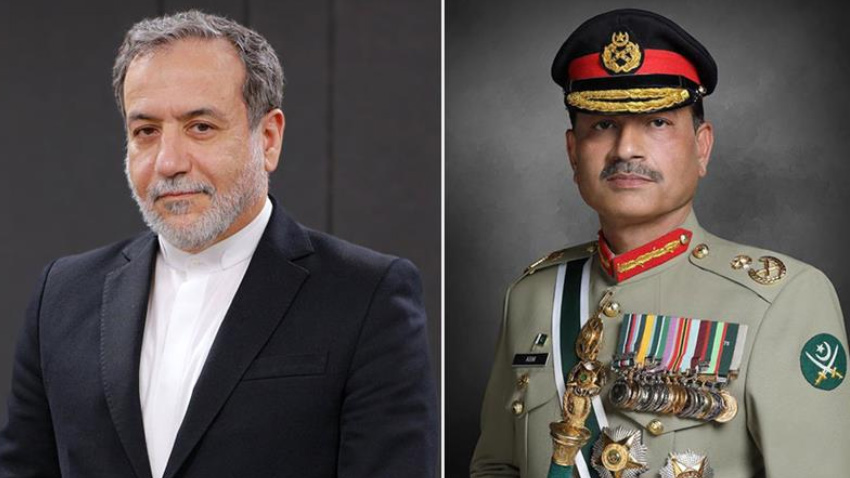
Iranian Foreign Minister Abbas Araghchi held a telephone conversation with Pakistan’s Chief of Defence Forces and Chief of Army Staff, Field Marshal Syed Asim Munir, to discuss the latest regional developments, according to an official statement issued by Iran. During the call, Araghchi strongly condemned the recent US military strikes on Iran and warned against any further escalation in the region.
According to Iran’s official news agency, the foreign minister described the US attacks as a violation of the United Nations Charter and the Islamabad Memorandum of Understanding. He said Iran would firmly resist any future aggression and take all necessary measures to safeguard its sovereignty, territorial integrity, and national security.
Araghchi said that if the United States failed to honour the Islamabad Memorandum of Understanding, it would reflect Washington’s continued policy of confrontation and military escalation. He added that Iran would not compromise on defending its sovereignty, territorial integrity or national security under any circumstances.
The Iranian foreign minister also warned against further US military “adventurism” in the region, saying Tehran remained prepared to respond to any future aggression. The conversation came as tensions between Iran and the United States continued to rise following recent military exchanges.
According to Iranian officials, the country’s armed forces launched attacks on US military infrastructure in Gulf states after American strikes targeted Iran’s southern coastal and eastern provinces. The latest developments have increased pressure on a ceasefire that has remained in place for nearly three weeks.
Iran’s Revolutionary Guards Navy claimed that the US attacks, along with Washington’s role in redirecting shipping through the Strait of Hormuz, had disrupted efforts to restore normal maritime traffic through the strategic waterway.
The Guards said vessel movements through the Strait of Hormuz had recovered to around 50 percent of pre-conflict levels over the past two weeks. They added that ships are currently permitted to pass only through routes designated by Iranian authorities.
Also Read: Punjab starts 24/7 toll-free helpline for women’s protection
The Revolutionary Guards also warned that any further US military intervention would receive what they described as a “crushing response.”
Meanwhile, the US military said its latest strikes were aimed at keeping the Strait of Hormuz open after accusing Iranian forces of attacking three commercial tankers in the area. The operation took place just hours after US President Donald Trump said he believed the temporary ceasefire with Iran had effectively ended.
Although Iran has not claimed responsibility for the reported attacks on commercial vessels, analysts say Tehran has previously used pressure on regional shipping during periods of heightened diplomatic and military tensions.
The renewed conflict has also affected global energy markets. Oil prices, which had risen over concerns about shipping disruptions and possible supply shortages, eased as investors assessed whether the latest escalation would remain limited or lead to a wider conflict.
Iranian state media reported that US strikes carried out on July 8 and 9 killed 14 people and injured 78 others across five provinces. The Fars News Agency also reported that one of the strikes damaged a railway bridge used for trade with Russia and China.