

Govt delegation to meet Jamaat-e-Islami today to end Lahore sit-in
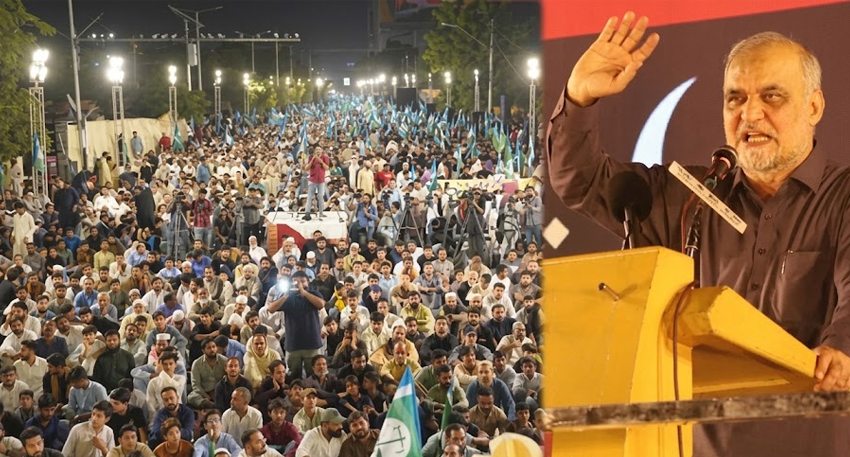
Government opens talks
Government representatives are expected to meet Jamaat-e-Islami leaders in Lahore to discuss ways to end the ongoing protest.
According to sources, Rana Sanaullah and Ahsan Iqbal had contacted Jamaat-e-Islami Deputy Emir Liaquat Baloch before deciding to begin formal negotiations.
The three-member government committee is expected to include Rana Sanaullah, Ahsan Iqbal and Khawaja Saad Rafique.
The meeting is planned at Mansoora, where the government team will discuss the demands behind the Jamaat-e-Islami sit-in.
Party asked for time
Sources said the party has requested 24 hours to respond to the proposed talks.
The government has also offered to hold negotiations in Lahore, Karachi, Islamabad or any other location agreed by both sides.
Officials hope that direct talks can reduce tensions and help find a solution to the dispute.
The government’s move comes as the petroleum levy protest continues over demands for lower fuel prices.
Protest over fuel prices
Jamaat-e-Islami has been holding demonstrations and sit-ins across the country since August 14.
The party is demanding the removal of the petroleum levy and a significant reduction in petrol prices.
Hafiz Naeem ur Rehman has repeatedly criticised the cost of petroleum products, saying expensive fuel is placing additional pressure on ordinary people, traders and businesses.
The party leader has called the campaign a peaceful political movement.
Read Also: Petrol and diesel prices rise in Pakistan amid oil market volatility
Nationwide strike planned
Hafiz Naeem ur Rehman announced that Jamaat-e-Islami would hold a nationwide strike on September 3.
While speaking at the Lahore protest, he urged young people, traders and the public to support the strike.
He said the party would approach traders and try to build wider support for the campaign.
The proposed strike is expected to become another major step in the petroleum levy protest if negotiations do not produce an agreement.
More protest options
The Jamaat-e-Islami leadership has warned that the campaign could expand if the government does not accept its demands.
Hafiz Naeem ur Rehman said the party would consider other democratic options, including a long march and wheel-jam protests.
The leadership has stressed that the movement will remain peaceful and that public participation will determine its strength.
The Jamaat-e-Islami sit-in has therefore become an important political issue as both sides prepare for negotiations.
Read Also: Punjab garbage collection tax force proposed to target 4.7m properties
What happens next?
The upcoming meeting could determine whether the protests are scaled back or continue.
If the government and Jamaat-e-Islami reach common ground, the petroleum levy protest could begin to lose momentum.
However, failure to reach an agreement could lead to a wider campaign.
The government’s talks with the party are therefore being closely watched as the September 3 strike approaches.


