

Emergency and governor’s rule imposed in KP as president nods federal cabinet decision
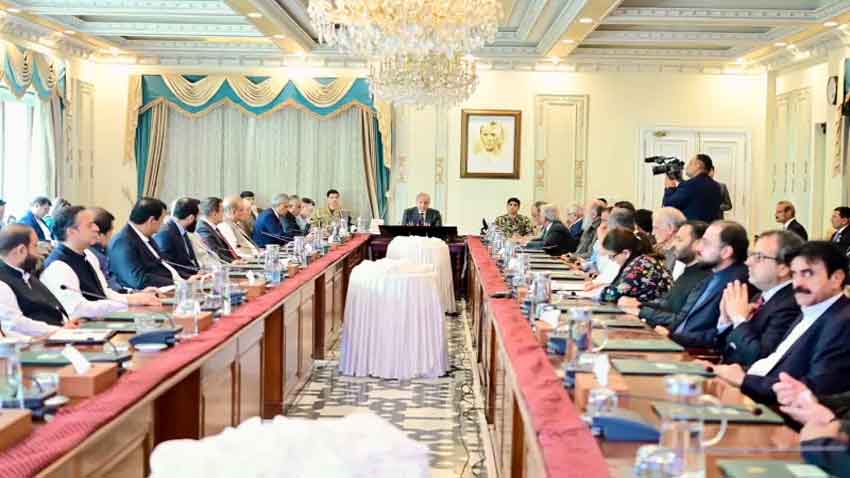
The decision was taken during an emergency meeting of the federal cabinet chaired by Prime Minister Shehbaz Sharif. The President House said the measures were approved under Articles 232 and 234 of the Constitution, which deal with emergency powers and governor’s rule.
Internet disruptions and heightened security in Peshawar
Internet disruptions were reported in parts of Peshawar following the announcement, while mobile networks and data services were reportedly slowed or suspended in selected areas of some cities. However, sources in the telecommunications sector said there was no province-wide shutdown of mobile data or internet services.
Police deployment was also increased in Peshawar, with containers placed along certain routes to strengthen security. The reported restrictions and security measures came as political tensions continued to rise between the federal government and the Pakistan Tehreek-e-Insaf (PTI)-led KP government.
Federal cabinet cites concerns over counterterrorism efforts
The federal cabinet reviewed the security situation in KP and expressed concern over what it described as the “provincial government’s deliberate disengagement from the fight against terrorism”. Cabinet members said the seriousness of the situation required the prime minister to advise the president to use his constitutional powers to impose emergency measures.
The emergency decision followed a meeting between Prime Minister Shehbaz Sharif and President Zardari a day earlier, during which they discussed the country’s overall security situation. The federal government has repeatedly criticised the KP government’s counterterrorism efforts and its position on negotiations with the Afghan Taliban.
PTI claims chief minister taken into custody
KP Information Minister Shafi Jan claimed that Chief Minister Sohail Afridi had been taken into custody shortly after the emergency decision was announced. Jan had been accompanying Afridi during the PTI’s long march, and Dawn reported that it had contacted police for a response to the claim.
The PTI and the federal government have been at odds over security policy, military operations and the provincial government’s role in decisions concerning KP. The PTI says it has been excluded from important security decisions, while the Centre has rejected that claim as “completely wrong” and “misleading”.
Constitutional provisions and KP’s opposition to military operations
Article 232 of the Constitution allows the president to declare an emergency if Pakistan’s security is threatened by war, external aggression or internal disturbances beyond a provincial government’s ability to control. However, the constitutional provision states that an emergency based on internal disturbances beyond provincial control requires a resolution from the provincial assembly concerned.
The KP Assembly has previously opposed military operations without consultation with the provincial government. In July 2024, it passed a resolution calling for consultation before any new operation, and in December 2024, lawmakers unanimously opposed a possible operation in parts of Khyber and Bannu.
The provincial government has also called for negotiations with Afghanistan and consultation on Afghan policy. A grand jirga attended by Governor Faisal Karim Kundi and other political representatives later demanded that the federal government prioritise talks with Kabul and involve KP in decisions affecting the province.
The imposition of emergency measures in KP marks a major development in the ongoing dispute between the federal government and the PTI-led provincial administration. The key questions are how the measures will affect provincial governance and whether they will improve security.
The disagreement over military operations and negotiations with the Afghan Taliban remains a major source of tension. The constitutional requirements surrounding emergency powers are also important, particularly the provision concerning approval by the provincial assembly for an emergency based on internal disturbances.
The situation could further deepen political divisions if both sides fail to reach an agreement on security policy. Its impact will depend on the legal basis for the measures, their implementation and the response of the provincial government and assembly.
Also read: Section 144 imposed in Rawalpindi and Murree for 30 days
Also read: Pakistan to install smart scanners at major airports


