

Key points of PCA’s Indus Waters Treaty verdict against India
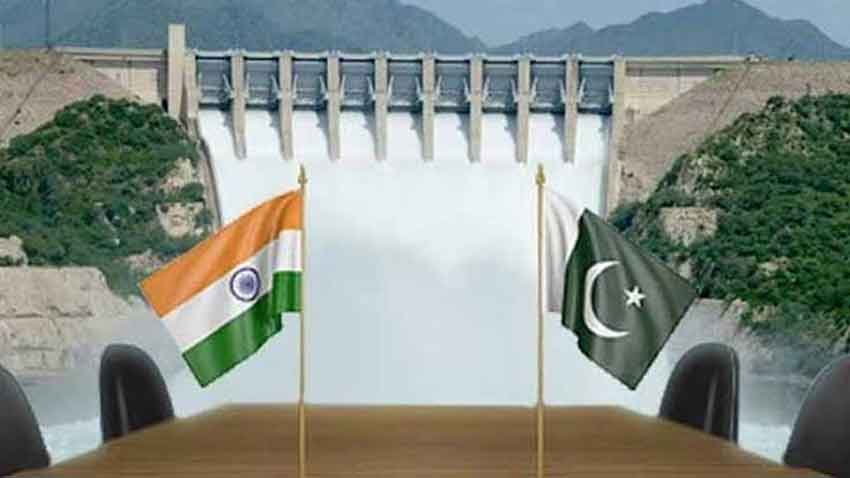
The Hague-based Permanent Court of Arbitration (PCA) unanimously ruled that India must continue following its obligations under the Indus Waters Treaty.
The court also ordered India to stop concreting certain parts of the Ratle dam wall and power intake structure above specified levels until 90 days after a neutral expert issues a final decision.
The Ratle and Kishenganga hydropower projects are also being reviewed by a World Bank-appointed neutral expert. The expert is expected to give a final decision in July 2027 on whether the projects comply with the treaty.
In short, the ruling keeps the Indus Waters Treaty active while placing temporary restrictions on the Ratle project.
The following are the key points of the PCA verdict against India:
1. IWT remains fully in force
The Permanent Court of Arbitration (PCA) ruled that the Indus Waters Treaty remains fully valid and binding on both India and Pakistan.
2. India cannot suspend the treaty alone
The court found that India had no legal basis to unilaterally suspend, terminate or place the IWT in “abeyance”.
3. India must follow its treaty obligations
The PCA said India must continue observing its obligations under the IWT, including rules governing the design and operation of hydropower projects on the western rivers.
4. India’s arguments were rejected
The court examined the reasons given by India for suspending the treaty but found that none of them justified suspension or termination.
5. Sovereignty argument not accepted
The PCA rejected the argument that a state can unilaterally suspend a treaty simply on the basis of sovereignty.
6. Terrorism claim did not justify suspension
The court found that the IWT does not regulate terrorism or the use of force and said India’s terrorism allegations did not establish a material breach of the treaty by Pakistan.
7. Pakistan was not required to renegotiate
The PCA found that the IWT did not require Pakistan to enter negotiations to modify the treaty. It also noted that Pakistan had been willing to discuss possible treaty modifications.
8. Armed conflict was not a valid reason
The court said the IWT was designed to remain operational even during an armed conflict and found that there was no such conflict at present that could justify suspension.
9. Ratle hydropower project faces restrictions
The PCA ordered measures preventing India from concreting parts of the Ratle hydropower project above specified levels until 90 days after the neutral expert issues a final decision.
10. India’s other arguments also failed
The court rejected arguments based on demographic changes, clean-energy needs, dam technology, terrorism and climate change, finding that the legal conditions for a fundamental change of circumstances had not been met.
11. Kishenganga and Ratle remain under review
The PCA noted that both projects are also being examined by a World Bank-appointed neutral expert, whose final decision is expected in July 2027.
12. India rejected the verdict
India said it does not recognise the PCA proceedings and “categorically” rejected the ruling, arguing that the court has no jurisdiction over India’s sovereign decisions.
What the verdict means
The main point is that the PCA has rejected India’s attempt to put the IWT on hold and has reaffirmed that the treaty continues to operate. The ruling also places temporary restrictions on construction at the Ratle project while the separate neutral-expert process continues.
Also read: Big blow to India as global court suspends hydropower project in held Kashmir
Also read: PakID app: NADRA makes taxpayer biometric verification easier


