

Punjab Class 9 results 2026 show growing education gap
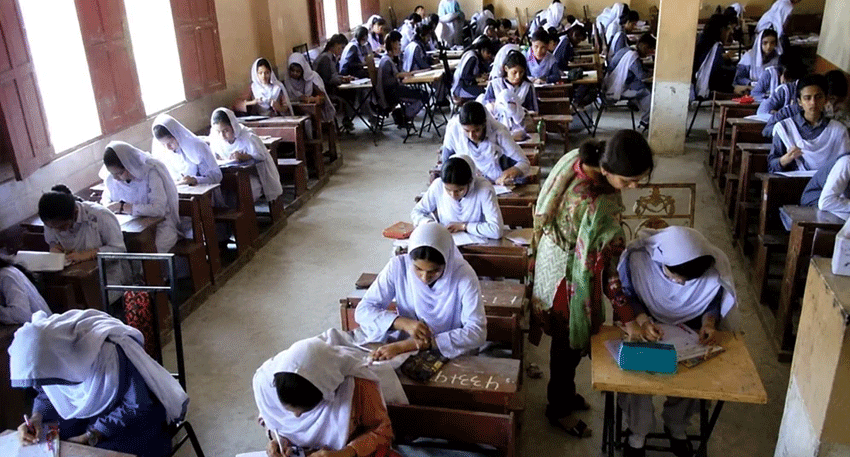
The results show that thousands of students across the province were unable to clear their ninth-grade examinations. They have also brought the difference between government and private schools into sharper focus.
Bahawalpur emerged as the weakest performer among the boards covered in the results, while Multan recorded the highest success rate at 52.11%.
The figures from Sargodha, Dera Ghazi Khan, Gujranwala and Lahore also remained concerning, with large numbers of students failing to reach the passing standard.
Bahawalpur students face the toughest results
Bahawalpur Board recorded the lowest pass rate, with only 38.46% of students successfully completing the Class 9 examination.
As many as 105,601 candidates appeared, but only 40,611 were declared successful. This means more than 60,000 students could not pass the examination.
The performance of government schools was especially weak. Their students achieved a pass rate of just 32.29%, compared with 58.48% for students studying in private institutions.
The board’s overall performance has also declined compared with previous years. The pass rate is reported to have fallen by around 6 percentage points over the past two years.
The difference between the two education sectors is one of the clearest findings from the results. It raises questions about teaching standards, learning facilities and academic support available to students.
Sargodha result shows a clear gender difference
The Sargodha Board recorded a 42.61% overall success rate. Out of 107,782 students who took the examination, 45,925 managed to pass.
Female candidates performed better than male candidates among regular students. The pass rate for regular girls stood at 50.98%, while regular boys recorded 37.31%.
The difference was also visible among private candidates. Private female students achieved a 44.46% pass rate, compared with 26.39% for private male students.
Overall, the figures show that student performance varied significantly according to gender and school category. However, the reasons behind these differences require further examination.
Several boards remain below the 50% mark
Dera Ghazi Khan Board reported a 48.18% success rate. The board said 106,001 candidates appeared, with 51,081 students declared successful.
Gujranwala also remained below the halfway mark. Of the 249,352 candidates who appeared, 115,966 passed, giving the board an overall success rate of 46.51%.
The figures from both boards mean more than half of the students who appeared were unsuccessful. This places them among several Punjab boards facing similar academic challenges.
Faisalabad performed slightly better, recording a 51.21% success rate. The board said 196,656 students appeared, while 48.79% could not pass.
The Faisalabad figures still show that almost one out of every two candidates failed. This makes the overall provincial picture more concerning despite differences between individual boards.
Multan leads, but the result is still modest
Multan Board recorded the strongest overall performance among the boards mentioned, with a 52.11% pass rate.
A total of 140,675 candidates appeared, while 73,301 students were declared successful. Despite leading the group, the board’s result means almost half of the candidates still failed.
The science group produced better results than the arts group. Science students achieved a 54.85% success rate, with 65,931 candidates passing out of 120,213.
The arts group had a much weaker performance. Only 5,132 of 14,795 candidates passed, giving the group a success rate of 34.69%.
The large difference between the two groups suggests that students may be facing different academic challenges depending on their subjects and educational background.
Also Read: KP approves free electric scooters for female students, working women
Lahore results highlight the school-sector divide
The Lahore Board results provide another clear example of the gap between government and private education.
Overall, 280,676 students appeared for the examination, while 130,543 were declared successful. This puts the overall pass rate at around 46%.
Government schools recorded a pass rate of only 39%, while private schools achieved a much higher rate of 70%.
The gender gap was also significant within government schools. Around 72% of boys and 52% of girls were reported to have failed the examination.
The figures do not by themselves explain why the difference exists. However, they highlight an area that education officials may need to examine more closely.
Why the Class 9 results are important
Class 9 is an important academic stage for students because it forms part of their secondary education and prepares them for the next phase of their studies.
A low pass rate at this level can create difficulties for students as they move toward higher secondary education. It can also place additional pressure on families and schools to provide academic support.
The latest results show that the problem is not limited to one education board. Different regions recorded different levels of performance, but several boards struggled to cross the 50% mark.
The situation in government schools is particularly notable. The strong difference between government and private school results in Bahawalpur and Lahore suggests that education authorities may need to study school-level factors more closely.
What could improve student performance?
The results point toward the need for stronger academic monitoring rather than focusing only on examination outcomes.
Schools could identify weak subjects earlier and provide additional classes to students who are falling behind. Teacher training and better access to learning materials could also help improve classroom performance.
Parents can also play a role by monitoring attendance and encouraging regular study instead of relying heavily on last-minute examination preparation.
For education authorities, detailed analysis of subject-wise results could provide a clearer picture of where students are struggling. This would make it easier to design targeted measures instead of using the same approach across all districts.


