

Mohsin Naqvi meets Iranian leaders to revive stalled MoU talks
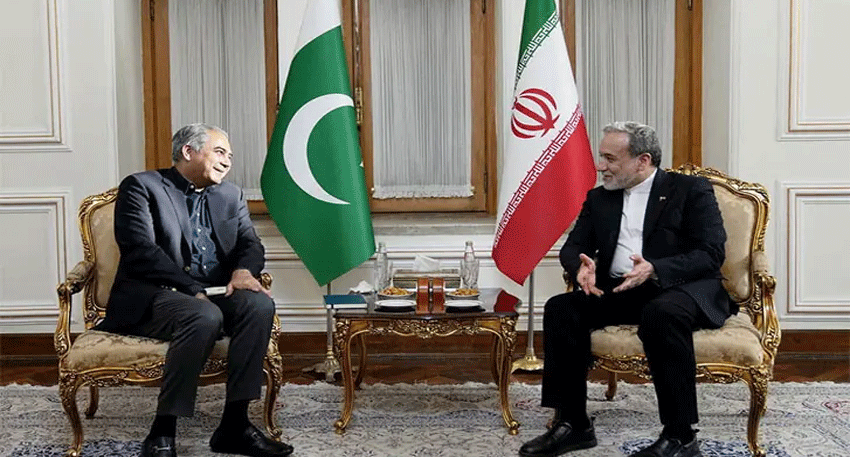
Pakistan’s interior minister arrived in Tehran and held talks with senior Iranian officials as Islamabad tries to keep its diplomatic channel active.
The visit focused mainly on the Islamabad Memorandum of Understanding (MoU), which was reached earlier as part of efforts to reduce tensions between Iran and the US.
A diplomatic source said Naqvi’s visit was intended to follow up on the agreement and explore ways to restart the wider mediation process.
Pakistan seeks to revive diplomatic channel
Naqvi was received by Iranian Interior Minister Eskandar Momeni after arriving in Tehran. He later met Araghchi, with further discussions between the two interior ministers also expected.
Pakistan’s mediation efforts had slowed after Oman took a leading role in talks involving Iran and arrangements for safe navigation through the Strait of Hormuz.
However, recent progress in Iran-Oman discussions has created a possible opening for Islamabad to revive its broader diplomatic initiative.
Defence Minister Khawaja Asif also said that Iran and the United States appeared to be moving closer to an understanding.
“Things are shaping up again in favour of a peace arrangement or a deal. The signals over the last three days are that we are close to some sort of an arrangement,” he told Bloomberg.
Pakistan had earlier invited Araghchi and Iranian parliament speaker Bagher Ghalibaf to visit Islamabad. Iranian officials said the visit would take place “at an appropriate time”.
Naqvi’s trip therefore allows Islamabad to continue diplomatic engagement without waiting for the Iranian officials to travel to Pakistan.
Iran-Pakistan ties remain central
During his meeting with President Pezeshkian, Naqvi described Pakistan-Iran relations as “strong, long-standing and unbreakable”.
He also conveyed Islamabad’s “serious determination and will” to strengthen cooperation with Tehran and expand bilateral ties.
Pezeshkian said stronger relations between the two neighbouring countries would serve their national interests. He also linked closer cooperation to regional stability and security.
The emphasis on bilateral relations comes shortly after Pakistan signed a trilateral defence agreement with Saudi Arabia and Turkiye.
Islamabad has repeatedly said the defence agreement is defensive and is not aimed at any particular country.
Deputy Prime Minister and Foreign Minister Ishaq Dar also recently spoke with Araghchi and explained the objectives of the agreement. Pakistan said the pact was intended to strengthen strategic cooperation and support regional peace and security.
Pakistan’s Interior Minister Mohsin Naqvi has held talks with Iranian FM Abbas Araghchi in Tehran amid mediation efforts to end the US-Israeli war on Iran and reopen the Strait of Hormuz. pic.twitter.com/EPujsxGqXU
— Al Jazeera English (@AJEnglish) August 11, 2026
Strait of Hormuz remains a key issue
The future of the Strait of Hormuz remains one of the biggest challenges surrounding the stalled Islamabad MoU.
Iran and Oman have been discussing a possible arrangement for safe passage through the strategic waterway. Their talks include a proposed shipping route and procedures for managing navigation.
However, Tehran has made clear that a technical arrangement with Oman would not automatically mean the full reopening of the strait.
Iran maintains that the United States must first address what Tehran considers violations of the Islamabad MoU.
A diplomatic source said Iran still considers the MoU the main framework for resolving the wider dispute. Tehran wants the agreement implemented as originally signed rather than replaced through a new interpretation.
Iran is also seeking clear evidence that Washington is willing to return to its commitments. Iranian officials want concrete and verifiable assurances instead of verbal promises before moving toward the next stage.
Also Read: Why Trump‘s secret flight to Turkiye hid him from Iran danger
Trump criticises Iranian negotiators
Meanwhile, US President Donald Trump criticised Iran’s negotiating team while discussing the possibility of future talks.
Trump described Iranian negotiators as “devious” and “dishonest” and accused them of agreeing to positions before later denying them publicly.
“They’re very devious negotiators because they’ll agree to something, then they’ll go out and tell the press that they never agreed to it. They’re very dishonest people,” he said.
Trump also spoke about Iran’s difficult economic situation and said Washington could continue applying pressure.
He argued that the United States could maintain economic pressure rather than immediately pursue another approach.
His comments underline the difficult environment surrounding efforts to revive negotiations between Washington and Tehran.
.@POTUS on Iran: "They're very devious negotiators because they'll agree to something, then they'll go out and tell the press that they never agreed to it. They're very dishonest people." pic.twitter.com/zxf9B4lbM9
— Rapid Response 47 (@RapidResponse47) August 11, 2026