The ongoing Iran war has prompted the IRGC to close the Strait of Hormuz, warning that no oil shipments will pass while the conflict with the US-Israeli coalition continues. Experts fear a major oil transit disruption, sending global oil prices sharply higher.
The Islamic Revolutionary Guard Corps (IRGC) announced that any vessel linked to the United States, Israel, or their allies will be considered a legitimate target.
This warning comes as the closure of the Strait of Hormuz halts roughly one-fifth of the world’s oil supply, creating uncertainty across global energy markets.
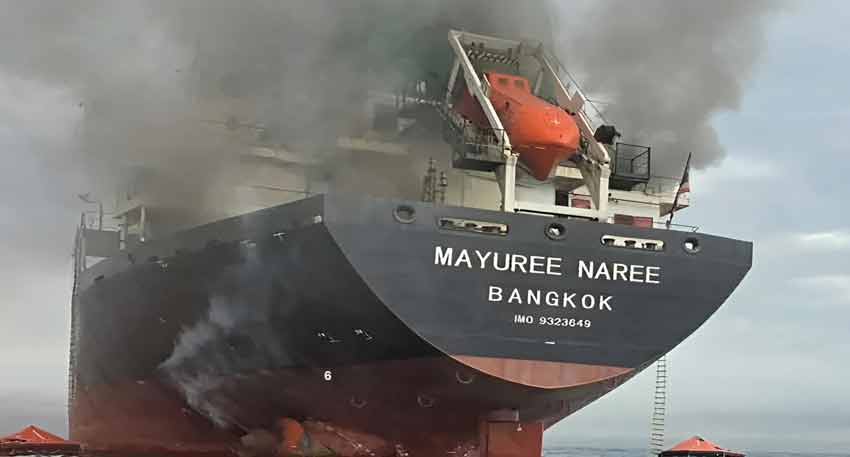
Smoke was reported rising from a Thai-flagged bulk carrier, Mayuree Naree, which was attacked about 18 kilometers north of Oman.
Three other merchant ships have also been hit near the waterway, heightening fears of a wider maritime crisis. Analysts warn that the oil transit disruption could last weeks if tensions continue.
Also Read: Trump administration briefs US war on Iran cost hits $11.3bn in first six days
US President Donald Trump encouraged shipping companies to continue using the strait, claiming the passage is safe despite the attacks.
Meanwhile, global leaders, including G7 nations and the European Union, have released oil from emergency reserves totaling 400 million barrels to stabilize global oil prices temporarily.
The conflict, part of the broader US-Israeli conflict with Iran, has caused Iran to fire missiles and drones at neighboring countries hosting US assets.
Energy experts warn that as long as the Strait of Hormuz remains closed, oil shipments will be restricted, and prices could surge to record highs.
Also Read: Iran sets three conditions to end war with US and Israel
The International Energy Agency emphasized that while emergency oil reserves provide temporary relief, the most important solution is reopening the strait.
“A return to stable flows of oil and gas is critical,” said IEA Executive Director Fatih Birol, underlining the link between regional security and global oil prices.
The closure and attacks have also prompted humanitarian concerns. UN officials are appealing for safe passage for aid shipments, as vital supplies risk being blocked by the ongoing blockade and escalating conflict.