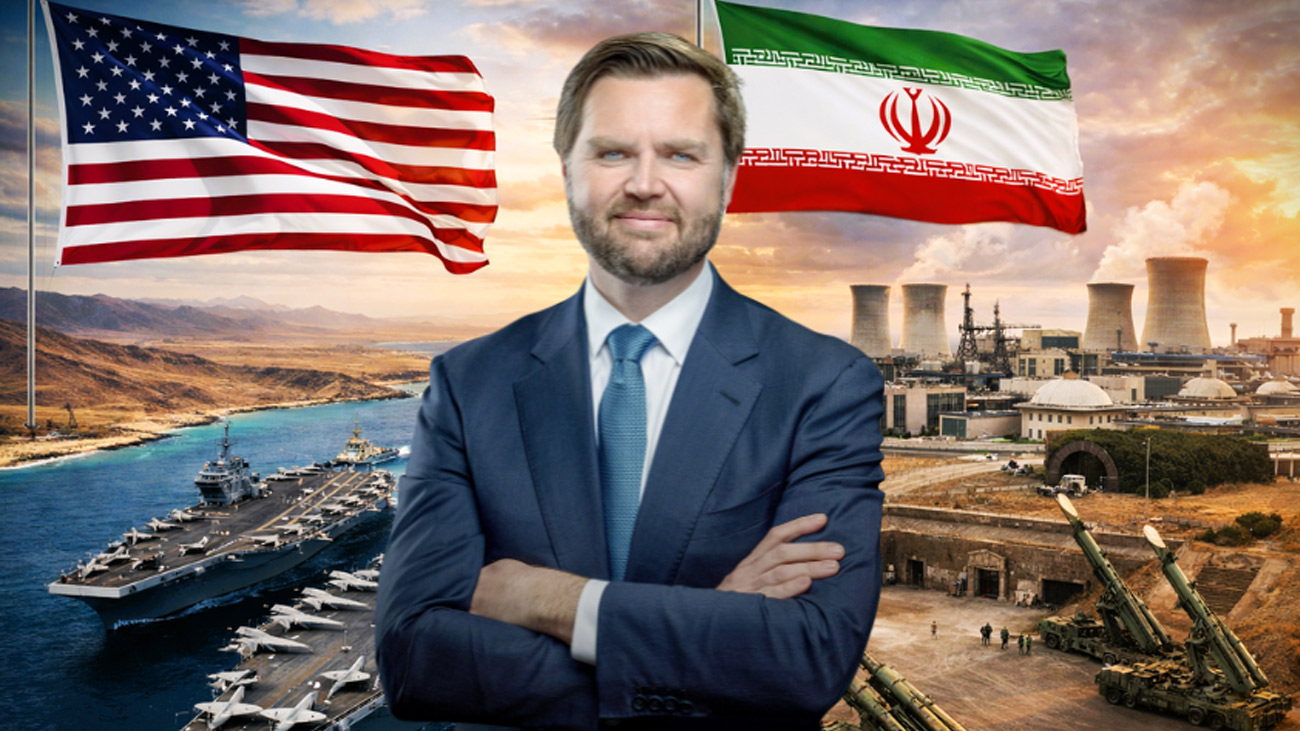
US Vice President JD Vance has arrived in Pakistan to lead Washington’s diplomatic efforts aimed at strengthening the recent ceasefire between the United States and Iran.
The mission comes directly from US President Donald Trump, who has tasked Vance with turning the fragile truce into a long-term peace agreement.
The talks in Islamabad are being seen as one of the most important moments of his political career. Vance had earlier maintained a relatively low profile during the Middle East conflict.
However, the new negotiations place him at the center of international diplomacy. Experts say the talks will test his leadership and negotiation skills.
Aaron Wolf Mannes, a lecturer at the University of Maryland School of Public Policy, said such a role for a US vice president is unusual. “This is high risk, high reward,” Mannes said while explaining that vice presidents rarely lead such high-level negotiations.
Also Read: US vice president and Iranian leaders to arrive in Pakistan for crucial talks
Before entering politics, Vance served as a US Marine and built his political image as someone who opposed foreign military interventions. He often argued that the United States should avoid getting involved in long and costly wars abroad.
That stance created challenges after the Trump administration launched military action against Iran earlier this year. Reports say that during internal discussions before the conflict, Vance warned that a war could create regional chaos and divide Trump’s political supporters.
Despite those concerns, he later publicly supported the administration’s decisions once the conflict began. When the ceasefire was announced, Vance was visiting Hungary where he was supporting Prime Minister Viktor Orban’s political campaign.
Now he finds himself playing a central diplomatic role. “My key role was, I sat on the phone a lot,” Vance told reporters before departing for Pakistan. “I answered a lot of phone calls. I made a lot of phone calls. And again, I’m happy about where we are.”
White House Press Secretary Karoline Leavitt said Vance had played a “very significant and a key role in this since the very beginning”.
During the visit, Vance is expected to be joined by senior US officials including special envoy Steve Witkoff and presidential adviser Jared Kushner. The delegation aims to hold discussions with Iranian representatives in Islamabad to explore a broader peace agreement.
Some analysts believe Iran may view Vance as a more acceptable negotiation partner because he had earlier expressed doubts about the war. During recent tensions involving Israeli strikes in Lebanon, Vance also appeared to adopt a more moderate tone.
Also Read: Islamabad hosts US-Iran talks as global attention turns to Pakistan
He suggested there might have been a “legitimate misunderstanding” regarding the ceasefire terms. However, Vance has also shown a more confrontational side in the past.
He previously criticized US support for Ukraine and was involved in a heated Oval Office exchange with Ukrainian President Volodymyr Zelensky in 2025. For Vance, the Islamabad negotiations also carry political significance.
He is widely considered a potential candidate for the US presidential election in 2028. Success in these talks could strengthen his political reputation.
However, failure could raise questions about his leadership abilities. Analysts also note that US Secretary of State Marco Rubio could emerge as a rival candidate in future Republican politics. Experts say the outcome of the talks could shape not only Middle East diplomacy but also the future political careers of key American leaders.