Total solar eclipse to occur after three years – Everything you need to know
Millions of people are expected to witness one of nature’s rarest and most fascinating events.
Rare celestial event returns
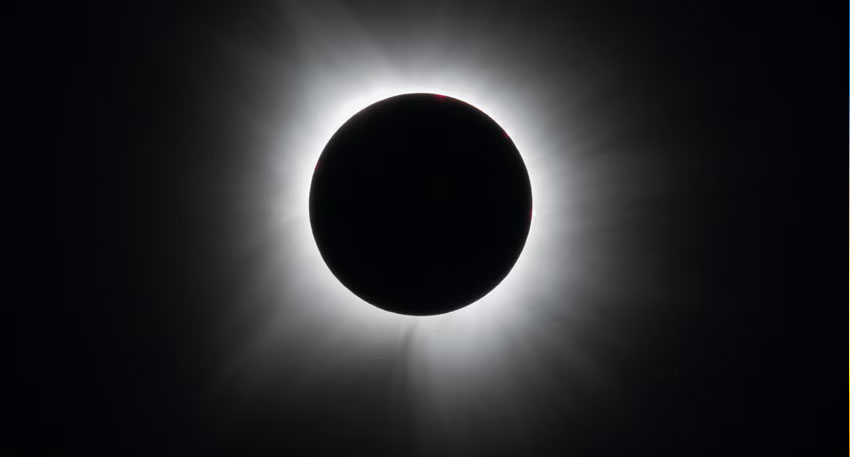
A total solar eclipse will take place on August 12, creating a dramatic spectacle across parts of the world. The event will mark the first total solar eclipse since 2024.
According to NASA, a total solar eclipse occurs when the moon moves between the Earth and the sun. This alignment blocks the sun’s light completely for people located within a narrow path.
Where the eclipse will be visible
People in parts of Greenland, Iceland, northern Spain and northeastern Portugal will experience totality. During this phase, the sun will disappear completely for a short time and the sky will briefly turn dark.
A partial solar eclipse will also be visible across several regions of Europe, Africa and North America. In these areas, only part of the sun will be covered by the moon.
A historic moment for Spain
The upcoming eclipse is especially significant for Spain. It will be the first total solar eclipse visible from mainland Spain since 1905.
Experts say it is also the first of three solar eclipses that Spain will witness between now and 2028. This makes the country a major destination for eclipse enthusiasts.
What scientists are saying
European Space Agency science director Carole Mundell described total solar eclipses as unique events that inspire wonder and curiosity. She said such moments bring people together and strengthen humanity’s desire to explore and understand the universe.
Scientists believe these events help increase public interest in astronomy. They also provide valuable opportunities for scientific observations.
How long will totality last?
The eclipse path will stretch about 8,300 kilometers across different regions. It will begin near the Arctic coastline before moving over Greenland, Iceland, Portugal and northern Spain.
People in Greenland may witness slightly more than two minutes of totality. Observers in northern Spain are expected to see around 20 seconds of complete darkness if weather conditions remain favorable.
Weather could play a key role
Clear skies are essential for viewing any eclipse. Experts warn that clouds and poor weather remain the biggest obstacles for eclipse watchers.
As sunset approaches, the eclipse will pass over Spain’s Galicia region and the Balearic Islands. This timing could make the transition from daylight to darkness even more dramatic.
Livestream for global viewers
Those living outside the eclipse path will still be able to watch the event. The European Space Agency plans to broadcast a live stream from Spain’s Astrophysical Observatory of Javalambre.
This will allow millions of people worldwide to follow the eclipse in real time. Online coverage is expected to attract large audiences.
When is the next total solar eclipse?
The next total solar eclipse is expected on August 2, 2027. It will be visible from southern Spain, North Africa, Saudi Arabia and Yemen.
The United States will not see another total solar eclipse until March 30, 2033, and even then it will only be visible from Alaska. A wider eclipse crossing multiple US states is expected on August 22, 2044, while a coast-to-coast eclipse is forecast for August 12, 2045.
Total solar eclipses are rare and unforgettable events. They often attract scientists, travelers and sky watchers from around the world.
Also read: PMD warns of intense heatwave with soaring temperatures this week
The August eclipse is especially important because it will be visible in parts of Europe that have waited many years for such a sight. Weather conditions may decide how memorable the experience becomes for many observers.