

NASA warns of Super El Niño threat as Pacific warming signals intensify
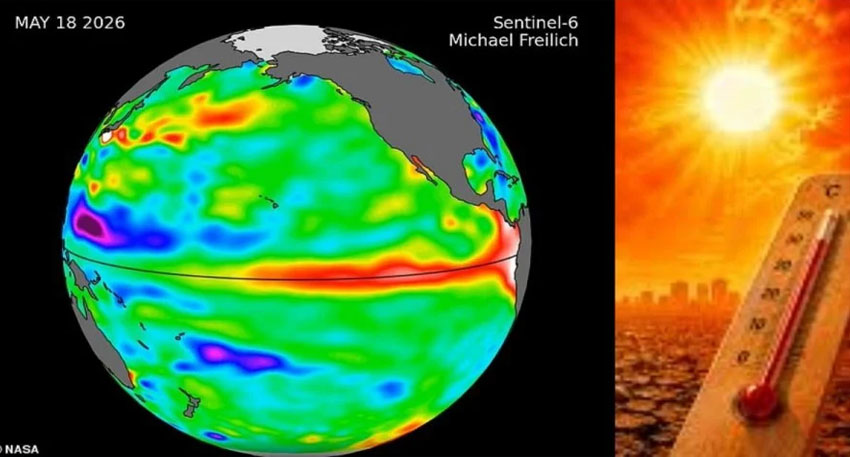
The National Aeronautics and Space Administration (NASA) has issued a warning about a potential Super El Niño event, as new satellite data indicates unusual warming patterns across the Pacific Ocean.
The warning comes after NASA analysed data from the Sentinel-6 Michael Freilich satellite, launched in 2020, which has been monitoring ocean levels and temperatures across the globe. The data revealed large areas of warm water moving eastward across the Pacific Ocean, a key indicator of an approaching El Niño event.
Rising risk of Super El Niño
NASA scientists say the current oceanic conditions suggest a strong possibility that a Super El Niño could develop later this year. According to researchers, waves of warmer-than-normal water typically appear in the Pacific months before an El Niño event fully forms.
NASA noted that several such warming waves have already been observed in 2026 satellite readings, raising concerns among climate experts.
What is Super El Niño?
A Super El Niño is an intensified form of the natural El Niño climate pattern, where a massive pool of unusually warm water develops in the Pacific Ocean. This acts like a “heat engine,” pushing global temperatures higher and triggering extreme weather events worldwide, including floods, droughts, heatwaves, and storms.
Scientists warn that while El Niño cycles are natural and have occurred for thousands of years, stronger events can significantly disrupt global weather systems and food production.
Global temperature concerns
Experts have also warned that a strong El Niño could contribute to a global temperature rise of around 3°C, increasing the risk of widespread heat stress and climate-related disasters across multiple regions.
NASA researcher Josh Willis of the Jet Propulsion Laboratory said the current warming trend began later than previous major El Niño events in 1997 and 2015, but is now “beginning to catch up,” suggesting intensification may still be ahead.
Preparedness advice
Authorities recommend monitoring official weather updates, preparing emergency supplies, and taking precautions against floods, droughts, and extreme heat. Farmers and rural communities are advised to protect crops, livestock, and water resources as climate conditions evolve.


