

Rare Total Solar Eclipse 2026: Will your country witness it?
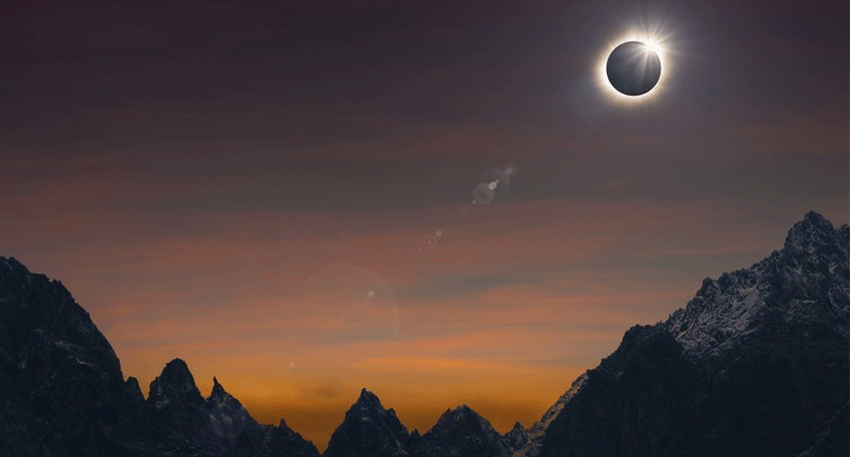
A rare and exciting Total Solar Eclipse 2026 is set to take place on August 12, marking the first complete solar eclipse in more than two years. Skywatchers and astronomy lovers around the world are eagerly waiting for the event, which is expected to create breathtaking views as the Moon completely blocks the Sun in several regions.
According to international reports, people living in parts of Greenland, Iceland, northern Spain and northeastern Portugal will experience the total solar eclipse. During the peak of the event, daylight will briefly disappear, creating conditions similar to nighttime for a few minutes.
Scientists explain that a total solar eclipse happens when the Moon moves directly between the Earth and the Sun, completely covering the Sun’s disk. This rare alignment allows people standing within the eclipse’s path to witness one of nature’s most spectacular events.
Where the total solar eclipse will be visible
The total phase of the eclipse will mainly pass through Greenland, Iceland, northern Spain and northeastern Portugal. Residents in these areas will have the best opportunity to witness complete darkness during daytime.
Meanwhile, a partial solar eclipse will be visible across many parts of Europe, northern Africa and North America. In these regions, the Moon will cover only part of the Sun, creating a different but still impressive astronomical event.
Space experts say weather conditions will play an important role in visibility. Clear skies will provide the best viewing experience, while clouds may reduce visibility in some locations.
Why this eclipse is special
This will be the first total solar eclipse in more than two years, making it one of the most anticipated space events of 2026. Astronomers say total solar eclipses are uncommon because the Moon’s shadow covers only a narrow path on Earth.
During the eclipse, observers may notice a sudden drop in temperature, changing light conditions and unusual animal behavior. Birds often return to their nests, while other animals may react as if night has arrived.
NASA advises people never to look directly at the Sun without certified eclipse glasses or proper solar viewing equipment. Watching the eclipse without eye protection can permanently damage eyesight.
Experts also recommend using approved solar filters on cameras, telescopes and binoculars to safely capture the event.
Next total solar eclipse already scheduled
Astronomy experts have confirmed that the next total solar eclipse will occur on August 2, 2027. That eclipse is expected to be visible across parts of Europe, North Africa and the Middle East, attracting millions of visitors and astronomy enthusiasts.
Solar eclipses continue to inspire scientific research while also attracting people who simply want to experience one of nature’s rarest and most beautiful phenomena.
The August 12 eclipse is expected to become one of the biggest astronomical highlights of 2026, especially for those living along the path of totality.
Also Read: Monsoon floods kill more than 100 as landslides force thousands to flee
What causes a solar eclipse?
A solar eclipse occurs when the Moon passes directly between the Earth and the Sun. This alignment blocks sunlight either completely or partially, depending on where a person is located.
Although solar eclipses happen several times around the world over the years, total solar eclipses are visible only from limited areas. That makes each event unique and highly anticipated by scientists and the general public alike.