

Germany highlights EU Blue Card opportunity for skilled professionals
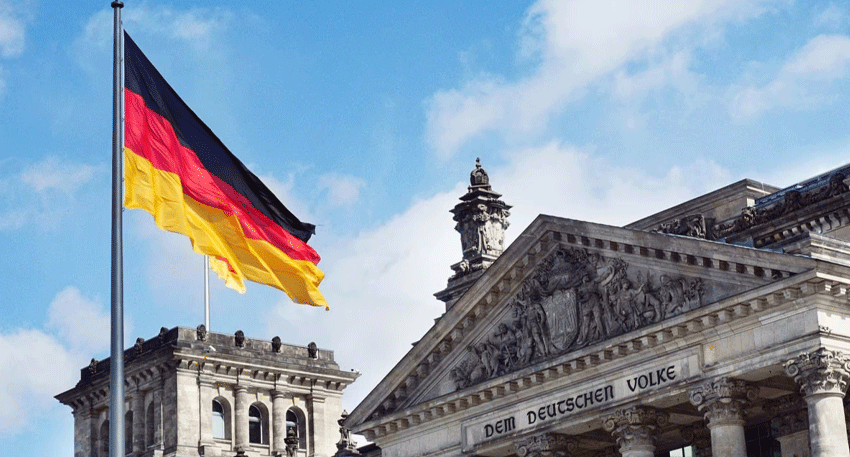
Germany has highlighted an opportunity for highly skilled professionals from outside the European Union through the EU Blue Card programme.
The special residence permit is designed to attract qualified workers who can contribute to Germany’s economy and fill skilled labour shortages.
Information shared by Pakistan’s Bureau of Emigration & Overseas Employment (BEOE) explains that eligible professionals may use the programme to obtain legal employment and residence in Germany.
However, applicants must meet specific immigration conditions before they can receive approval.
These conditions generally include recognised educational qualifications, a suitable employment contract and the required salary level.
The programme may be particularly useful for professionals working in fields where Germany needs trained and experienced workers.
What is the Germany EU Blue Card?
The EU Blue Card was introduced under the European Union’s framework to attract highly qualified professionals from countries outside the bloc.
It allows eligible foreign workers to live and work in Germany under a special residence arrangement.
Applicants normally need a recognised university degree or an equivalent professional qualification. They must also secure employment that meets the applicable requirements set by German authorities.
The job offer must generally match the applicant’s qualifications and fulfil the required salary conditions.
The exact requirements can vary depending on the profession, qualification and applicable immigration rules.
For Pakistani professionals, the opportunity could offer a legal pathway to Germany for work, especially for those with recognised higher education and relevant professional experience.
Still, applicants should carefully check the latest rules before preparing their documents or paying any application-related costs.
Who can apply for the programme?
Applicants must generally hold a valid passport or another recognised travel document.
They may also need to show that they have enough financial resources to support themselves during their stay in Germany.
In addition, applicants must meet Germany’s immigration, employment and residence requirements.
A recognised qualification is one of the most important parts of the application process.
Applicants may qualify through a German university degree, a German vocational qualification or a foreign qualification that has been fully recognised or considered equivalent to German standards.
The qualification must be relevant to the professional position for which the applicant is applying.
Applicants should also ensure that their employment contract is genuine, valid and meets the required professional and salary conditions.
Difference between the EU Blue Card and Opportunity Card
The information also refers to two routes linked to Germany’s skilled-worker immigration system.
However, the EU Blue Card and the Opportunity Card are separate immigration pathways and should not be treated as the same programme.
The EU Blue Card is mainly connected to qualified employment and a qualifying job offer.
The Opportunity Card, on the other hand, is designed to allow eligible foreign nationals to enter Germany to search for suitable employment under specific conditions.
The Opportunity Card may be available through a recognised qualification route or a points-based route.
Applicants with a fully recognised qualification may qualify as skilled workers without meeting the separate six-point requirement or providing formal proof of language proficiency.
Even in such cases, German-language knowledge can improve a person’s chances of finding employment and adjusting to life in Germany.
Qualification route for applicants
Under the recognised qualification route, applicants may qualify if they hold a university degree or vocational qualification obtained in Germany.
They may also qualify with a foreign academic or professional qualification that has been fully recognised or is considered equivalent to German standards.
This route may be suitable for applicants who already have strong educational credentials and want to continue their careers in Germany.
Applicants should confirm whether their qualification requires formal recognition before submitting an application.
Recognition procedures can depend on the profession, type of qualification and the German authority responsible for assessment.
Some regulated professions may have additional requirements, including professional licensing or registration.
Also Read:Trump hints at Iran war ending after November vote
Financial requirements for 2026
Applicants must also demonstrate that they can financially support themselves during their stay.
According to the information provided, the minimum financial requirement in 2026 is €1,091 per month.
This amount may generally be shown through a blocked account in Germany.
In some cases, applicants may also provide a formal Declaration of Commitment from an eligible sponsor living in Germany.
Another possible option may involve a confirmed part-time job of up to 20 hours per week, provided the income meets the required financial threshold.
For a one-year stay, the total amount needed in a blocked account may depend on the application period and the instructions issued by the relevant German mission.
Applicants should verify the latest financial figure with the German embassy, consulate or official immigration authority before transferring money or opening a blocked account.
What Pakistani applicants should consider
Pakistani professionals interested in Germany should first review their educational and professional qualifications.
They should also search for jobs that match their training and meet the required employment and salary conditions.
Important documents may include a valid passport, academic certificates, qualification recognition documents, employment contracts and proof of financial resources.
Applicants should ensure that all documents are accurate and, where required, translated or officially verified.
Learning German may also improve employment opportunities, even when it is not formally required under a particular route.
Applicants should rely on official German government sources, German missions and authorised immigration guidance for updated requirements.
Rules, salary thresholds and financial conditions may change, so information from older social media posts or unofficial agents should be treated carefully.


