

China missile test deepens Pacific divide over security plans
China missile test raises fresh concerns
China’s recent ballistic missile test into the Pacific has raised concerns among island nations and exposed growing differences over regional security.
The launch was the first known Chinese ballistic missile test into the Pacific since September 2024. It came only hours after Australia and Fiji signed a major defence agreement.
The timing added to concerns that the Pacific is becoming increasingly caught between the United States and China as both powers expand their military activities.
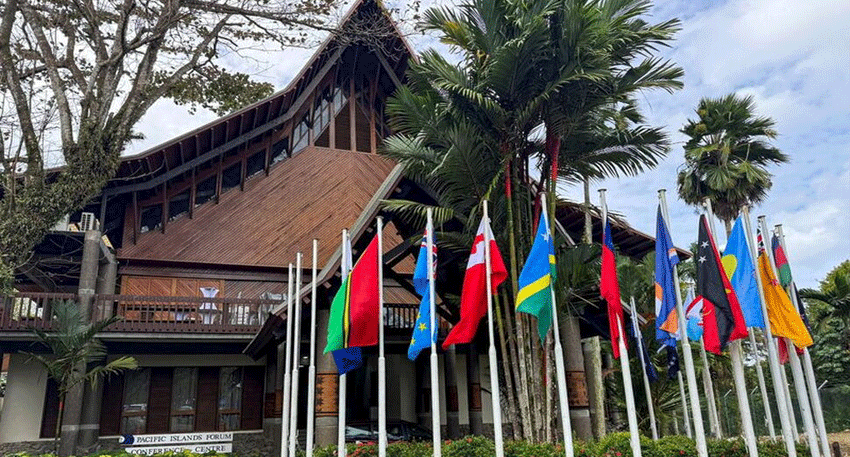
Despite private and public concerns from several leaders, Pacific foreign ministers were unable to agree on a joint statement condemning the missile test.
Papua New Guinea Foreign Minister Justin Tkatchenko described the launch as “totally inappropriate”. He said China remained a close friend and ally of Papua New Guinea but argued that the missile test did not help regional stability.
China had reportedly informed Papua New Guinea about the launch beforehand. However, officials said they were not given details about where the missile would land.
Chinese Foreign Ministry spokesperson Mao Ning said the test had been carried out “safely”. She also urged countries not to “over-interpret” the launch.
Pacific faces growing military pressure
The missile test followed a year of increased military activity across the Pacific. China has expanded naval deployments and conducted live-fire exercises, including activity in areas near Australia and New Zealand.
At the same time, the United States and its allies have increased military exercises around Guam and Hawaii. Warship visits and new defence partnerships have also become more common across the region.
The United States maintains important military facilities and forces in Hawaii, Guam and the Marshall Islands. These activities have added to concerns that Pacific island nations could increasingly become part of major-power competition.
Tuvalu’s permanent foreign secretary Pasuna Tuaga has also raised concerns about the wider militarisation of the region.
He said the issue went beyond China’s missile test and included security arrangements such as AUKUS, the defence partnership between Australia, Britain and the United States.
For Pacific nations, however, security partnerships can also provide practical benefits. These include help with illegal fishing, disaster response, policing, training and access to security equipment.
‘Ocean of Peace’ faces a difficult test
Pacific leaders endorsed the Ocean of Peace Declaration in September 2025. The initiative called for protecting the region and strengthening international peace and security.
The idea was partly designed to ensure that Pacific nations themselves could shape discussions about their security instead of having their priorities decided by larger outside powers.
David Peebles of the Australian National University’s Pacific Security College said Pacific countries had traditionally resisted having their security agendas shaped by competing foreign strategies.
The new defence agreement between Australia and Fiji was also linked to the Ocean of Peace initiative. The pact represents Fiji’s first formal defence alliance.
However, some regional leaders worry that a growing number of bilateral security agreements could produce the opposite result.
Critics say these arrangements may gradually increase military activity and reduce the ability of smaller countries to control how their territory, waters and infrastructure are used.
Solomon Islands Foreign Minister Rick Houenipwela said the regional agenda should remain “conceived by the Pacific, shaped by the Pacific and only by the Pacific.”
Yet the failure to agree on a joint response to China’s missile test showed how difficult that goal can be.
Also Read:Colombia’s strongest quake this century kills more than 100
Pacific nations divided over security choices
Different Pacific countries have different relationships with China, the United States and other major powers.
Kiribati and Nauru, which strengthened ties with Beijing after switching diplomatic recognition from Taiwan, reportedly did not support the wording of a proposed statement about the missile test.
New Zealand Foreign Minister Winston Peters blamed foreign influence for the failure to reach agreement, although he did not identify a specific country.
The disagreement reflects a wider challenge for Pacific island states. Some governments want stronger security cooperation with the United States, while others remain cautious about deeper involvement with major military powers.
Fiji Foreign Minister Sakiasi Ditoka described the situation as a difficult balance.
He said countries wanted “to be free of all these war-making paraphernalia” but also understood that certain security capabilities could help protect them.
Fiji also took part for the first time in the US-led RIMPAC military exercises in the Pacific last month.
Pacific leaders prepare for next meeting
The issue is likely to remain on the regional agenda as Pacific leaders prepare to meet in Palau for the Pacific Islands Forum leaders meeting.
The gathering is expected to provide another opportunity to discuss China’s missile test, regional security and the future of the Ocean of Peace initiative.
The challenge for Pacific governments will be finding a common position while protecting their individual economic and security interests.