

China deploys record ships around Taiwan as pressure rises
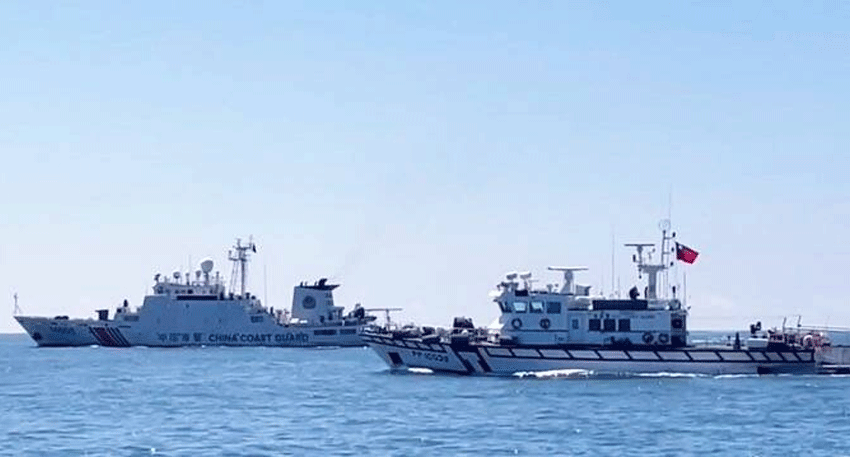
The figure includes coast guard, research and other government ships operating around Taiwan and its nearby islands. Taiwan’s coast guard described the growing activity as an increasingly serious situation.
The latest figures show a sharp rise in Chinese maritime activity around the island. Analysts believe some of the operations could also help China collect information useful for future military planning.
Chinese ship activity reaches record level
According to figures shared by Taiwan’s coast guard, 244 Chinese government vessels were detected around Taiwan’s main island in July. That means nearly eight such ships were seen in the area every day.
The number was much higher than previous months. Taiwan recorded 55 Chinese vessels in June and 30 in May, while 58 were detected during July last year.
The activity has continued into August. During the first 21 days of the month, Taiwan’s coast guard detected 152 Chinese vessels around the island.
About 60 percent of the vessels were Chinese coast guard ships. Research vessels and other government-operated boats accounted for the remaining ships.
The figures do not include Chinese military warships. Taiwan says Chinese naval forces operate around the island almost every day, meaning the total Chinese maritime presence is considerably larger.
Since May, Taiwan’s coast guard has recorded 1,247 Chinese vessels around Taiwan and several of its outer islands. The growing numbers have increased concerns about Beijing’s wider intentions.
Taiwan warns of growing maritime pressure
Taiwan’s coast guard said the situation was becoming increasingly serious because of the rise in Chinese government vessels operating around its waters.
A senior coast guard official said the sharp increase was particularly noticeable in July. The official also argued that Beijing has no legal basis to claim control over waters surrounding Taiwan.
China claims Taiwan as part of its territory, although the Chinese Communist Party has never governed the island. Beijing has repeatedly refused to rule out using force to bring Taiwan under its control.
China also claims rights over waters surrounding Taiwan. Taipei rejects those claims and continues to operate as a self-governing democracy.
Chinese coast guard and research vessels have been used in other disputed areas as well. In the South China Sea, Beijing has frequently deployed government ships to strengthen its claims without directly starting military conflict.
Analysts often describe such activities as “grey zone” tactics. These actions are designed to increase pressure and establish control while remaining below the level of open warfare.
Research vessels raise submarine warfare concerns
Taiwan is particularly concerned about Chinese research vessels because of the information they can collect from the sea. Such data could potentially provide useful details about underwater conditions.
Taiwan’s coast guard has previously said China operates more than 120 oceanographic research vessels. It is currently tracking about 41 vessels that operate in waters around Taiwan.
One vessel, the “Tong Ji”, drew attention after circling Taiwan in May. The vessel reportedly tracked the boundary of Taiwan’s restricted waters and did not immediately follow instructions from the coast guard to leave.
Taiwanese authorities said its activities likely involved “oceanographic sampling and seabed survey operations”. They warned that such work could contribute to China’s “anti-submarine warfare databases”.
This type of information can be important during military operations. Knowledge about seabed conditions, currents and underwater environments can help naval forces detect and track submarines.
The issue has therefore attracted attention beyond Taiwan’s immediate security concerns. Experts say research missions could have both civilian and military value.
Also Read:US religious panel seeks action against RSS chief over rights concerns
Concerns over a possible blockade
China’s increasing presence around Taiwan has also raised concerns about a possible quarantine or blockade in a future crisis.
Taiwan depends heavily on maritime trade for energy, food and other essential supplies. Any major disruption to shipping routes could therefore have serious economic consequences.
Chinese authorities have previously used terms such as “traffic control measures” while conducting activities around the Taiwan Strait. Such actions can create uncertainty for commercial vessels without necessarily amounting to a formal military blockade.
Taiwanese officials have accused Beijing of gradually expanding its presence and testing how far it can push without triggering a major confrontation.
The concern is that repeated operations could slowly establish a new normal around Taiwan. Over time, increased patrols may make Chinese vessels a more regular feature of the waters surrounding the island.


