

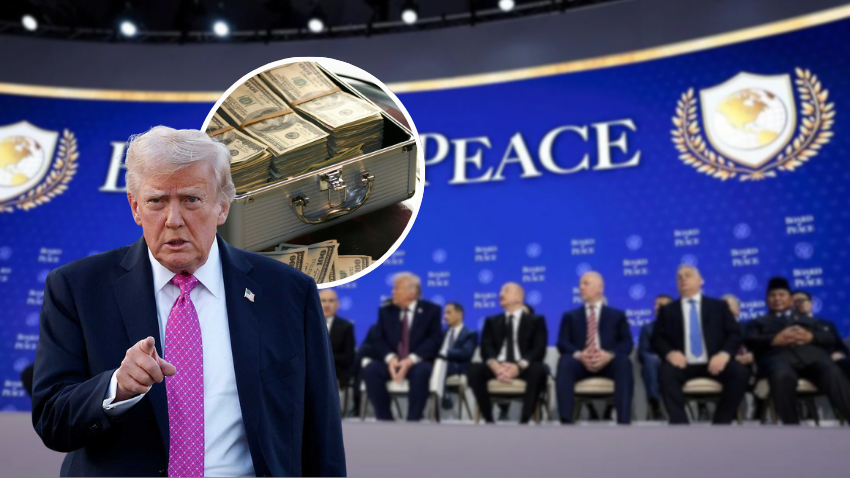
Trump said the official pledge would be confirmed during a February 19 meeting at the Donald J. Trump Institute of Peace in Washington, D.C. According to him, member countries have committed over $5 billion for humanitarian relief and rebuilding efforts in Gaza. Thousands of personnel will also be deployed as part of an International Stabilization Force and local police units to help maintain peace and security.
The Board of Peace was created in January and includes nearly 20 countries. Trump described it as a historic international body and said he was honored to serve as its chairman.
He also stressed that Hamas must follow through on its promise of full and immediate demilitarization. This condition could become one of the most debated parts of the plan.
Must Read: Punjab launches Pak ID App for vehicle biometric verification
Israel officially joined the Board of Peace last week, before Prime Minister Benjamin Netanyahu met Trump at the White House. Earlier, leaders from 17 countries signed the initial charter during a ceremony in Davos, Switzerland. These leaders came from Latin America, Europe, the Middle East, and parts of Asia.
Several other countries were invited to join, including Russia, France, Germany, and China. However, Poland and Italy have said they will not take part.
At the same time, military movements have raised eyebrows. The US has deployed the USS Abraham Lincoln carrier strike group and the USS Michael Murphy as American envoys hold talks with Iranian officials in Oman.
Other US naval ships, including the USS Bulkeley, USS Roosevelt, USS McFaul, and USS Frank E. Petersen Jr., are stationed across key waterways around Iran, from the eastern Mediterranean and Red Sea to the Persian Gulf and Arabian Sea.
Must Read: ‘Are you the devil himself? Jeffrey Epstein asked during an interview
The big question now is whether this $5 billion pledge will truly change conditions in Gaza or remain a political promise. The condition placed on Hamas could create new tensions. Also, the heavy US naval presence in the region shows that diplomacy and military pressure are moving in tandem. The coming weeks may decide whether this plan brings peace or adds more complexity to an already fragile situation.


