

Pezeshkian denies Iran seeks nuclear weapon, blames US for war
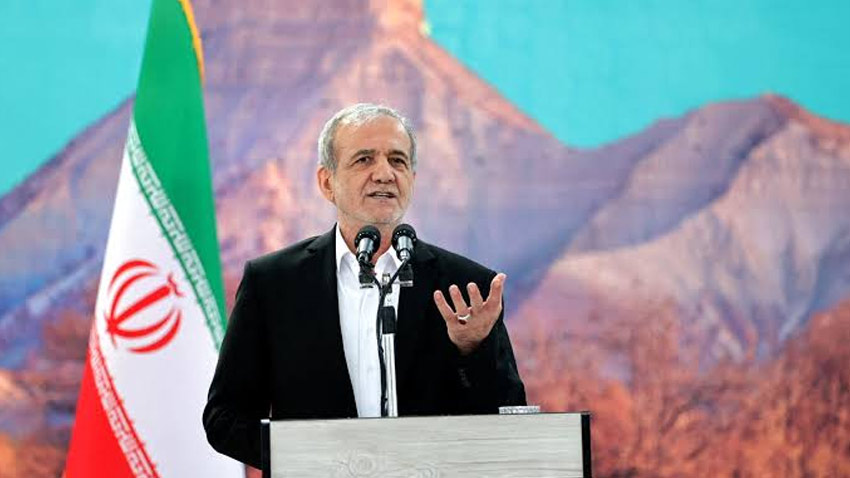
Iranian President Masoud Pezeshkian has rejected claims that Tehran is seeking nuclear weapons, saying Iran is willing to allow international verification of its nuclear programme.
Speaking in an interview with Fox News’ “Special Report”, Pezeshkian was directly asked whether Iran wanted a nuclear bomb.
“Not at all. Not at all. Our martyred, esteemed supreme leader had announced several times that, by religious decree, it is unholy. It is illegal,” he said.
Iran ready to allow nuclear inspections
Pezeshkian said Iran could accept lower enrichment levels and outside verification as part of efforts to reduce tensions over its nuclear programme.
“So, that weapon’s mass destruction. We said we’re willing to dilute them. It’s not a big deal. We are willing to submit ourselves to verification,” he said.
His comments suggest that Tehran is presenting inspections and limits on enrichment as possible areas for negotiations with Washington.
However, major differences remain between the two sides over the scope of Iran’s nuclear activities, sanctions and security issues.
The United States has previously cited concerns over Iran’s nuclear programme as a major reason for military action against Tehran. Operation Epic Fury was launched in February after US-Iran nuclear talks broke down.
Pezeshkian blames Washington for conflict
Pezeshkian also blamed Washington for the continuing war and accused the US of blocking diplomatic efforts.
He said Iran had previously reached an understanding with US President Donald Trump and claimed Tehran was still prepared to move forward with an agreement.
“We have no problems. We did reach an agreement with your president,” Pezeshkian said of Trump, who signed the agreement.
“That agreement was signed, and, based on that, we are willing and still wish to move forward.
“And the framework was agreed upon. We had not closed the Strait of Hormuz; it was open without any legal justification or framework,” he said.
“They attacked us. They assassinated and martyred our esteemed supreme leader, our scientists, our military commanders and government.”
Pezeshkian said the diplomatic process later collapsed because Washington chose military pressure instead of dialogue.
“The problem is that America, instead of conducting dialogue, they descend into the arena by bombing us first, by blocking every pathway. We are ready,” he said.
“This is not the way to conduct yourself on the world stage. They can have free access to see whatever we have, but not to put us under such pressure, under blockades, deny us access.”
Iran says it does not want war
The Iranian president also said Tehran did not seek a conflict with the United States.
“We do not seek to kill Americans, as shown by actions, demonstrable actions. America has sought to kill Iranians,” Pezeshkian said. “What we know is that if we’re attacked, we must defend ourselves.”
Pezeshkian repeated that Iran did not want the war to continue and said Washington had a role in deciding whether the conflict would end.
“We will stand resolutely to defend ourselves. We never sought war. We do not seek war,” he said.
“I deeply believe that humans should not cause the death of another human. But with the instigations conducted by Israel, they have imposed this war on us.
“But we do not wish to continue. It’s America that must choose whether it wants to end this or not.”
Reuters also reported that Pezeshkian said the United States would have to decide when the war ends.
Pezeshkian rejects pressure over sanctions
Pezeshkian said Iran would continue dealing with economic pressure and US sanctions.
“This is something that has been the doing of the United States,” he said. “We will keep resisting. We will find ways, and the life of our country will continue. We will remain.
“Yes, we do have economic issues, certainly. But to remain, we will go through any hardship and endure.”
He also said Iran would not change its position based on the timing of US elections.
“If America thinks that they can keep sanctioning us, we have nothing to do, nor do we consider any type of American elections. If the current American government, within international legal frameworks, wishes to reach an agreement, fine. If not, before the elections or after the elections, what difference does it make for us?”
His remarks came as the US continues to use economic and military pressure against Tehran.
Strait of Hormuz remains a key issue
The Strait of Hormuz was another major issue discussed during the interview. The waterway is a critical route for global energy shipments, making any disruption there a major concern for international markets.
Also Read: Netanyahu defends Israel at UN as dozens of delegates walk out
Pezeshkian referred to the strait while discussing the previous understanding with Washington and said it had remained open under the framework he described. The issue has become increasingly important during the current conflict because tensions involving Iran and the United States have affected shipping and energy security in the region.
Iran denies role in attack on US base
Pezeshkian was also questioned about reports that Iranian forces had used Chinese satellite imagery during a deadly attack on a US military base in Jordan.
The reported attack killed three US service members.
Pezeshkian said he did not have direct knowledge of the alleged use of satellite imagery.
“I’m specifically unaware of these purported images that you talk about,” Pezeshkian said.
“Now, what do militaries do with one another between two countries? It is their own business within their own guidelines.”
He did not provide further details about the reported intelligence or the military operation.
US and Iran remain far apart
The interview highlighted the major differences that continue to separate Washington and Tehran.
Pezeshkian says Iran is willing to discuss nuclear inspections and enrichment limits, while also insisting that Tehran has the right to defend itself. Washington, meanwhile, has continued to pressure Iran over its nuclear programme and broader regional activities.
The two sides have also exchanged accusations over the causes of the current conflict and the failure of diplomatic efforts. Despite those differences, Pezeshkian said Iran remains open to an agreement if it is conducted within what Tehran considers an acceptable legal and diplomatic framework.


