

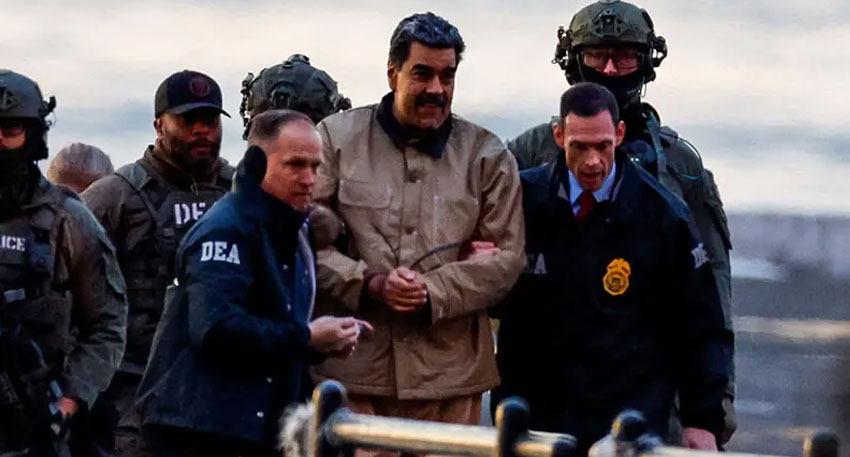
Deposed Venezuelan president Nicolas Maduro arrived at a New York court after being seized in Caracas during a surprise US military operation. The move has stunned Venezuela and sparked intense international debate over Washington’s next steps.
Maduro, aged 63, is facing narcotrafficking charges along with his wife, Cilia Flores. Both were taken from Caracas in a forceful operation involving helicopters, fighter jets and naval support. US commandos carried out the capture late Saturday.
Read more: Who is Nicolás Maduro and why his 12-year rule ended abruptly in Venezuela
On Monday morning, Maduro was escorted to the courthouse by heavily armed officers. He was transported by helicopter and then moved in an armoured vehicle under tight security in New York.
Attention has now shifted to Venezuela’s response. Interim leader Delcy Rodriguez softened her earlier stance and signaled readiness to engage with Washington. “We extend an invitation to the US government to work together on an agenda for cooperation,” the former vice president said.
In Caracas, around 2,000 Maduro supporters rallied, including armed men on motorcycles, waving flags and chanting slogans. Meanwhile, the Venezuelan military said it recognised Rodriguez and urged calm across the country.
No official death toll has been released. Defence Minister Vladimir Padrino Lopez said a “large part” of Maduro’s security team was killed “in cold blood”, along with military personnel and civilians.
Read more: US Vice President JD Vance’s Ohio home targeted, suspect taken into custody
US President Trump claimed the United States was “in charge” of Venezuela. He said Washington needed “total access” to rebuild the country, especially its oil sector. Venezuela holds the world’s largest proven oil reserves, but analysts warn boosting output will be slow and costly.
The UN Security Council is set to hold an emergency meeting at Venezuela’s request as details of the operation continue to emerge.
The sudden capture has changed Venezuela’s political path overnight. Oil interests appear central to US strategy. Regional stability now depends on calm dialogue and clear international steps.


