

New York schools impose one-year AI ban for young students
The decision covers elementary and middle school students across New York City, the largest public school system in the United States. High school students will still be allowed to use artificial intelligence in certain situations.
City officials said the move is intended to give schools time to establish clearer rules around the rapidly growing use of AI in education.
The policy will stop the current use of about 40 AI-powered educational tools in classrooms. However, the restrictions will not apply in the same way to teachers.
Teachers can continue using AI for selected work
Teachers will be allowed to use artificial intelligence for tasks such as lesson planning and scheduling, according to the city.
Officials have therefore drawn a line between student use of AI and its use by educators for administrative or teaching preparation.
The decision comes as schools across the United States continue to work out how artificial intelligence should be used in classrooms.
Some education systems have embraced the technology as a learning aid, while others have introduced restrictions because of concerns about student dependence and the effect on traditional learning skills.
New York City’s decision is notable because of the size of the school system and the number of students affected.
Mamdani stresses importance of human learning
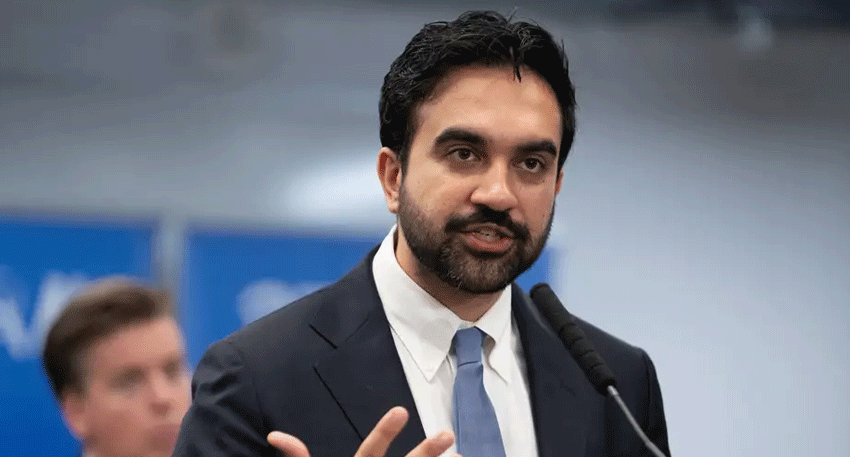
Mayor Zohran Mamdani defended the policy while speaking about the role of teachers and personal interaction in education.
“Children need teachers and human connection in order to learn and grow,” Mamdani said during a press conference.
He said children should develop skills with their classmates, build relationships with teachers and work through difficult problems themselves.
The comments reflect a wider debate about whether students should rely on artificial intelligence when completing schoolwork.
Supporters of tighter restrictions argue that students need opportunities to think independently before using technology that can quickly generate answers.
AI rules remain a major challenge for schools
The latest decision follows earlier efforts by New York City schools to control the use of AI.
After ChatGPT became widely available in 2022, the city’s public schools introduced a temporary restriction on the chatbot. That policy was later removed as officials explored ways to use AI as an educational tool.
The change shows how quickly school policies have evolved alongside the technology.
Instead of treating AI only as a threat, education authorities have increasingly considered ways to use it under controlled conditions.
The latest one-year moratorium suggests officials now want additional time to reassess how these tools should be introduced to younger students.
High school students face fewer restrictions
The new policy does not completely remove artificial intelligence from New York City’s education system.
Students in high school will still be able to use AI in some circumstances. The difference reflects officials’ view that older students may be better prepared to use the technology responsibly.
For younger children, officials appear more concerned about protecting basic learning skills and encouraging direct interaction with teachers and classmates.
The policy also leaves room for educators to continue using AI for selected professional tasks.
This means artificial intelligence will remain present in the school system, but its use will be more limited for younger students.
Also Read: Trump $1 coin goes on sale, but legal questions spark debate
AI companies yet to respond
Major technology companies involved in artificial intelligence did not immediately comment on the New York policy.
Google, Anthropic and Microsoft are among the major companies developing or providing AI tools that are increasingly being used in education.
Schools have been testing such technology for activities including writing assistance, tutoring, research and lesson preparation.
However, questions remain about accuracy, privacy, academic honesty and whether frequent AI use could weaken students’ ability to solve problems independently.
These concerns have encouraged many education authorities to review their existing policies.
A wider debate over AI in classrooms
New York’s decision comes at a time when schools are still trying to find a balance between technology and traditional teaching.
Artificial intelligence can help students access information quickly and support teachers with routine work. At the same time, excessive dependence could make it harder for students to develop writing, reasoning and problem-solving skills.
The one-year pause allows New York City officials to study these issues before deciding whether the restrictions should continue or change.
The experience could also be watched by other school districts considering similar policies.


