

Trump $1 coin goes on sale, but legal questions spark debate
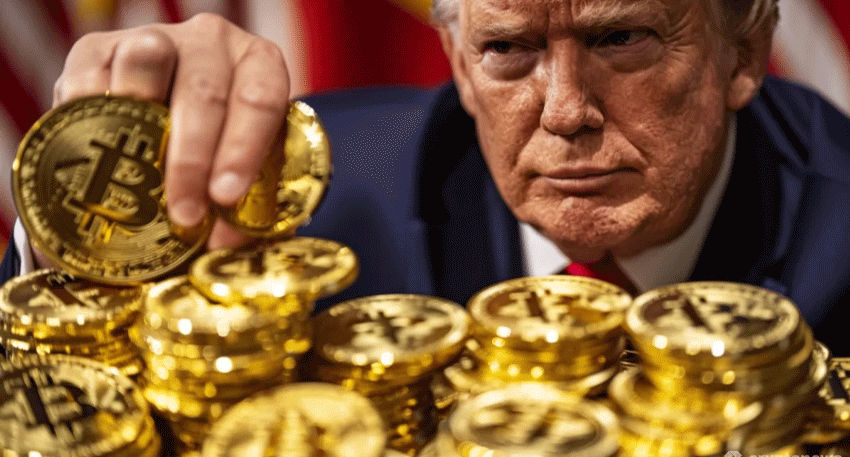
The new $1 coin featuring US President Donald Trump’s likeness is now available from the US Mint, marking an unusual moment in American currency history.
Trump is the first sitting US president in about a century to appear on American currency. The release has quickly attracted attention because US law has traditionally restricted images of living people on currency.
The gold-colored coin was created to celebrate the United States’ 250th anniversary. However, its design has opened a fresh debate about how existing currency laws apply to commemorative coins.
Trump $1 coin features presidential portrait
The US Mint began selling the commemorative coin with Trump’s portrait on the obverse, or “heads” side.
The design includes the words “LIBERTY,” “IN GOD WE TRUST” and “1776 ~ 2026.” The reverse side carries the Great Seal of the United States.
The reverse design shows a bald eagle holding arrows in one claw and an olive branch in the other. It also carries the words “UNITED STATES OF AMERICA” and “ONE DOLLAR.”
A banner held by the eagle contains the traditional phrase “E PLURIBUS UNUM,” meaning “out of many, one.”
The US Mint said the design reflects the country’s history, pride and national heritage as it approaches its major anniversary.
The Mint said the coin was created to “honor 250 years of great American heritage.”
The design was approved by the US Commission of Fine Arts earlier this year. Members of the commission were appointed by Trump.
Trump had earlier called the proposal to put his face on a coin “very unusual,” while also saying he felt honored by the idea.
Coin looks like gold but contains no gold
Although the Trump $1 coin has a golden appearance, it does not contain actual gold.
According to the US Mint, the coin is made mainly from copper. Its composition includes 88.5% copper, with zinc, manganese and nickel making up the remaining portion.
Around 9 million coins are being produced, according to the report. The coins are legal tender, but they are also being marketed as commemorative collectibles.
Collectors and buyers are paying more than the coin’s face value. A roll containing 25 coins costs $61, while a 100-coin bag is priced at $154.50.
This means buyers pay about $2.44 for each coin when purchasing a 25-coin roll, despite each coin having a face value of only $1.
The coins are also available through vending machines at the US Mint store in Washington, DC.
The Mint’s website later indicated that the coin could be ordered but was temporarily out of stock, with more inventory expected.
For the time being, households are limited to two orders.
Special July 4 coins could attract collectors
Some Trump $1 coins contain an additional feature that could make them more interesting to collectors.
The Mint said 250,000 coins were struck on July 4 in Philadelphia. These coins carry a special “July 4th” privy mark showing the date on which they were produced.
The specially marked coins have been mixed randomly into the rolls and bags being sold to customers.
This means buyers cannot know in advance whether their order will contain one of the specially marked coins.
The limited marking could increase interest among collectors who focus on unusual or historically significant currency issues.
Why Trump coin has created legal questions
The biggest controversy surrounding the Trump $1 coin involves federal restrictions on the use of living people’s portraits on American currency.
The United States has maintained a long tradition against placing living individuals on its money. The practice is partly linked to concerns that American currency should not resemble monarchies where rulers traditionally appear on money.
George Washington reportedly rejected an early proposal to place his image on American currency because he believed such a practice was associated with monarchies.
Congress later strengthened restrictions in 1866 by prohibiting the “portrait or likeness” of living people on currency.
However, the legal situation involving coins is more complicated than the rules governing paper money.
The Thayer Amendment of 1866 restricts portraits of living people on US notes. The restriction has not traditionally been interpreted in exactly the same way for coins.
Another law has also become part of the debate.
The Circulating Collectible Coin Redesign Act of 2020 prohibits portraits of living people on the reverse, or “tails” side, of coins. However, it does not clearly prohibit such an image on the obverse, or “heads” side.
Trump’s portrait appears on the obverse of the new $1 coin.
Coolidge coin becomes part of the debate
Treasury Secretary Scott Bessent has defended the use of Trump’s image by referring to a historical example.
A commemorative half-dollar issued in 1926 to mark America’s 150th anniversary featured then-President Calvin Coolidge while he was still in office.
Bessent has cited that example while defending the broader idea of Trump appearing on commemorative currency.
The Trump administration has also considered other currency featuring the president.
A proposal was previously announced for a commemorative $250 bill carrying Trump’s portrait. That plan faces a more direct legal problem because federal law specifically restricts living people from appearing on US paper money.
Trump supporters in Congress have proposed legislation that could create an exception, but the proposal has not moved forward.
Also Read:Trump birthright citizenship order blocked by federal judge
Legal challenge failed to stop the coin
The Trump $1 coin also faced a legal challenge before reaching buyers.
James Rickher, a retired attorney from Portland, filed a lawsuit in March seeking to stop the coin. He argued that the planned currency was unlawful.
A federal judge rejected his request for a temporary order blocking the coin in June.
The judge said Rickher had not shown that he would personally face concrete harm from the coin’s issuance.
However, the ruling did not decide whether the Trump $1 coin itself was legal or illegal.
This distinction leaves the broader legal question open to continued debate.
Some experts remain doubtful about whether the design fully complies with existing restrictions.
Gabriel Mathy, an associate professor of economics at American University who has studied US currency, said he would consider the coin illegal.
He also noted that some US currency laws operate more like long-established norms because enforcement can be complicated.
Trump’s currency plans go beyond the $1 coin
The new coin is part of a wider effort to place Trump’s name or image on prominent American institutions and national symbols.
The administration has pursued moves involving Trump’s name at places including the Kennedy Center and the US Institute of Peace. Those efforts have also faced legal and political disputes.
The Trump $1 coin has therefore become more than a commemorative item for some critics.
Its release has revived questions about presidential imagery, the limits of executive authority and the rules governing American currency.
The coin is also the first Trump currency design to reach production, making it an important development in the administration’s broader branding efforts.
What the Trump $1 coin means for collectors
For collectors, the coin offers several features that could make it historically interesting.
It celebrates the United States’ 250th anniversary and carries the image of a sitting president. Some coins also contain the special “July 4th” marking.
At the same time, its price is considerably higher than its face value.
A roll costs $61 for 25 coins, while a bag of 100 costs $154.50. Buyers are therefore purchasing the historical and collectible value rather than simply paying for $1 of spending power.
The controversy surrounding the coin may also contribute to public interest.


