

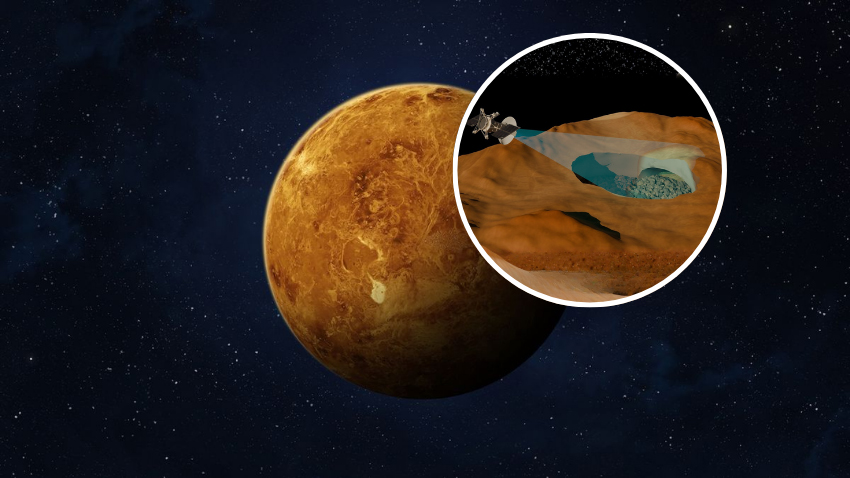
This is the first time such a subsurface structure has been clearly identified on Earth’s so-called ‘evil twin.’ The discovery was made by a research team from the University of Trento. They detected a possible lava tube near the Nux Mons volcano after carefully studying old radar images.
The study was published in the Nature. Researchers reexamined archival radar data collected by NASA during its Magellan mission, which mapped Venus between 1990 and 1992. By looking for signs of surface collapse, they found evidence of a massive underground cavity.
Also Read: Scientists propose $80 billion undersea wall to save Doomsday Glacier
The size of the tunnel is surprising. It is estimated to be about 1 kilometer wide, which is nearly 0.6 miles. This makes it much larger than similar lava tubes found on Earth and even on Mars. Scientists believe the roof of the tunnel is about 490 feet thick, and the inside cavity may be at least 375 meters high.
One of the study’s coauthors, Lorenzo Bruzzone, said this discovery is very important. Venus is known as the most volcanically active planet in our solar system, but its thick and toxic atmosphere has made it difficult to study what lies beneath its surface.
He explained that finding a volcanic cavity helps confirm scientific theories that had existed for many years but were never proven before.
Lava tubes are formed when hot, flowing lava moves under a hardened surface. When the lava drains away, it leaves behind a hollow tunnel. The discovery of such a large structure suggests that Venus could have a vast network of hidden tunnels under its crust.
Also Read: Samsung develops new privacy display technology
This exciting finding opens the door for future missions. NASA is preparing to launch the VERITAS mission, while the European Space Agency will send the EnVision spacecraft. Both missions are planned for 2031 and will use advanced radar systems to study Venus in greater detail and search for more hidden tunnels.
Scientists believe these missions could completely change what we know about Venus and its volcanic past.


