

PTA, Google join hands for stronger child online safety in Pakistan
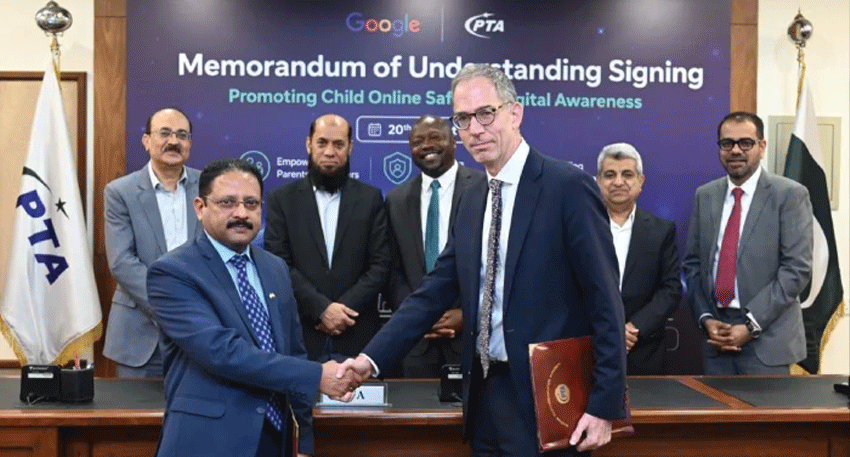
The Pakistan Telecommunication Authority and Google LLC have joined hands to improve online safety for children across the country.
Under the agreement, both organisations will work together on a Child Safety Programme focused on awareness, education and capacity-building.
The programme will target children as well as parents, teachers and caregivers who play an important role in protecting young internet users.
The initiative comes as children spend more time online for education, entertainment and communication.
It aims to help families understand digital risks while teaching children how to use online platforms more safely and responsibly.
PTA and Google plan child safety programme
The new programme will provide parents and teachers with practical tools and guidance for helping children deal with the digital world.
Educational resources will explain common online risks and offer simple ways for adults to guide children while they use digital platforms.
The initiative will also focus on improving digital literacy among children and families.
Both organisations believe that better awareness can help young users make safer decisions while using the internet.
The programme is expected to support a wider effort to promote responsible internet use across Pakistan.
The Pakistan Telecommunication Authority (PTA) and Google LLC today signed a Memorandum of Understanding (MoU) on Child Online Safety, aimed at strengthening awareness, digital safety and responsible use of online platforms among children, parents, teachers and caregivers across… pic.twitter.com/kGoqO428PI
— PTA (@PTAofficialpk) August 20, 2026
Awareness campaign to reach families
PTA and Google plan to develop online safety material in English, Urdu and local languages.
Using different languages is expected to make the information easier to understand for families in different parts of the country.
The organisations will also arrange training programmes at educational institutions.
These sessions will help students, teachers and other relevant people understand online safety and responsible digital behaviour.
A nationwide awareness campaign is also planned to connect millions of families with localised online safety resources and tutorials.
The campaign could give parents easier access to information about how they can support children in their online activities.
Why digital literacy matters
Children are increasingly using smartphones, computers and other connected devices for schoolwork and everyday communication.
This wider access creates new learning opportunities but can also expose young users to online risks.
PTA Chairman Maj. Gen. (R) Hafeez Ur Rehman said cooperation between government institutions, technology companies, educators and families is important for protecting children online.
He described joint efforts to improve child protection on the internet as a pressing need.
According to the PTA chairman, protecting children cannot be the responsibility of one organisation alone.
Families, schools, technology companies and government bodies all have roles to play in creating a safer digital environment.
Also Read: GTA 6 leak claims players could turn virtual cash into real money
PTA highlights importance of digital awareness
PTA Member Khawar Siddique also highlighted the need to improve digital literacy among children and families.
He described digital literacy as an important priority as Pakistan becomes increasingly connected.
Better digital knowledge can help children understand how to use online services responsibly and recognise potential dangers.
For parents and teachers, access to practical guidance can also make it easier to discuss online safety with children.
The new partnership is therefore focused not only on restricting risks but also on giving families the knowledge needed to manage digital challenges.
What the partnership could mean
The PTA-Google agreement could expand access to child online safety information across Pakistan.
The use of local languages and training in educational institutions may help the campaign reach families who have limited access to digital safety guidance.
The initiative also places greater emphasis on education rather than relying only on technical measures.
If implemented effectively, the programme could help children develop safer online habits from an early age.


