

Texas Muslims seek greater political influence ahead of US midterm elections
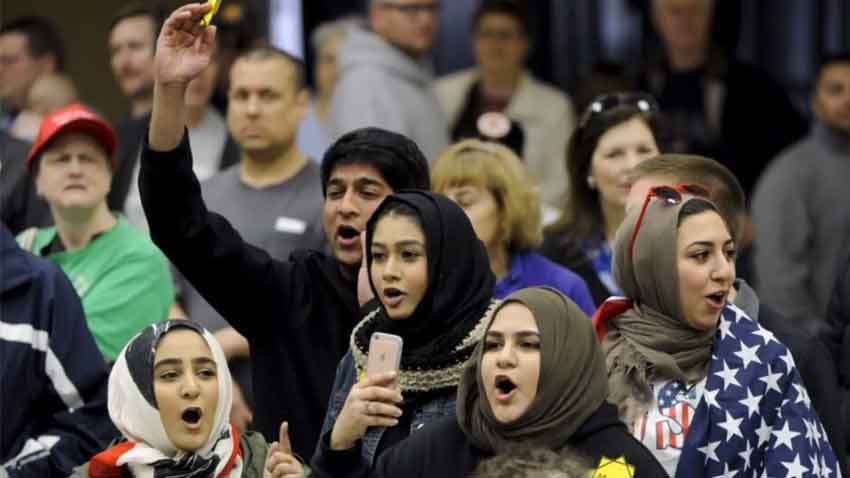
Mosques become voter registration centres
Mosques in Houston are helping Muslims register to vote before the November 3 midterm elections, with community leaders reporting around 1,000 registrations a week. The campaign comes amid concerns over a new social studies curriculum approved by Texas’ Republican-majority State Board of Education.
Muslim advocates say the curriculum presents Islam unfairly by requiring students to learn that “radical Islam” motivated the September 11 attacks instead of focusing on the terrorist groups responsible. Supporters of the curriculum argue that it gives students a broader understanding of Western civilisation and the foundations of the United States and Texas.
The dispute has raised a wider question about whether stronger political organisation can help Muslim Americans influence government decisions and challenge discrimination. Community groups are increasingly focusing on voter registration, public awareness and contact with elected officials.
Muslim groups seek a stronger political voice
Political advocacy groups help communities influence elections and public policy by registering voters, supporting candidates and lobbying elected officials. For Muslim Americans, these efforts cover issues such as civil rights, immigration, the economy and US foreign policy, especially its approach to the Middle East.
Syed Hassan, co-chair of the American Muslim Democratic Caucus, says communities with limited political representation need to organise around shared concerns. Speaking at the group’s 2026 national convention, he recalled former US president Barack Obama’s 2004 Democratic National Convention speech, which stressed national unity beyond racial and political divisions.
Hassan said a small gathering of Muslim delegates at a mosque in Cambridge around that time helped inspire the caucus. He urged people to take part in the democratic process, saying, “Our strategy is simple: we unite, we organise, we vote”.
He also warned that hostility towards one minority could later affect another community. “Last election, it was our hardworking, honest Mexican and Latino brothers and sisters in the crosshairs. This time, it is hatred against Muslims. Next time, it will be another community entirely,” he said.
Muslim voters do not share one political position
Not all Muslim Americans support the same party or political strategy, and their views differ on social issues, the economy and foreign policy. While some work with Democratic organisations, others support Republicans or remain independent.
Sajid Tarar, a Pakistani-American businessman who founded American Muslims for Trump, is encouraging Muslims to vote for Republican candidates in the 2026 midterm elections. He argues that “the Republican platform best serves the interests, safety, and economic prosperity of the Muslim community in the United States.”
The different approaches show that Muslim Americans are not a single voting bloc, even when they share concerns about discrimination and representation. Their political influence will depend partly on how effectively they organise and how many eligible voters register and participate.
Growing population, key election contests
The Pew Research Centre estimated in September that the United States had around 5.5 million Muslims of all ages, compared with 2.4 million in 2007. However, a larger population does not automatically mean more registered voters or higher election turnout.
Texas voters will decide several major races on November 3, including contests for the US Senate, governor and all 38 seats in the US House of Representatives. The Senate race includes Republican Ken Paxton, Democrat James Talarico and Libertarian Ted Brown, while Republican Governor Greg Abbott is seeking a fourth term against Democrat Gina Hinojosa and Libertarian Pat Dixon.
All 150 seats in the Texas House of Representatives and 16 of the state Senate’s 31 seats are also up for election, alongside other state and local positions. These contests give community groups several opportunities to engage candidates and raise issues important to their members.
Pew’s analysis of its 2023–24 Religious Landscape Study found that 53 per cent of Muslim adults identified with or leaned towards the Democratic Party, while 42 per cent identified with or leaned towards the Republican Party. The findings challenge the idea that Muslim voters overwhelmingly support one political party.
Muslims in Texas are working to turn their growing community presence into a stronger voice in politics and public policy. Their influence will depend not only on population size but also on voter registration, turnout and their ability to engage with different political parties.
Also read: British rapper Central Cee accepts Islam, reveals new Muslim name


