

Why NA Committee raises serious objections to Pakistan’s Hajj Policy 2027–2030
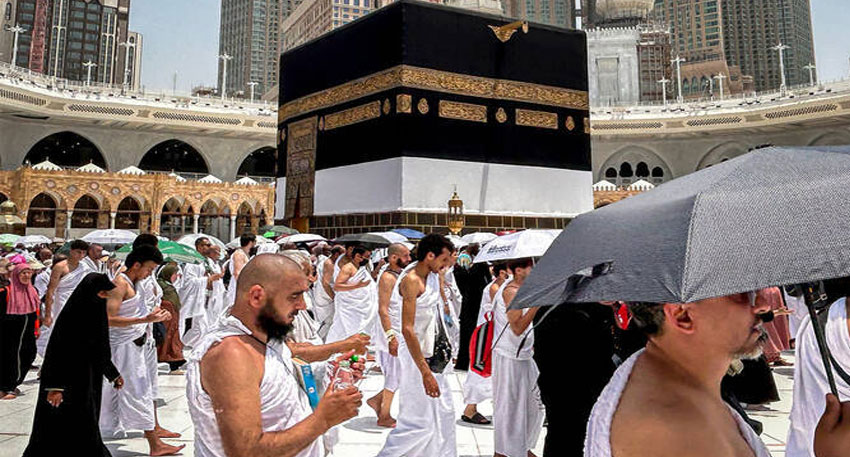
The NA body members said major religious policies should be discussed by Parliament before final approval.
The meeting was chaired by Shagufta Jumani and also reviewed minority welfare funds and Evacuee Trust Property Board affairs.
Committee member Ijaz-ul-Haq strongly objected to the government’s approach to parliamentary consultation.
“If the cabinet has to take all the decisions, what is the need for this Religious Affairs Committee? Just abolish it,” he remarked.
He said draft laws and major religious policies should first go through the relevant parliamentary committee.
DG Hajj extensions come under scrutiny
Ijaz-ul-Haq also questioned the reported involvement of Rana Sanaullah and Musadik Malik in Hajj-related matters.
The committee further raised concerns over repeated extensions given to the Director-General of Hajj.
Ijaz-ul-Haq sarcastically said lawmakers had now learned that the DG had effectively received a “lifetime service extension.”
The committee is expected to seek more information about the official’s appointment and service-extension history.
The Ministry of Religious Affairs has already published the Hajj Policy and Plan 2027–2030.
The ministry says the policy aims to improve facilities for pilgrims and make Hajj operations more efficient.
Private Hajj operators face questions
Private Hajj operators also came under scrutiny over the allocation of 2,000 pilgrims to individual operators.
Lawmakers questioned the decision because private Hajj packages can be very expensive.
Members noted that some private operators reportedly charge up to Rs10,000,000 for Hajj packages.
They also questioned what could happen if an operator handling thousands of pilgrims failed to manage its responsibilities properly.
The new private Hajj framework aims to replace traditional quota-based arrangements with a more regulated and performance-based system.
Under the Hajj and Umrah (Regulation) Act, 2024, operators are expected to meet financial, compliance and performance requirements.
Hajj policy already in implementation phase
The Ministry of Religious Affairs has published the Hajj Policy and Plan 2027–2030 on its official website.
Registration for Hajj 2027 has also already started, making the committee’s concerns important for the policy’s future implementation.
The objections have brought attention to the balance between government decision-making and parliamentary oversight.
They could lead to further questions about the policy, private operators and the repeated extensions given to the DG Hajj.
The main issue is not only the Hajj policy itself but also how major decisions are being reviewed.
Lawmakers want greater parliamentary involvement before policies affecting thousands of pilgrims are finalized.
Private Hajj costs are another major concern for families planning their pilgrimage.
Further clarification from the ministry could help explain how operators will be monitored and how pilgrims will be protected.
Also read: Hajj 2028: New passport rule could affect Pakistani pilgrims
Also read: Govt announces date for first Hajj 2027 installment


