

Who controls electricity prices in Pakistan?
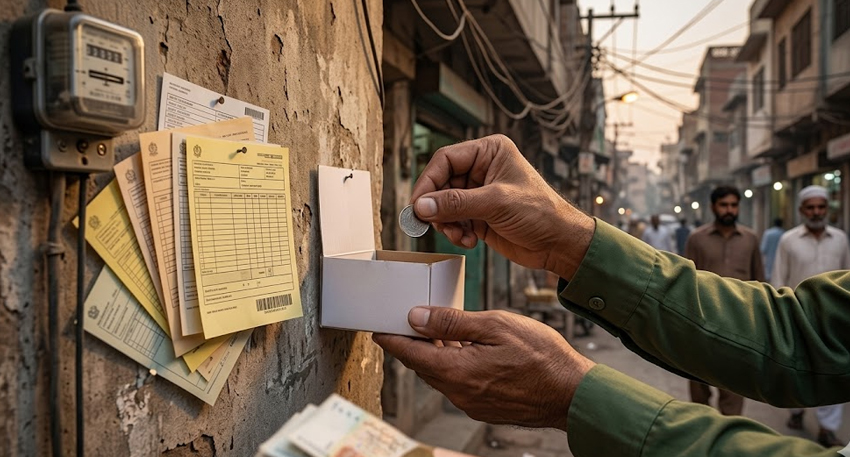
Multiple institutions behind electricity pricing
The answer is more complicated than many people think. Electricity prices are not decided by one institution alone. Instead, the federal government, NEPRA, private power producers, international lenders, and electricity distribution companies all influence the final amount consumers pay.
Role of the federal government
The federal government, through the Ministry of Energy, is responsible for setting overall energy policies. It decides subsidy levels, tariff policies, and Electricity bill fixed charges Pakistan consumers see every month.
It also manages the Pakistan power sector circular debt, which has become one of the biggest financial challenges facing the country. This growing debt affects future electricity prices and government decisions.
NEPRA’s role in tariff setting
The National Electric Power Regulatory Authority (NEPRA) is another key institution. NEPRA tariff adjustments determine the base electricity tariff and approve monthly changes based on fuel costs and operational expenses.
Through Fuel Price Adjustment FPA and quarterly reviews, NEPRA regularly changes electricity rates. These NEPRA tariff adjustments directly affect household and commercial electricity bills across Pakistan.
Role of private power producers (IPPs)
Private electricity producers also play an important role. Many Independent Power Producers operate under long-term agreements signed with the government.
These contracts include IPP capacity payments Pakistan, meaning companies receive payments even when electricity demand is low.
These IPP capacity payments Pakistan are considered one of the major reasons behind expensive electricity generation and contribute significantly to the Pakistan electricity price crisis.
IPP Contracts with Government
The Government of Pakistan has started a major overhaul of its agreements with Independent Power Producers (IPPs) under International Monetary Fund (IMF) guidance.
The aim is to reduce rising circular debt and ease the heavy burden of capacity payments that continue to pressure the country’s power sector. As part of earlier steps, the government has already terminated Power Purchase Agreements (PPAs) with five older IPPs and secured discounts from several others.
Revised contracts now include longer repayment periods, reduced KIBOR/LIBOR spreads, and lower operation and maintenance costs to bring down overall electricity generation expenses.
A key shift in policy is the move away from expensive “take-or-pay” contracts, where payments were made even if electricity was not used, toward a more efficient “take-and-pay” system linked to actual consumption.
IMF influence on electricity prices
International lenders also influence electricity pricing. Under various IMF conditions Pakistan energy reforms, the government has been required to reduce subsidies, hike power tariffs to recover sector costs, and implement structural reforms in order to release tranches of financial aid.
These IMF conditions Pakistan energy often result in higher electricity tariffs because Pakistan must meet financial targets before receiving loan installments.
Fuel Price Adjustment mechanism
Consumers also notice monthly increases through Fuel Price Adjustment FPA, which reflects changes in international fuel prices.
If imported fuel becomes expensive, the Fuel Price Adjustment FPA allows utilities to recover those additional costs from consumers in future bills.
This is another reason Why are electricity bills so high in Pakistan, especially during periods of global energy price volatility.
Role of distribution companies
Electricity reaches homes through K-Electric and DISCOs. While K-Electric and DISCOs do not decide the base tariff, they distribute electricity, collect payments, manage line losses, and submit requests for tariff hikes to maintain their operational margins.
Inefficiencies, electricity theft, and technical losses within K-Electric and DISCOs also increase operational costs, which eventually affect consumers.
Read Also:Electricity bills get new look - What will change for consumers?
Fixed charges burden on consumers
Another issue is Electricity bill fixed charges Pakistan consumers must pay regardless of how much electricity they use. These fixed charges have increased in recent years and have become a major concern for households trying to reduce their monthly bills.
Combined with NEPRA tariff adjustments, Fuel Price Adjustment FPA, and IPP capacity payments Pakistan, they add significantly to overall electricity costs.
Need for structural reforms
Experts believe solving the Pakistan power sector circular debt is essential for long-term stability. Without reforms, the Pakistan electricity price crisis may continue, making it difficult to lower electricity prices despite improvements in power generation.