
Pakistan Electricity Bill 2026: Why the Government Changed It, What Is in the New Bill, and What Benefits It Brings
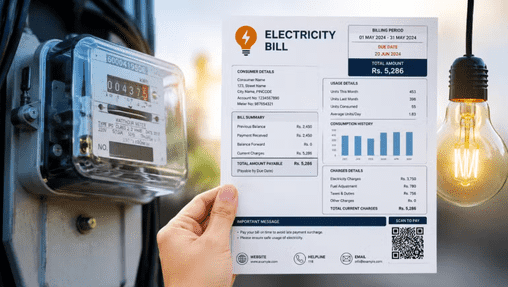
The new framework, effective from July 1, 2025, changes not just the rates — it changes the very logic of how your bill is calculated. For millions of households and thousands of businesses, understanding these changes is no longer optional; it is a financial necessity.
Why Did the Government Change the Electricity Bill?
The decision to overhaul Pakistan's electricity tariff system did not happen overnight. It was the product of years of mounting financial pressure, structural dysfunction, and obligations to international lenders. Below are the core reasons behind the reform.

1. The Circular Debt Crisis Reached a Breaking Point
Pakistan's energy sector's circular debt — the chain of unpaid dues flowing between power producers, distribution companies, and the federal government — crossed Rs. 2.7 trillion. This astronomical figure made the existing billing and subsidy model financially unsustainable. Without a structural fix, the government would need to keep borrowing to plug the gap, adding to a national debt that has already crossed Rs. 77 trillion. The new tariff system is designed to improve cost recovery and begin reducing this burden.
2. Consumers Were Not Paying the True Cost of Infrastructure
Under the old system, consumers only paid based on the units of electricity they consumed each month. This meant that a household with a high-capacity connection — a large house with heavy appliances — could choose to use very little electricity in a particular month, yet impose enormous costs on the grid through their reserved capacity. The distribution network must be built and maintained to serve peak demand, and those fixed costs were not being recovered fairly. The new billing framework corrects this by adding a fixed charge based on the sanctioned load of a connection.
3. Massive Capacity Payments to Independent Power Producers (IPPs)
Pakistan is locked into long-term contracts with Independent Power Producers under which it pays capacity charges regardless of whether the electricity is actually used. These take-or-pay contracts created a situation where idle power plants were costing the nation billions every month. The resulting financial strain was passed directly to consumers through ever-higher tariffs. The new structure tries to rationalize these costs while the government simultaneously pursues renegotiation of IPP contracts.
4. IMF Program Requirements
As part of Pakistan's ongoing agreement with the International Monetary Fund, the government was required to move electricity tariffs toward cost-reflective levels and reduce generalized subsidies. The 2025–26 tariff reform is a direct fulfillment of these conditions. The government has attempted to balance IMF-mandated cost-reflectivity with targeted relief for the genuinely poor, as also seen in the Rs. 5.9 trillion Punjab Budget 2026–27, which was unveiled with a stated aim of providing consumer relief alongside fiscal discipline.
5. Subsidies Were Going to the Wrong People
A fundamental flaw in the previous tariff structure was that energy subsidies were not adequately targeted. Wealthier households with larger connections were benefiting from subsidized rates that were intended for the poor. The government needed a mechanism to direct relief specifically at low-income households consuming under 200 units per month, while ensuring that high-capacity, high-consumption users paid a more accurate share of the system's costs.
What Is in the New Electricity Bill?
The NEPRA-approved tariff framework for FY 2025–26, effective July 1, 2025 and continuing through 2026, introduces several major structural changes that affect every category of electricity consumer in Pakistan.
A) The New Two-Part Tariff System: The Biggest Change
This is the single most significant structural change in the new electricity bill. Under the old system, your bill was calculated almost entirely on how many units of electricity you consumed. Under the new system, your bill now has two distinct components:
· Variable Energy Charge: This part of the bill is still based on how many kilowatt-hours (kWh/units) you actually consume in the month. Consume more, pay more. This is the traditional part of the bill that most consumers are familiar with.
· Fixed Capacity Charge: This is the new component. It is a fixed monthly charge based entirely on your sanctioned load — the maximum electricity capacity your connection is authorized to draw, measured in kilowatts (kW). This charge is due every month regardless of how much or how little electricity you actually used.
· B) Revised Per-Unit Rates and the Slab System
· While the structural model changed, the slab-based pricing system for variable consumption remains in place. Pakistan's electricity pricing still uses a tiered structure where the rate per unit increases as your consumption increases in a given month. The average base tariff was reduced slightly from approximately Rs. 32.73 per unit to Rs. 31.59 per unit for FY 2025–26.

C) Industrial and Agricultural Relief Package
In October 2025, NEPRA approved Prime Minister Shehbaz Sharif's three-year subsidized power package targeting industrial and agricultural consumers — a landmark decision aimed at reviving Pakistan's manufacturing sector and reducing input costs for agriculture.
· Industrial consumers: The incremental rate for consumption beyond a reference baseline was cut from Rs. 34 per unit to Rs. 22.98 per unit — a reduction of nearly 32 percent.
· Agricultural consumers: The incremental rate was reduced from Rs. 38 per unit to Rs. 22.98 per unit — a cut of nearly 40 percent.
· Greenfield industries, including data centres and new manufacturing ventures, are also eligible for this rate under the same framework.
This package is directly linked to the government's broader economic competitiveness agenda, which also includes declining global oil prices following the Iran-US deal — a development that is expected to reduce fuel costs in power generation and potentially ease electricity pricing further.
D) The New 200-Unit Subsidy Verification System
A new digital verification system has been introduced specifically for consumers in the protected category — those using fewer than 200 units of electricity per month. This system is designed to ensure that subsidized rates reach only genuinely eligible households.
· Every protected consumer must scan the QR code printed on their electricity bill.
· The scan triggers a CNIC-linked OTP (one-time password) verification on the consumer's registered mobile number.
· Failure to complete verification may result in the consumer losing their protected status and being charged at standard (much higher) rates.
· The system is being rolled out across all major distribution companies, including LESCO (Lahore), PESCO (Peshawar), IESCO (Islamabad), FESCO (Faisalabad), and K-Electric (Karachi).
E) The 300-Unit Policy for Subsidized Rates
Alongside the 200-unit protected category, a 300-unit policy has been introduced as a broader relief measure. Households that keep their monthly electricity consumption within the 300-unit limit receive access to subsidized rates. If consumption crosses this threshold, the subsidy structure may be removed entirely for that billing cycle, which can cause a dramatic spike in the total bill.
This design creates a strong financial incentive for middle-income households to manage their electricity consumption actively — particularly during the summer months when air conditioning drives consumption upward. Follow Suno News Pakistan for practical tips as the monsoon season approaches.
F) Smart Meter Rollout
As part of the broader billing modernization, the government is rolling out smart meters across Pakistan's electricity distribution network. Unlike traditional meters that require manual reading, smart meters:
· Track electricity consumption in real time, sending data digitally to distribution companies.
· Enable consumers to monitor their own usage through dedicated mobile apps and portals.
· Reduce opportunities for meter tampering and electricity theft — which currently adds Rs. 80–120 billion in annual losses to the system.
· Enable time-of-use billing in the future, where consumers could pay lower rates for electricity used during off-peak hours.
G) What Additional Charges Still Apply?
A major source of confusion for Pakistani electricity consumers is the gap between the base per-unit rate and the actual amount on their bill. The following charges are added on top of the base tariff and account for the difference:
· Fuel Charge Adjustment (FCA): A monthly adjustment reflecting the actual fuel costs of power generation that month. It can be positive (increasing the bill) or negative (reducing it), depending on oil and gas prices.
· Quarterly Tariff Adjustment (QTA): Seasonal corrections to the tariff applied every three months.
· Sales Tax: Applied at different rates depending on the bill amount and consumer category.
· Income Tax (Withholding Tax): Charged based on the filer or non-filer status of the consumer.
· Meter Rent: A small monthly fee charged by the distribution company for providing and maintaining the meter.
· TV Licence Fee: A statutory charge collected through electricity bills.
· Late Payment Surcharge: An additional charge applied if the bill is not paid by the due date.
What Are the Benefits of the New Electricity Bill?
The government and NEPRA have outlined several expected benefits of the new tariff framework. Here is an honest assessment of what each segment of the population can realistically expect.
Benefits for Low-Income and Protected Consumers
The new system's most significant achievement for ordinary households is the targeting of subsidies. By requiring verification through QR codes and CNIC-linked authentication, the government can now direct subsidized rates specifically to households that genuinely consume under 200 units per month — predominantly low-income families in smaller homes.
· Lifeline consumers (0–100 units) remain fully protected at Rs. 3.95 per unit and are exempt from most fixed charges and FCAs.
· The 200-unit verification system ensures subsidy funds are not diverted to wealthier households who were previously benefiting from protected rates without genuine need.
· The 300-unit policy gives middle-income households a clear and manageable threshold to target through energy efficiency measures.
Benefits for Industries and Agriculture
The industrial and agricultural relief package is arguably the most economically significant part of the entire reform. By cutting the incremental electricity rate for industries from Rs. 34 to Rs. 22.98 per unit, the government is directly reducing production costs across Pakistan's manufacturing sector. This has several downstream effects:
· Lower electricity costs reduce the cost of goods manufactured in Pakistan, improving export competitiveness in international markets.
· Industries that were previously operating below capacity due to high electricity costs may increase production, creating jobs and boosting tax revenue.
· Agricultural consumers benefit from cheaper power for tube wells, irrigation pumps, and cold storage facilities — directly supporting food security.
· The inclusion of greenfield industries and data centres signals an attempt to attract new investment in technology and manufacturing sectors.
This industrial push is part of the same economic strategy visible in Pakistan's broader market reforms, which have been accelerated by favorable developments including the recent decline in global oil prices.
Benefits for the National Economy
Beyond individual consumers, the new billing framework is designed to produce macroeconomic benefits for Pakistan:
· Circular debt reduction: Better and more accurate cost recovery means fewer unpaid obligations cascading through the energy sector, gradually shrinking the Rs. 2.7 trillion circular debt.
· Fiscal savings: More targeted subsidies reduce the government's annual subsidy bill, freeing up funds for development spending or debt servicing.
· IPP renegotiation leverage: A more financially stable distribution sector is in a stronger position to renegotiate or restructure expensive capacity payment contracts with IPPs.
· Inflation control: Stabilizing the energy sector's finances reduces the likelihood of sudden, large tariff shocks — which have historically triggered inflationary waves across the entire economy.