The humble ride of caliph Umar (ra) and the lesson of true leadership
In the burning desert of Arabia, where the sand itself felt like fire and the sun poured down with full intensity, a powerful lesson in humility quietly unfolded. The heat was so extreme that even walking became difficult, and the air felt heavy and still.
In this harsh environment, a man was walking towards Madinah. He had covered his head with a simple cloth to protect himself from the blazing sun. There was nothing about his appearance that suggested pride, power, or authority. He looked like an ordinary traveler enduring the hardships of the desert journey.
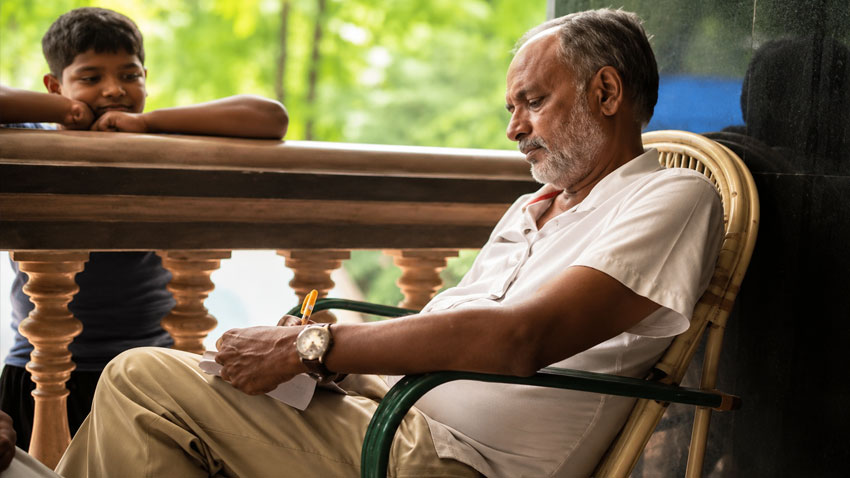
On the same path, he came across a slave who was riding a donkey. The slave was moving slowly through the desert, likely unaware of how significant the moment was about to become. The man approached him and spoke gently, without any sign of command or arrogance.
He said, “Brother, the heat is extremely intense. Would you allow me to sit behind you?”
The slave looked at him carefully. At that moment, he recognized the identity of the person standing before him. A sense of respect immediately overwhelmed him. Realizing who he was speaking to, he quickly dismounted from the donkey in humility and honor, saying, “No, you should ride. I will walk instead.”
But the man refused with calmness and dignity. He replied softly, “No, you ride the donkey. I will sit behind you.”
The slave, still overwhelmed with respect, insisted again, “It is more appropriate that you ride and I walk. How can I sit while you walk?”
Yet the man remained firm, not out of pride, but out of humility. His intention was not to show superiority but to remove all signs of rank and status between people. Eventually, the slave obeyed, sat on the donkey again, and the man sat behind him.
Together, they continued their journey toward Madinah in this unusual manner—one riding in front as a slave, and the other sitting behind as an ordinary companion.
As they reached the boundaries of Madinah, the people witnessing this scene were stunned. It was rare, almost unimaginable, to see such an arrangement. Some stood silently, others stared in confusion, and many were left wondering who this person could be who chose to enter the city in such a humble way.
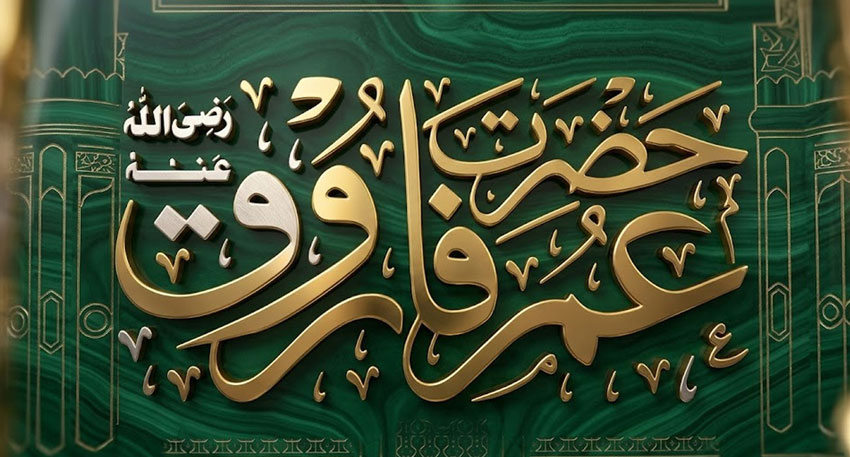
The truth soon became clear. The man was none other than Hazrat Umar ibn Al-Khattab (RA), the second Caliph of Islam, Amir-ul-Momineen, a leader whose name once shook the empires of the world.
Despite his immense authority, Umar (RA) was known for his simplicity and deep fear of Allah. He ruled over a vast Islamic empire stretching across multiple regions, yet he lived in a way that made him indistinguishable from ordinary citizens.
His title “Al-Farooq” meant the one who separates truth from falsehood. Before Islam, he was already known among the Quraysh for his strength, intelligence, and fearless personality. People respected his judgment and leadership even before he accepted Islam.
When he embraced Islam, it marked a turning point in Islamic history. His conversion strengthened the Muslim community and brought confidence to the believers while shaking the opposition.
However, what made Umar (RA) truly extraordinary was not his strength or political power, but his absolute justice and humility. He believed that leadership was a trust from Allah, not a privilege for personal benefit.
His lifestyle remained extremely simple. Even as Caliph, he wore patched clothing, slept on the ground when needed, and avoided any form of luxury. He believed that comfort for leaders should not come at the cost of the poor.
On one occasion, he delivered a sermon while wearing a garment that had multiple patches sewn onto it. This was a reminder that the ruler of a vast empire did not separate himself from the condition of his people.
Umar (RA) was extremely strict in matters of justice. He did not allow favoritism, even for his own family. Once, he discovered that his son’s camel had become fat because it had been grazing on government land. Immediately, he ordered that the camel be sold, and the excess profit—earned due to misuse of public property—be returned to the state treasury.
He also maintained strict accountability over governors and officials. Before appointing anyone, he would examine their financial background. After appointment, he continued monitoring them closely. If any unjust increase in wealth was found without explanation, he would take immediate action and return the wealth to the public treasury.
His governance was based on the principle that rulers are servants of the people, not masters over them. He famously emphasized that if leaders remain upright, society remains upright, but if leaders become corrupt, the society collapses.
During his caliphate, he personally walked through streets at night to check on the condition of the poor, widows, and orphans. Many stories describe him carrying food supplies himself to the homes of those in need, ensuring that no one in his territory slept hungry.
His rule lasted approximately ten and a half years, a period remembered as one of the most just and well-organized administrations in Islamic history. It was an era where law, accountability, and compassion worked together.
In the year 23 Hijri, during the Fajr prayer, Hazrat Umar (RA) was attacked by a man named Abu Lu’lu’ah Firuz, a disgruntled slave. He struck Umar (RA) with a poisoned dagger, causing severe injuries.
Even in that critical moment, Umar (RA) remained concerned about prayer. He instructed that another companion lead the congregation so that the prayer would not be delayed.
After being taken home, his condition worsened. Yet, even when consciousness returned briefly, his first concern was Salah. He performed ablution and prayed, demonstrating his lifelong commitment to worship.
A few days later, Hazrat Umar (RA) passed away. His funeral prayer was led by Hazrat Suhaib (RA), and he was buried beside Prophet Muhammad (PBUH) and Hazrat Abu Bakr (RA), as he had wished.
He was 63 years old at the time of his martyrdom.
The life of Hazrat Umar (RA) is a timeless lesson that true leadership is not about power, wealth, or status. It is about humility, justice, accountability, and service to humanity. His example shows that even the greatest ruler can choose simplicity, and even the strongest leader can bow in humility before Allah.