

Power consumers to pay higher bills in August under Nepra fuel adjustment
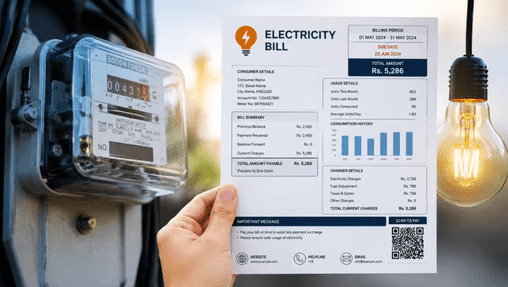
Nepra approves fuel cost adjustment
The National Electric Power Regulatory Authority (Nepra) has approved a fuel cost adjustment (FCA) of 75 paisa per unit for electricity consumers. The additional charge will appear in electricity bills issued for August.
The regulator said the adjustment will place an additional burden of around Rs9.8 billion on consumers. It also said the average fuel cost in August will be about 41 paisa per unit higher than it was in July.
Who will pay the additional charge?
According to Nepra, the positive FCA for June 2026 is Rs0.7503 per kWh. The adjustment will apply to most electricity consumers, including customers of K-Electric and power distribution companies that were previously part of Wapda.
The additional charge will also apply to consumers using the incremental consumption package. However, lifeline consumers, electric vehicle charging stations and prepaid electricity users have been exempted.
The regulator directed power companies to include the June 2026 fuel cost adjustment in August electricity bills. Under Pakistan’s tariff system, fuel cost adjustments are normally applied for one billing month only.
Why has the FCA increased?
The Central Power Purchasing Agency (CPPA) reported that the actual average fuel cost for June 2026 was Rs8.9138 per kWh, compared with the reference fuel cost of Rs7.7138 per kWh. Based on this difference, the agency requested an FCA of Rs1.20 per unit.
After reviewing the figures, Nepra calculated the actual fuel component at Rs8.4641 per kWh. As a result, it approved a lower FCA of 75 paisa per unit instead of the requested Rs1.20 per unit.
The Power Division also reported that electricity generation in June was 5.6 percent lower than projected. Nepra expressed concern over Rs4.9 billion in partial loading charges.
The CPPA said these charges were mainly caused by lower daytime electricity demand due to increased rooftop solar generation. It explained that many power plants had to operate at partial load during the day and increase output later to meet higher evening demand.
The Power Division also warned that renewable energy sources such as solar and wind could face curtailment in the future if daytime demand continues to decline. It added that quarterly tariff adjustments are handled separately and become part of the base tariff after government approval.
The latest FCA shows that fuel costs continue to affect electricity prices despite growing use of solar energy. Future tariff decisions may increasingly depend on how Pakistan balances conventional power generation with renewable energy.
Also read: Why are electricity bills so high? IPPs received Rs13.397 trillion in five years
Also read: Pakistan targets 90% clean electricity by 2035 with new plan


