

Lahore installs QR panic buttons on 80,000 public transport vehicles
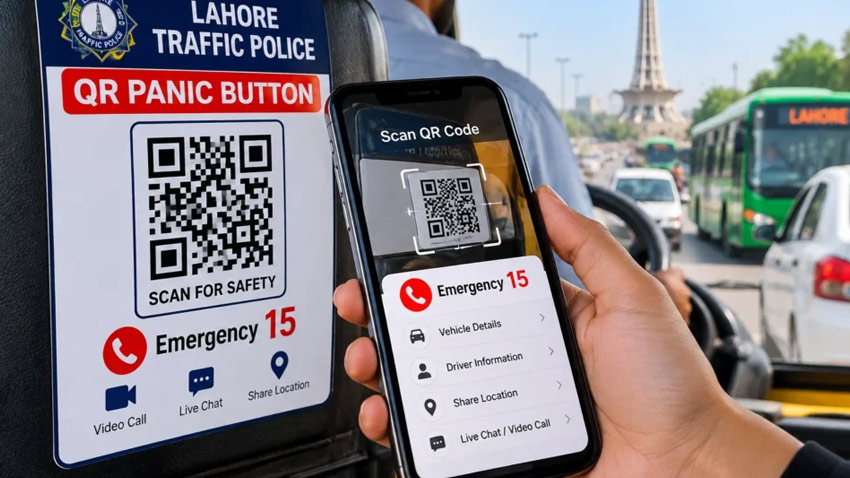
The initiative is being carried out on the directives of Punjab Chief Minister Maryam Nawaz as part of efforts to introduce modern safety measures in the city’s transport system.
The QR-based system is designed to help passengers seek assistance during emergencies, particularly in cases involving harassment or other security concerns.
The initiative also aims to make it easier for authorities to receive emergency alerts and respond to incidents involving public transport users.
Installation work continues across Lahore
According to the Chief Traffic Officer (CTO), traffic teams are installing QR panic buttons at 45 locations across Lahore. Dedicated teams have been deployed in different traffic sectors to facilitate the installation process and ensure that more vehicles are covered.
Twelve teams have specifically been assigned to rickshaws, which form a major part of Lahore’s public transport network. The dedicated teams are working with transport operators to install the required safety system in vehicles.
Women can use the QR system during emergencies
The QR panic-button system is particularly aimed at improving safety for women travelling on public transport and in ride-hailing vehicles. According to the CTO, women facing harassment or another emergency can use the panic code to contact the relevant authorities.
The system provides an additional way for passengers to seek assistance when they feel unsafe. The use of technology is also expected to help authorities receive information about emergencies more quickly and take appropriate action.
Four new licensing centres established
Traffic authorities have also established four new licensing centres in Lahore following requests from different rickshaw unions. The new centres are intended to make the licensing process easier for rickshaw drivers and improve access to licensing services.
The move comes alongside the QR panic-button initiative as authorities work to improve regulation and safety across the city’s transport sector. Officials are also encouraging transport operators to adopt modern systems that can improve passenger security and make monitoring easier.
Online cab services face action over safety rules
Authorities have decided to take action against online cab services that fail to adopt the required safety and security features. The measure is aimed at ensuring that ride-hailing services operating in Lahore also follow the safety standards introduced by the authorities.
Online cab services have become an important part of urban transport, making passenger safety an increasingly important issue for commuters. Officials want modern safety features to become a regular part of these services rather than remain limited to selected vehicles.
Smart traffic management gets greater focus
CTO Abdul Rahim Shirazi said efforts were underway to promote smart traffic management in Lahore. The authorities are working to increase the use of modern technology across the city’s transport system and introduce safety and security features for commuters.
The QR panic-button system is part of this wider effort to use technology in traffic management and public safety. Such systems can provide authorities with another channel for receiving emergency alerts and responding to incidents.
Panic buttons introduced in women’s colleges
The safety system is also being expanded to educational institutions across Punjab.
Also Read: Special anti-polio campaign ends after vaccinating 28.2 million children
In the first phase, 39 institutions were equipped with panic buttons, according to a spokesperson for the Punjab Safe Cities Authority (PSCA). The system is planned to be expanded to more than 450 women’s colleges across Punjab.
The initiative is aimed at giving female students a quick and reliable way to seek assistance if they face an emergency on campus. The expansion would bring the safety system to a much larger number of educational institutions across the province.
How the panic-button system works
The panic buttons installed at institutions are linked to the PSCA’s central control room.
When a button is pressed during an emergency, an alert is sent to the Virtual Women Police Station. The alert allows the relevant authorities to respond to the situation and provide assistance.
The system is especially useful in situations where students may not have immediate access to their mobile phones. Instead of depending entirely on a phone call, the panic-button system provides a direct emergency alert mechanism.
Technology aimed at improving public safety
The introduction of QR panic buttons shows the growing use of technology in Lahore’s public safety and transport systems. For commuters, the system could provide an additional sense of security while travelling in rickshaws, ride-hailing vehicles and other forms of public transport.
For authorities, the system can create another way to receive information about emergencies and coordinate a response. However, the effectiveness of such technology will depend on proper installation, public awareness and a quick response when an alert is received.
More vehicles expected to be covered
With installation continuing at 45 locations, authorities are expected to bring more vehicles under the safety system. The involvement of dedicated teams in each traffic sector could help speed up the installation process.
The 12 teams assigned to rickshaws will also play a key role in expanding coverage among one of Lahore’s most widely used forms of public transport. Authorities will also need to monitor compliance by online cab services and other transport operators to ensure that the required safety measures remain in place.


