
Inside the Kaaba: hidden history, sacred design and timeless spiritual legacy
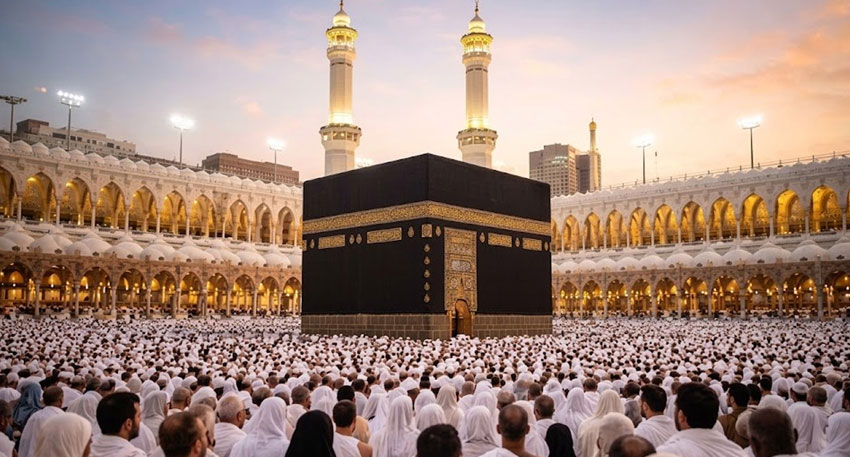
The Kaaba, the most sacred structure in Islam, is widely known for its spiritual significance from the outside, but its interior also carries a deep historical and symbolic legacy that few people are aware of.
Covering an area of around 180 square metres, the Kaaba’s roof is supported by three massive wooden pillars. These pillars are believed to have been constructed during the era of early Islamic history and are traditionally associated with the time of Companion Abdullah ibn Zubayr. Remarkably, they continue to stand firm after more than a thousand years, holding the sacred structure with strength and stability.
Inside, the pillars are joined by a wooden beam that displays various gifts and historical artifacts. The interior walls are lined with marble, while the floor is made of white and multi-coloured marble pieces, creating a calm and dignified atmosphere.
A red silk curtain with gold and silver embroidery covers the inner ceiling and walls, inscribed with verses and divine names, adding to the spiritual aura of the space. On the eastern side, a staircase leads to a special chamber with a locked door and a decorated silk covering.
The interior also features carved stones containing inscriptions in Thuluth and Kufic scripts dating back centuries, showcasing early Islamic calligraphy and artistic heritage. A marble-engraved document commemorating renovation efforts during the reign of Saudi leadership is also preserved inside.
These elements reflect that the Kaaba is not only a place of worship but also a living archive of Islamic history, art, and devotion—an eternal symbol of faith and unity for Muslims around the world.