

CDF Munir, Syrian minister discuss defence and security ties
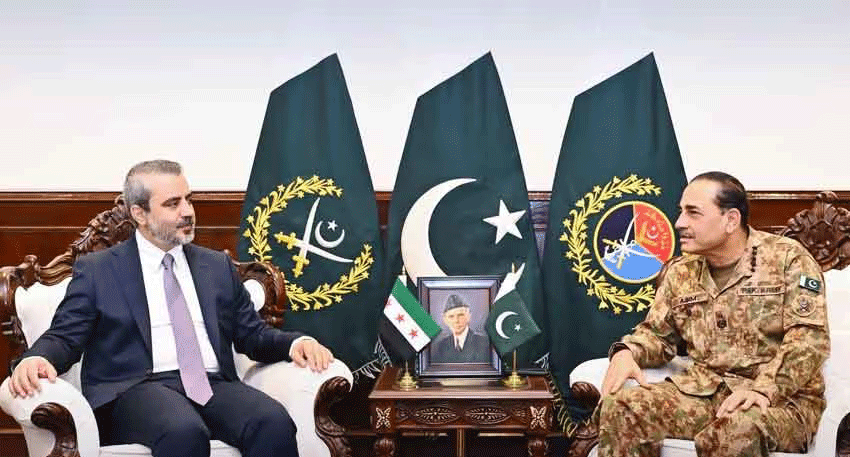
Chief of Defence Forces and Chief of Army Staff Field Marshal Asim Munir met Syrian Foreign Minister Asaad Hassan Al-Shaibani at General Headquarters in Rawalpindi.
The meeting focused on defence and security cooperation between Pakistan and Syria. Regional security, mutual interests and ways to strengthen bilateral relations were also discussed.
According to Inter-Services Public Relations, both sides reviewed the regional security environment and discussed possible areas for greater cooperation.
The military’s media wing said the two officials also considered ways to expand bilateral defence and security engagement.
Pakistan highlights long-standing ties with Syria
During the meeting, CDF Munir highlighted Pakistan’s long-standing fraternal relations with Syria. He also shared Pakistan’s views on global peace and regional stability.
The field marshal stressed the importance of cooperation in dealing with common security challenges. He said closer coordination between the two countries could support wider efforts for regional peace.
The meeting comes as Syria works to strengthen its relations with other countries following the change of government in Damascus.
The Syrian foreign minister also praised the professional role of Pakistan’s armed forces in supporting regional peace and stability.
According to ISPR, both sides expressed their determination to further improve relations. They also agreed on the importance of expanding cooperation in defence and security.
Syrian foreign minister on official Pakistan visit
Al-Shaibani arrived in Islamabad on Thursday for an official visit at the invitation of Deputy Prime Minister and Foreign Minister Ishaq Dar.
During his visit, the Syrian foreign minister also met Prime Minister Shehbaz Sharif. The two sides discussed several areas where Pakistan and Syria could increase cooperation.
Sharif called for stronger ties in politics, defence, trade, investment, education and human resource development.
The Pakistani prime minister stressed that the countries’ long-standing relationship should be turned into practical cooperation.
The discussions therefore went beyond defence and security. Both countries are also looking at ways to increase economic and people-to-people links.
Syria proposes joint business council
The Syrian foreign minister also proposed creating a Pakistan-Syria Joint Business Council.
The proposed council would provide a platform for business communities from both countries to interact directly. It could also help identify new opportunities for trade and investment.
The proposal comes as Islamabad and Damascus look for ways to expand their relationship in areas beyond traditional diplomatic cooperation.
Closer business links could give companies from both countries greater opportunities to explore markets, investment projects and commercial partnerships.
For Pakistan, stronger engagement with Syria could also support its broader diplomatic and economic outreach in the region.
Also Read: Imran Khan declared fit, sister Uzma Khan present during medical examination
Why the visit is significant
Al-Shaibani’s visit is notable because it is the first visit by a Syrian foreign minister to Pakistan since Walid al-Mouallem travelled to Islamabad in May 2007.
The latest visit comes after a major political change in Damascus. This has created an opportunity for Syria to rebuild and strengthen diplomatic relationships with regional and international partners.
Pakistan’s discussions with the Syrian leadership indicate an interest in maintaining its historic relationship with Damascus while exploring new areas of cooperation.
Defence and security remain important parts of that relationship, particularly because both countries face a changing regional security environment.
At the same time, the focus on trade, investment, education and business shows that the relationship could develop across several sectors.
Defence cooperation could gain greater attention
The meeting between CDF Munir and Al-Shaibani puts security cooperation at the centre of the Syrian minister’s Pakistan visit.
Both sides have expressed a desire to strengthen their defence relationship and increase official engagement.
However, the discussions also point towards a wider partnership. Economic and diplomatic cooperation could become increasingly important as both countries seek practical ways to deepen their ties.
For Syria, stronger relations with Pakistan could provide another avenue for regional engagement. For Pakistan, closer ties with Damascus could strengthen its diplomatic outreach in the Middle East.
The coming months may show whether the agreements and proposals discussed during the visit develop into concrete initiatives.


