Pakistan’s top leadership has renewed the country’s firm moral, diplomatic, and political support for the people of Jammu and Kashmir, reaffirming their right to self-determination under United Nations resolutions on Kashmir Solidarity Day, observed on February 5.
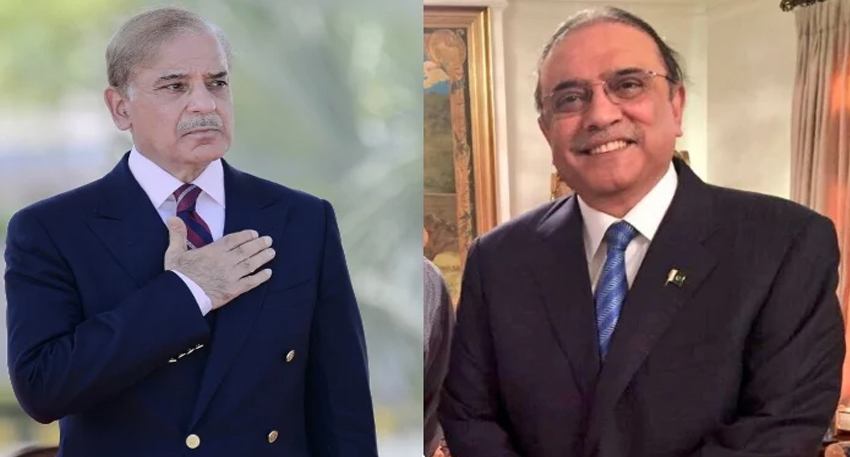
In a special message, Prime Minister Muhammad Shehbaz Sharif said Kashmir Solidarity Day symbolizes Pakistan’s principled and unwavering support for its Kashmiri brothers and sisters in their “just and legitimate” struggle for freedom, dignity, and fundamental rights. He noted that the Jammu and Kashmir dispute remains one of the world’s oldest unresolved issues on the United Nations agenda, with multiple UN Security Council resolutions clearly recognizing the disputed status of the territory and calling for a free and impartial plebiscite.
The prime minister said that despite the passage of nearly eight decades, the Kashmiri people continue to be denied their right to self-determination due to India’s intransigence. He described Indian Illegally Occupied Jammu and Kashmir (IIOJK) as a heavily militarized region marked by systematic repression, arbitrary detentions, curbs on political activity, and severe restrictions on media freedom.
PM Shehbaz Sharif strongly condemned India’s unilateral actions of August 5, 2019, stating that the revocation of Jammu and Kashmir’s special status violated the UN Charter, relevant UN Security Council resolutions, and the Fourth Geneva Convention. He warned that attempts at demographic re-engineering and legal manipulation cannot erase India’s international obligations or diminish the inalienable rights of the Kashmiri people.
Also Read: Kashmir Solidarity Day observed across Pakistan to support Kashmiris
Highlighting the ideological dimension of the occupation, the prime minister said India’s policies in IIOJK are driven by Hindutva ideology, which seeks to normalize discrimination, suppress religious freedom, and criminalize dissent. He pointed to the profiling of mosques and mosque management committees as a grave violation of religious rights and an example of ideological coercion.
Despite decades of oppression, PM Shehbaz said, the Kashmiri people have shown remarkable resilience and courage. He reaffirmed that Pakistan will continue to raise the Kashmir issue at all international forums, including the United Nations General Assembly, until Kashmiris achieve their right to self-determination through a free and impartial plebiscite.
President Asif Ali Zardari also reiterated Pakistan’s steadfast support for Kashmiris, calling their right to self-determination “inalienable” and firmly rooted in UN Security Council resolutions. In his message, the president recalled that Kashmir Solidarity Day was initiated 36 years ago by Shaheed Mohtarma Benazir Bhutto following the historic 1989 Kashmiri uprising.
President Zardari expressed deep concern over the worsening human rights situation in IIOJK since August 5, 2019, citing increased political repression, curbs on media, mass detentions, collective punishment, and house demolitions. He also condemned the suppression of digital freedoms, including the blocking of thousands of social media accounts to conceal ground realities.
The president highlighted recent profiling of mosques and their management committees, calling it deliberate intimidation aimed at restricting the religious freedom of Kashmir’s Muslim majority. He warned that India’s military escalation in May 2025 further exposed the fragility of peace in South Asia, stressing that lasting regional stability is impossible without a just resolution of the Kashmir dispute.
Calling on the international community to move beyond symbolic statements, President Zardari urged global powers and human rights bodies to pressure India to end violations in IIOJK, allow independent observers, and fulfill its commitment to granting Kashmiris their right to self-determination.
Both leaders reaffirmed that Pakistan will continue to stand shoulder-to-shoulder with the Kashmiri people until they are free to determine their future, expressing hope that the darkness of occupation will eventually give way to the dawn of freedom.