

Khawaja Asif urges PCB revolution, responds to Mohsin Naqvi
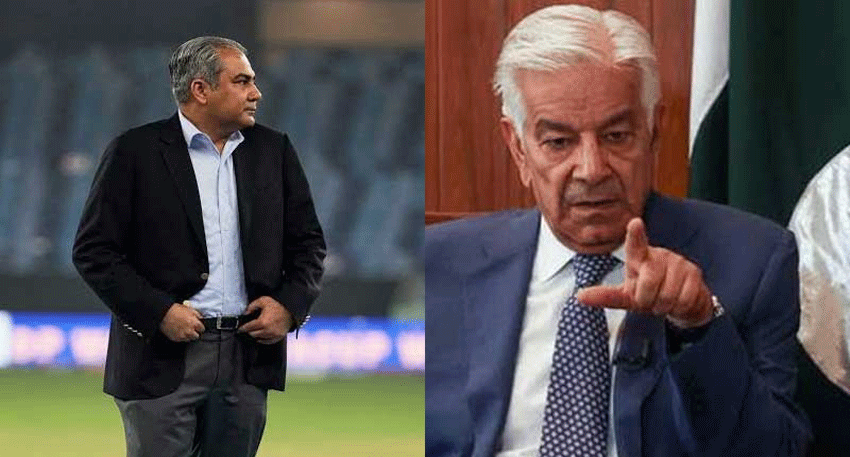
Khawaja Asif calls for a ‘PCB revolution’
Defence Minister Khawaja Asif has called for major reforms in the Pakistan Cricket Board (PCB), saying the organisation has full authority to improve its performance without facing political or institutional obstacles.
His remarks came after Interior Minister Mohsin Naqvi, who also serves as PCB Chairman, recently called for major changes to Pakistan’s governance system, including the creation of new administrative units and provinces.
Speaking about the PCB, Khawaja Asif said institutions should continue to evolve with time. He added that cricket supporters across the country are unhappy with the board’s recent performance and expect meaningful improvements.
He urged Mohsin Naqvi to bring what he described as a real “PCB revolution,” saying the cricket board has complete authority to introduce reforms.
نقوی صاحب سسٹم ھر وقت evolve ھو رہے ھوتے ھیں اور ھونے چاہییں ۔ نمونے کے طور پہ PCB میں کوئی انقلاب لائیں کرکٹ کے شائقین PCB کی پرفارمنس سے کوئ اتنے مطمئن نہیں۔ PCB میں تو اقتدار کل آپ کے پاس ھے نہ وزیر اعظم ھے نہ پارلیمنٹ ھے نہ کوئ فرسودہ سیاسی نظام رکاوٹ ھے۔
— Khawaja M. Asif (@KhawajaMAsif) August 2, 2026
“No prime minister, no parliament” in PCB
Khawaja Asif said the PCB does not face the political challenges that exist in government institutions. According to him, there is no prime minister, parliament or political system preventing the board from implementing reforms.
He stressed that the PCB leadership has the freedom to make decisions and should use that authority to improve cricket administration and produce better results.
His comments quickly attracted public attention because they came only days after Mohsin Naqvi’s statements about changing Pakistan’s governance structure.
Mohsin Naqvi’s governance proposal sparks debate
Earlier, Mohsin Naqvi said Pakistan’s existing governance system had failed to solve many national problems. Speaking at the Pakistan Economic Summit in Islamabad, he suggested that political parties should work together on major constitutional reforms.
He proposed creating new administrative units and provinces, arguing that smaller administrative structures could improve public services and bring government closer to citizens.
Naqvi also said the country’s young population wants justice, merit and employment instead of temporary financial support. He urged political leaders to resolve long-standing issues instead of delaying difficult decisions.
Also Read:Polling underway in 21 AJK election constituencies
Political parties respond to the proposal
The Pakistan Peoples Party (PPP) responded by saying that any proposal to create new provinces must follow the Constitution. PPP Secretary General Nayyar Bokhari said such changes require approval through the relevant provincial assembly, the National Assembly and the Senate with the required constitutional majority.
He also suggested that if there is serious interest in creating a South Punjab province, the matter should first move through parliament and the constitutional process.
Sindh Chief Minister Murad Ali Shah also rejected the proposal. He questioned claims that the current governance system had completely collapsed and said every province already has an elected government.
Meanwhile, the Lahore High Court Bar Association described the proposal as unconstitutional. The association stressed that any institutional reforms must remain within the constitutional framework and emphasised the importance of judicial independence.
DG ISPR supports discussion on good governance
During a recent press conference, DG ISPR Lieutenant General Ahmed Sharif Chaudhry also commented on the debate. He said good governance is essential for Pakistan’s security, stability and long-term development.
The DG ISPR said the National Action Plan cannot be fully implemented without effective governance. However, he made it clear that any decision regarding administrative changes should be taken by political representatives through constitutional and legal procedures.
He added that Pakistan’s large population makes it reasonable to discuss whether the current administrative structure is sufficient. At the same time, he emphasised that the will of the people must remain the highest authority in any constitutional process.


