

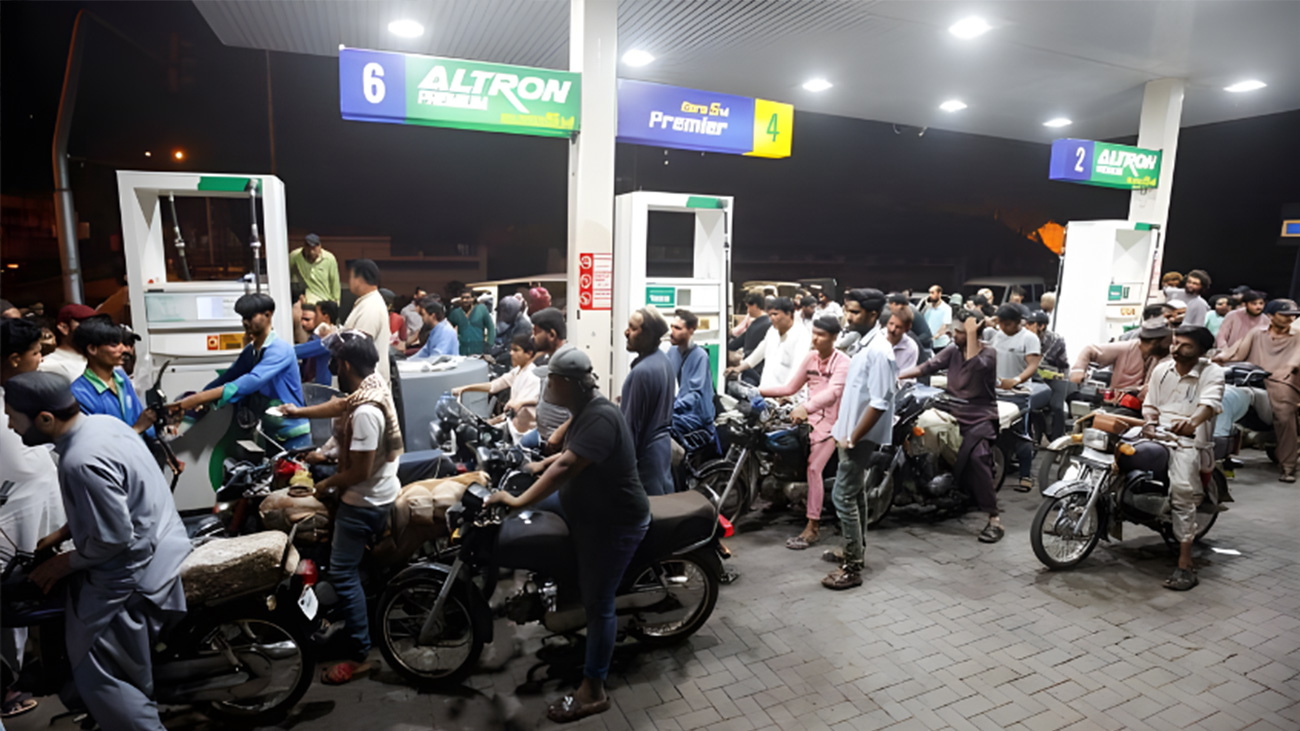
Officials shared the details during a briefing to the Senate Standing Committee on Petroleum. Secretary of Petroleum Hamed Yaqoob Sheikh told the committee that the government is considering several measures to support people who rely on motorcycles and rickshaws for daily travel and income.
He explained that the recent rise in petroleum prices was mainly introduced to prevent fuel hoarding and ensure that oil marketing companies continue importing petroleum products.
According to the secretary, the decision was not meant to benefit oil marketing companies but to maintain a stable fuel supply across the country.
Also Read: Punjab climate internship offers Rs60,000 monthly stipend for youth
He also warned that tensions in the Middle East are affecting global petroleum supply routes. Around 70% of Pakistan’s oil imports come from that region, which makes the country vulnerable to disruptions.
Officials informed the committee that petrol stocks in Pakistan are currently enough for about 27 days.
Diesel reserves are expected to last for around 21 days, while crude oil stocks are available for about 11 days.
Meanwhile, reserves of liquefied petroleum gas and liquefied natural gas are sufficient for nearly nine days, while jet fuel reserves can last for around 14 days.
During the meeting, Senator Hidayatullah asked officials to explain the major increase in petroleum prices after March 7.
Officials from the Oil and Gas Regulatory Authority (OGRA) told the committee that diesel prices increased by about 100% while petrol prices saw a rise of nearly 70%.
The petroleum secretary said the government has taken several steps to create financial savings, which will later be used to provide relief to the public.
Earlier, the government increased the price of kerosene oil by Rs39.20 per litre while keeping petrol prices unchanged for the week ending March 20.
Also Read: CM Maryam launches T-Card travel subsidy on metro buses – How to get it?
Following the latest notification, kerosene oil has become one of the most expensive fuel products for consumers at Rs358 per litre.
It has also recorded the largest price increase among fuels since March 7.
Officials from the Ministry of Energy said the government will pay Rs23 billion as a price differential subsidy to oil marketing companies.
This subsidy is meant to keep petrol prices stable for consumers despite rising fuel prices in the international market.


