

Asim Munir inspects locally made weapons at POF Wah
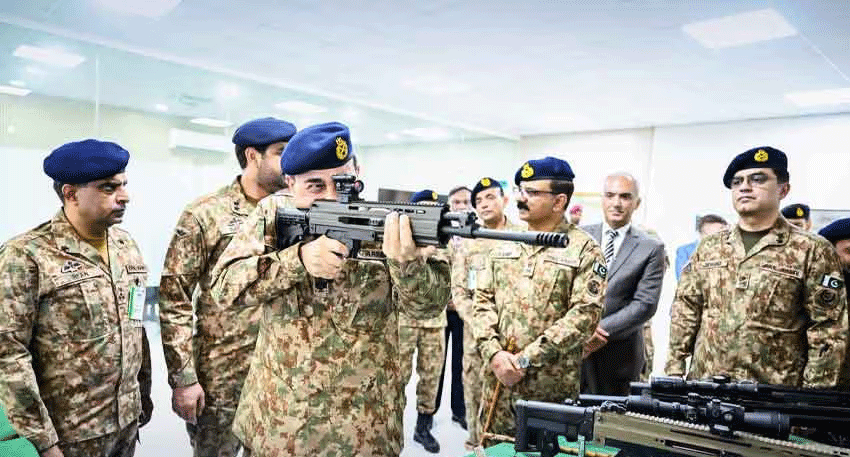
The chief of army staff and chief of defence forces visited POF Wah, Pakistan’s largest defence industrial complex, to assess its production capabilities and ongoing modernisation work.
According to the Inter-Services Public Relations, the visit focused on strengthening domestic defence manufacturing, improving production capacity and exploring opportunities to increase exports.
The army chief received a detailed briefing on POF’s operations, manufacturing facilities and the processes used to produce military equipment and ammunition.
Asim Munir reviews locally made weapons
During the visit, Field Marshal Munir witnessed trials of weapons and ammunition designed and manufactured within Pakistan.
The trials provided an overview of the country’s efforts to develop defence equipment locally and reduce reliance on imported products.
Officials also briefed the army chief about the progress of several projects aimed at expanding POF’s industrial and manufacturing capabilities.
The visit comes as Pakistan continues to place greater emphasis on self-reliance in defence production. Developing local equipment can help strengthen supply capabilities while supporting technical skills and industrial development.
The briefing also covered changes introduced following the implementation of the Defence Industrial Production and Regulatory Authority Ordinance.
Officials explained the steps being taken to strengthen domestic defence manufacturing and improve the overall organisation of the sector.

Two new POF plants expected this year
A major part of the briefing concerned two new industrial plants being established at POF Wah.
Officials told Field Marshal Munir that both plants are expected to begin production by the end of this year. The projects are intended to increase manufacturing capacity and support the modernisation of Pakistan’s defence industry.
The planned facilities could help POF expand its production base and improve its ability to meet future requirements.
The development is also linked to Pakistan’s wider efforts to build a stronger domestic industrial base for defence-related products.
Modern production facilities can support faster manufacturing, introduce improved processes and create greater opportunities for technical innovation.
However, the success of these projects will depend on their timely completion and the ability to maintain production standards.
Pakistan eyes stronger defence exports
Export potential was another important issue discussed during the visit.
POF already forms a major part of Pakistan’s defence production infrastructure, and officials briefed the army chief about opportunities to increase its presence in international markets.
Greater defence exports could provide additional foreign exchange while giving local manufacturers more experience in competing internationally.
To achieve that, Pakistan would need to maintain quality, reliability and competitive pricing across its defence products.
The modernisation of POF facilities is therefore important not only for domestic requirements but also for the country’s broader export ambitions.
The visit also highlighted the connection between defence production and wider industrial development. Local manufacturing requires skilled workers, modern technology and consistent investment in production facilities.
Also Read:Forces strike militant hideouts in KP, Balochistan, kill 11
Focus on self-reliance and innovation
The ISPR said the visit reflected the Pakistan Army’s focus on self-reliance, innovation and domestic production in the defence sector.
Locally designed weapons and ammunition are an important part of that strategy because they can strengthen Pakistan’s ability to develop and maintain equipment according to its own requirements.
The establishment of new plants is expected to further support these efforts. It could also provide additional capacity for future projects and help modernise older manufacturing systems.
POF Wah remains a central part of Pakistan’s defence industrial structure. Its production facilities have long supported the country’s military requirements and continue to play a role in developing locally manufactured defence products.
Field Marshal Munir’s review therefore comes at a time when Pakistan is seeking to strengthen both the domestic capabilities and international potential of its defence industry.


