

SC upholds Rs30m PVMA fine in major price-fixing case
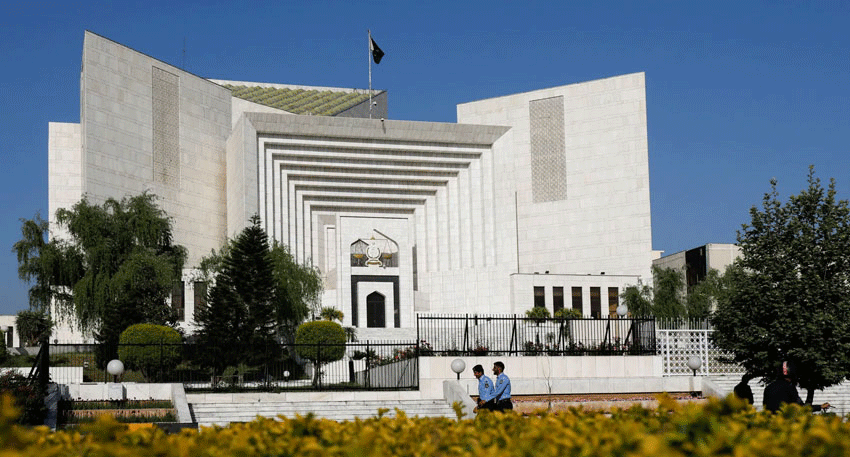
The court upheld findings by the Competition Commission of Pakistan and the Competition Appellate Tribunal that the association had violated competition law.
However, the Supreme Court reduced the original penalty from Rs50 million to Rs30 million. The association has been directed to deposit the revised amount.
Supreme Court backs price-fixing finding
A two-member Supreme Court bench comprising Justice Jamal Khan Mandokhail and Justice Salahuddin Panhwar heard the case.
The judges ruled that PVMA’s actions amounted to prohibited price-fixing under Section 4 of the Competition Act, 2010.
The case relates to discussions held between the federal government and PVMA during 2007-09. At that time, the government was seeking lower prices for ghee and cooking oil.
PVMA took part in those discussions and later communicated the agreed prices to its member companies. The Competition Commission concluded that the association had negotiated and determined prices collectively on behalf of competing manufacturers.
The CCP treated the arrangement as a violation of Section 4(1), read with Section 4(2)(a), of the Competition Act. It subsequently imposed a Rs50 million penalty on PVMA.
The Competition Appellate Tribunal later upheld the CCP’s decision. PVMA then challenged the findings before the Supreme Court.
Why the court considered the arrangement illegal
In its judgment, authored by Justice Jamal Khan Mandokhail, the Supreme Court explained that competing companies must decide their prices independently.
The court said businesses should consider their own costs, market conditions and commercial interests when setting prices. They cannot collectively agree on prices through a trade association representing competing companies.
According to the judgment, collective price decisions weaken competition. Such arrangements replace independent decisions by individual businesses with a common pricing approach.
The court also considered the role of the government consultations. It observed that discussions about price reductions took place without the involvement of the Competition Commission.
After those discussions, PVMA collectively determined prices and communicated them to its members. The Supreme Court found that this process crossed the line into prohibited price-fixing.
The ruling therefore makes clear that the involvement of a trade association does not remove the competition-law concerns. An association cannot act as a platform for competing businesses to agree on common prices.
Lower prices do not automatically make price-fixing legal
One important part of the judgment was the court’s explanation about lower prices.
The agreed prices in this case were reportedly lower than the prevailing market prices. However, the Supreme Court said this fact did not make the arrangement lawful.
The court noted that lower prices are normally expected to result from healthy competition. When companies compete independently, consumers can benefit from businesses trying to offer better prices.
The problem arises when competing companies collectively decide what prices should be charged. Even if the agreed amount is lower, the process can still damage independent competition.
The judgment also rejected the idea that a public-interest objective automatically makes such an arrangement acceptable.
The court held that an arrangement cannot escape competition law simply because it is presented as being beneficial to consumers or the wider public.
Also Read:LHC declares home electricity disconnection illegal over industrial dues
What the ruling means for manufacturers
The Supreme Court’s decision sends a clear message to trade associations and businesses operating in competitive markets.
Companies that compete with each other are expected to make their pricing decisions independently. Trade associations also need to ensure that their activities do not become a mechanism for competitors to coordinate prices.
The ruling is particularly important for sectors involving everyday consumer goods. Ghee and cooking oil are widely used household products, so pricing decisions can directly affect consumers.
At the same time, the court did not completely reject the idea of government consultations with industry representatives. Instead, the judgment focused on the point where competing businesses collectively determine prices.
The decision therefore highlights the importance of maintaining a clear separation between government policy discussions and independent commercial decisions by competing companies.
Penalty reduced from Rs50m to Rs30m
Although the Supreme Court upheld the main finding against PVMA, it reduced the financial penalty.
The original Rs50 million fine imposed by the CCP and upheld by the Competition Appellate Tribunal was brought down to Rs30 million.
The association has been directed to pay the revised amount. The court otherwise maintained the substantive finding that PVMA had engaged in prohibited price-fixing.
The reduction means PVMA will face a lower financial burden than originally ordered. However, the Supreme Court’s confirmation of the violation remains significant for the association and its members.
The ruling also strengthens the position of competition authorities when dealing with collective pricing arrangements involving industry groups.


