

Murad Saeed seeks relief over Rs2.5m defamation award
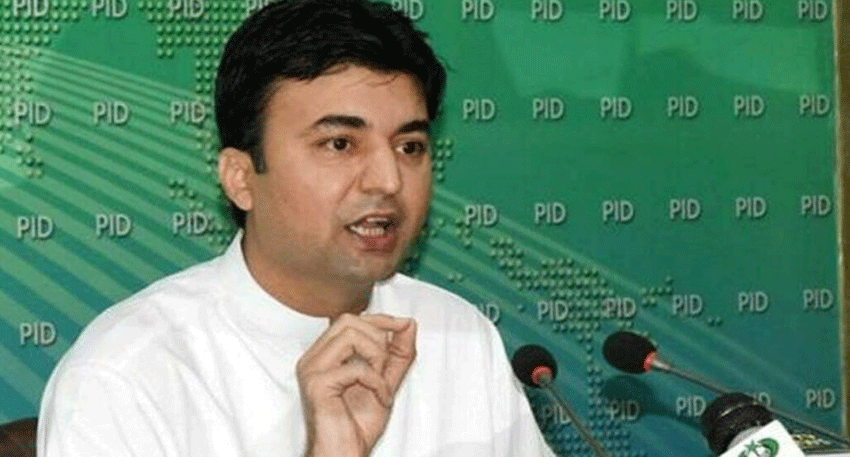
Murad Saeed challenges damages award
Pakistan Tehreek-e-Insaf leader and former federal minister Murad Saeed has approached the Islamabad High Court against a district court decision ordering him to pay Rs2,500,000 in damages to Federal Minister for Planning and Development Ahsan Iqbal.
The appeal follows a recent judgment by an Islamabad district court in a defamation case filed by Iqbal against Saeed. The district court accepted the suit and held that allegations made against the minister had affected his reputation.
The dispute dates back to 2019, when Saeed, who was serving as a federal minister at the time, accused Iqbal of corruption during a press conference.
Saeed had alleged that Iqbal was involved in corruption worth Rs70,000,000,000 in the Multan-Sukkur Motorway project. Iqbal rejected the allegations and later filed a defamation case seeking financial compensation.
Iqbal had originally demanded Rs10,000,000,000 in damages. However, the district court considered the amount excessive based on the evidence presented during the proceedings.
The court eventually awarded Rs2,500,000, saying the injury to Iqbal’s reputation justified compensation but did not support the much larger amount claimed.
Saeed asks high court to overturn ruling
In his appeal before the IHC, Saeed has asked the court to set aside the district court judgment. He has also requested a stay on the implementation of the decision until his appeal is finally decided.
Saeed’s lawyer argued that the district court judgment could not stand because some of its findings were inconsistent with the material already available on the court record.
The appeal claims the trial court wrongly concluded that inquiry reports, official records, Federal Investigation Agency material, National Accountability Bureau documents and other government records mentioned by Saeed were not produced as evidence.
Saeed has also challenged the way the trial court described his participation in the case. According to the appeal, he was treated as if he had remained absent or had not contested the proceedings properly.
His legal team pointed to a June 4, 2024 order, which they said showed that no adverse order had previously been passed against him.
The appeal further argues that the allegations made during the 2019 press conference were based on government records and information that Saeed said he had received from the FIA.
Dispute over evidence and reputation
Saeed’s lawyers have questioned whether the evidence placed before the district court was properly examined before the damages were awarded.
The appeal says statements given by court witnesses and material contained in an FIA report were not given proper consideration. Saeed has therefore asked the IHC to review the evidence and legal findings made by the lower court.
Another important argument concerns the question of whether Iqbal’s reputation was actually damaged by the allegations.
According to Saeed’s appeal, Iqbal and his witnesses acknowledged during the proceedings that the minister’s reputation had not been damaged. Saeed’s legal team has relied on this point while challenging the damages award.
The appeal also argues that the trial court did not establish mala fide, or bad faith, against Saeed. His lawyers have questioned how damages could still be awarded when such an intention was not proved.
The petition has also referred to judgments of superior courts, including PLD 2002 SC 514 and PLD 1996 Lahore 410, to support its legal position.
Also Read:250% salary increase proposed for KP police under new allowance
What the original case was about
The defamation dispute began after Saeed publicly linked Iqbal to alleged corruption in the Multan-Sukkur Motorway project.
Iqbal responded through legal proceedings, saying the allegations had seriously harmed his personal and political reputation. He sought Rs10,000,000,000 in damages from Saeed.
The district court, however, did not accept the full amount claimed. After examining the case, it decided that monetary compensation was justified but reduced the award to Rs2,500,000.
The ruling did not end the dispute because Saeed has now challenged the decision before the IHC. The high court will determine whether the lower court correctly assessed the evidence and applied the relevant legal principles.
For now, the district court’s award remains the subject of an appeal. Saeed is seeking both cancellation of the judgment and protection from its implementation while his challenge is considered.


