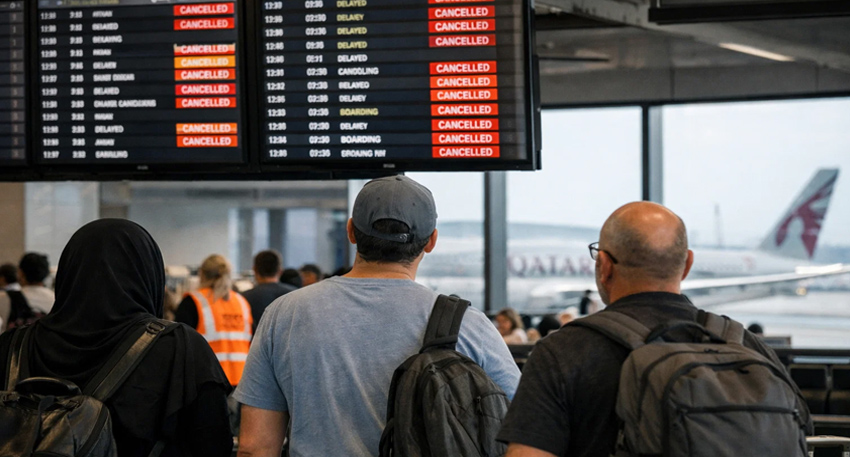
International air travel remains severely disrupted after heightened regional tensions following joint US and Israeli strikes on Iran and retaliatory Iranian attacks across the Gulf.
Several Gulf nations have temporarily closed their airspace, leading to widespread flight suspensions and delays. Major aviation hubs, including Dubai International Airport, have been affected, with departures and arrivals either delayed or cancelled.
Major Airlines Issue Advisories
Leading carriers such as:
- Qatar Airways
- Emirates
- Saudia
- Etihad Airways
have advised passengers to check flight status before heading to the airport to avoid inconvenience.
Thousands of travelers are facing uncertainty as airlines adjust schedules in response to restricted air corridors.
Also Read: UAE airports and Emirates flights suspended till 3 March amid Middle East tensions
What Passengers Should Do Before Going to the Airport
- Check Airline Website
Visit your airline’s official website and use the “Manage Booking” option. Enter your booking reference number to get the latest updates on delays or cancellations.
- Check Airport Website
Go to your departure airport’s official website and check the Departures/Arrivals section using your flight number.
- Contact Your Travel Agency
If you booked through an agent, contact them directly. Agencies often receive operational updates before public announcements.
- Avoid Accepting Changes Immediately
If your airline offers an “Accept Changes” option due to delays, do not immediately confirm. Accepting changes may affect your eligibility for compensation, meals, or hotel stays.
- Use Flight Tracking Platforms
Independent platforms like Flightradar24 provide real-time flight tracking. Enter your flight number for updates.
- Contact Airlines via Social Media — Carefully
Airlines actively respond on social platforms. However, never share sensitive information such as passport details, bank information, or passwords online.
Regional Tensions Impact Global Aviation
The latest disruptions highlight how geopolitical tensions in the Gulf can immediately affect global aviation routes, cargo transport, and passenger travel.
Experts warn that prolonged airspace restrictions could cause ripple effects across international flight schedules, including Europe–Asia transit routes.
Passengers are urged to stay updated and monitor official announcements from airlines and airport authorities.