

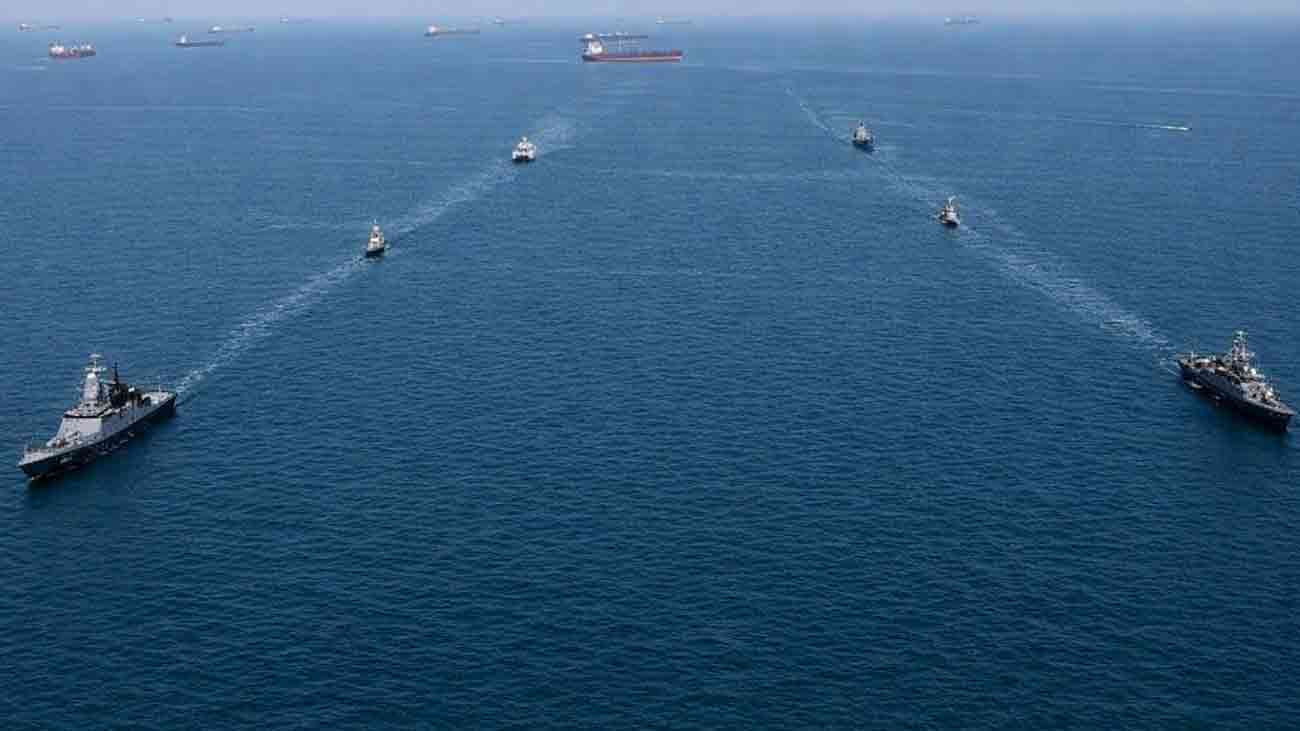
Iran has announced that non-hostile vessels may pass safely through the Strait of Hormuz, provided they comply with established security protocols and are not involved in any aggressive actions against the country.
The announcement comes after heightened regional tensions that had partially disrupted one of the world’s most critical maritime routes for energy transportation.
Security Coordination Required for Safe Transit
According to a statement issued by Iran’s mission to the United Nations, ships intending to pass through the Strait must:
- Coordinate with Iranian authorities
- Follow designated security procedures
- Avoid any hostile or military-linked activity
However, Iran has not provided detailed guidelines, leaving international shipping companies with lingering uncertainty regarding operational requirements.
Strategic Importance of the Strait of Hormuz
The Strait of Hormuz plays a vital role in global energy supply:
- Nearly 20% of the world’s oil and liquefied natural gas (LNG) passes through this route
- It serves as a key transit corridor connecting major oil-producing regions
Any disruption in this passage can have immediate effects on global energy markets and trade flows.
Shipping Traffic Disrupted During Regional Tensions
Shipping through the Strait had been significantly affected following escalating tensions in the Iran–Israel conflict escalation 2026, involving the United States and regional allies.
- Before tensions: around 120 ships per day
- During peak disruption: traffic reduced sharply
- Recent reports: only 5 ships recorded in a single day
This decline impacted both global trade routes and energy supply chains.
Also Read: Trump issues 48‑hour ultimatum to Iran to reopen the Strait of Hormuz
Impact on Global Oil Prices and Markets
Analysts warn that prolonged closure or disruption of the Strait could have severe consequences:
- Oil prices surged during periods of restricted movement
- Estimates suggested prices could reach $150–$200 per barrel if the Strait were fully blocked
- Global shipping costs and insurance premiums increased
Following recent developments, partial recovery in market sentiment has been observed.
Mixed Signals on Diplomatic Efforts
U.S. President Donald Trump has claimed that discussions are underway to end the conflict, although Iran has previously denied such negotiations.
Reports of potential peace talks have contributed to:
- Slight recovery in Asian stock markets
- Temporary decline in Brent crude oil prices
- Improved investor confidence in global markets
Outlook for Shipping and Energy Stability
Economists suggest that if stability continues:
- Global energy supply chains may normalize
- Shipping operations could become more predictable
- Oil price volatility may reduce
However, experts caution that the situation remains sensitive and dependent on geopolitical developments.


